Preheat the oven to 350°F.: Warm, comforting aromas develop as soon as the loaf goes into a properly heated oven. You should feel the gentle heat radiating from the oven when you open it, and the internal temperature will promote even rise, which prevents a gummy center. If your oven runs hot, an oven thermometer will save you from overbrowning. A common mistake is skipping preheating, which can lead to uneven texture and dense crumb.
In a large mixing bowl, combine sugar, almond extract, vanilla, vegetable oil, milk, cherry juice, eggs, and sour cream. Whisk to combine well.: The bowl will quickly fill with an inviting, perfumed steam from the extracts and cherry juice as you whisk. Texturally you want a glossy, cohesive mixture where the oil has distributed and the eggs are integrated, not separated. Whisk briskly but avoid over aeration, which can cause too much rise and then collapse. One error is adding cold eggs straight from the fridge which can make the oil seize; room temperature eggs blend more smoothly.
In a separate bowl, sift together flour, salt, and baking powder.: Sifting creates tiny air pockets that contribute to a lighter crumb and removes lumps, giving a uniform flour mixture. You will see a soft powder falling like snow into the bowl, and it should smell clean and wheaty. Not sifting can leave pockets of leavener which create uneven rise and small tunnels in the crumb.
Drain maraschino cherries from the rest of the juice (you've already used 1/4 cup of the juice in the bread batter) and coarsely chop the cherries into halves and/or quarters.: Draining stops the cherries from adding too much liquid which would weigh down the batter. As you chop, notice the glossy sheen and how the fruit holds its color, and aim for mostly even pieces so each slice has consistent distribution. Avoid very small bits which can release more juice and color the crumb unevenly.
Sprinkle 1 to 2 tablespoons of the flour mixture over the cherries and toss to combine.: Coating the cherries in flour muffles their tendency to sink and helps them suspend in the batter. You will feel the dry dusting and see the cherries take on a matte finish, which is the cue to proceed. A frequent mistake is skipping this step, which often results in cherries concentrated at the bottom of the loaf.
Stir the remaining flour mixture into the milk/eggs mixture. Stir just until wet and dry ingredients are combined – lumps and streaks of flour in the batter are fine.: As you fold in the flour, watch the batter change from glossy to slightly more structured, with ribbons of flour disappearing. The goal is to avoid overmixing, which tightens gluten and yields a dense loaf. Expect small streaks of flour and a batter that falls slowly from the spoon. Over-beating at this stage is a top mistake that leads to a chewy texture.
Gently fold the cherries into the batter to distribute evenly, but do not overmix.: Folding should feel gentle, like cradling the batter, preserving the cherries and avoiding release of excess juice. You will see bright pockets of color distributed through the batter. If you mix vigorously, the cherries will break down and bleed, which changes both texture and appearance.
Pour batter into a greased or parchment-lined 9×5 loaf pan.: The batter should pour with a ribbon like motion and settle evenly in the pan. Greasing or lining ensures easy release and clean slices later. Tap the pan lightly on the counter to release any large air bubbles, and smooth the top with a spatula. A sticky mistake is using too small a pan which causes overflow and uneven baking.
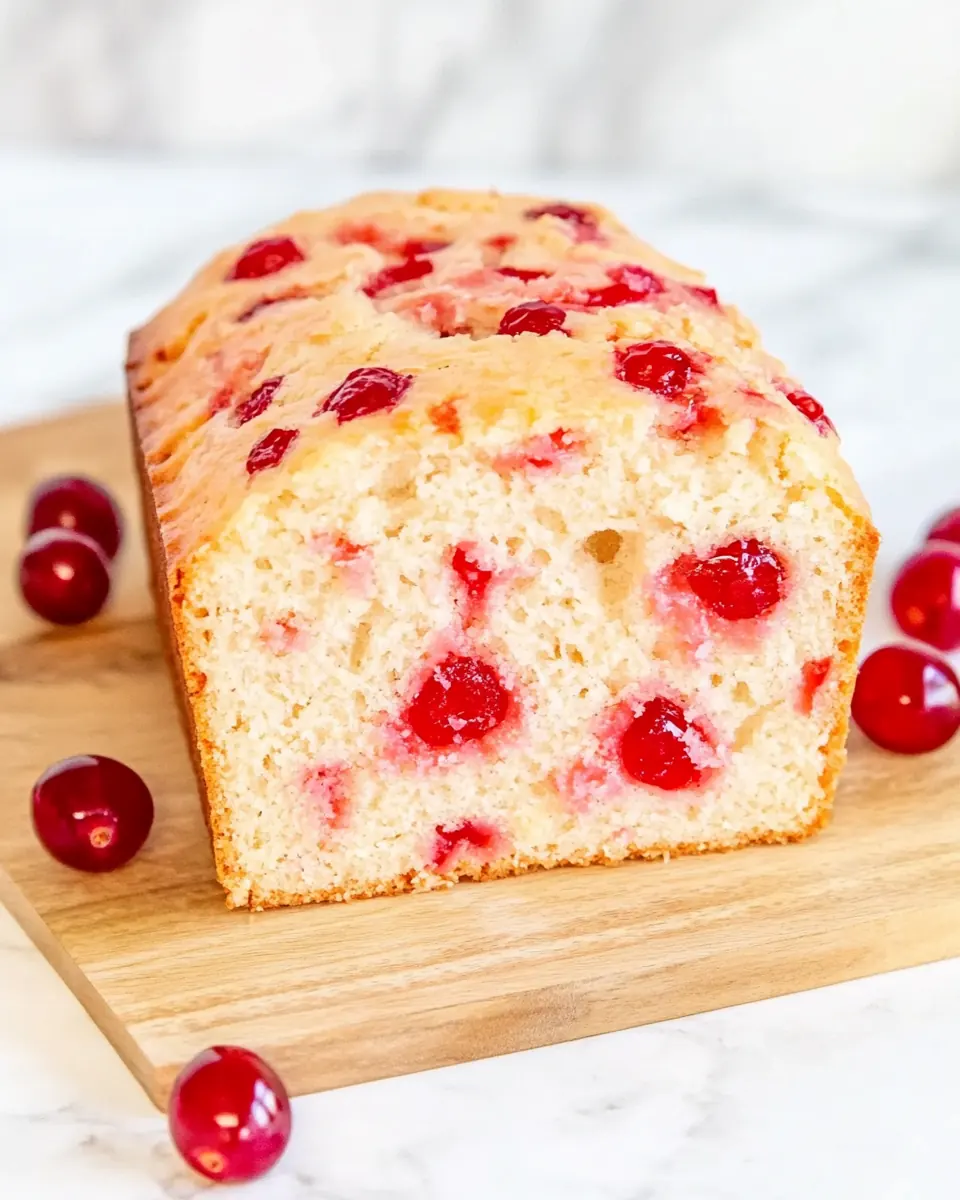
Bake for 55 to 60 minutes or until a toothpick inserted into the center of the bread comes out clean. Cover bread with aluminum foil after 45 minutes to prevent it from over-browning on top.: As the loaf bakes you will notice the top turn a warm golden brown and the kitchen will fill with sweet, fruity aroma. The internal crumb sets and the toothpick test should come out with a few moist crumbs but no raw batter. Covering with foil after the initial browning helps avoid an overly dark crust while allowing the center to finish cooking. Opening the oven frequently is a common trap that causes uneven rise and longer bake times.
Remove from the oven and cool. (You can turn the bread out onto a wire cooling rack after it has cooled for an initial 10 minutes in the pan.): The loaf releases a deeper cherry scent as it cools and will firm up, making slicing cleaner. Letting it rest in the pan for ten minutes helps the structure hold, then transferring to a rack prevents sogginess from trapped steam. Slicing too soon can lead to a gooey center and torn slices, so patience is rewarded here.
Whisk together the ingredients for the glaze. Drizzle the glaze over the bread. The glaze will set, dry to the touch after about 30 minutes.: The glaze should be smooth and glossy, and as you pour it will fall in thin ribbons that create a pretty lace across the top. Once set it offers a delicate sheen and a sweet finishing note. If the glaze is too thin it will pool, and if too thick it will clump, so adjust with small amounts of cream or powdered sugar until you reach the right silky consistency.