Open 1 packages of crescent rolls. Dust a clean surface with a little flour unless you have a very good non-stick surface. Roll out the crescent dough large enough to cover the base and go half-way up the sides of a 13 x 9 glass pyrex dish. Use any scraps of dough to patch the dough after it's in the pyrex dish.: When you unroll the first package of crescent dough the room fills with a mild, buttery scent that promises golden edges after baking, and that smell is a welcome start. As you lay the dough on a lightly floured surface, notice how soft and slightly elastic it feels; if it resists, let it rest a minute. The reason we roll it out is to create a continuous base without stubborn seams, which helps the filling stay put as it bakes. One thing to watch for is tearing the dough while stretching it, which happens if you pull too hard or the dough is cold; to avoid this, roll gently and patch any tears with scrap pieces pressed firmly into place.
On medium speed, beat together the cream cheese, sugar, vanilla and egg in a medium bowl, just until it is creamy and smooth.: A faint dust of flour prevents sticking and keeps the dough smooth as you roll, and you will notice the dough slides more easily under the rolling pin. The flour smell is faint but reassuring, and you only need the lightest touch to avoid drying the pastry. This technique matters because excess sticking can tear the dough and lead to uneven edges in the pan. Over flouring is the common mistake here, because too much flour will make the pastry dry; shake off excess before transferring.
Spread cream cheese mixture evenly over the crescent in the pyrex dish.: Roll the dough until it reaches the right size and visually covers the pan with a little extra on the sides, the dough should drape smoothly into the corners. The feel should be supple, and when placed the pastry will settle and form a neat edge, providing structure for the filling. This matters because the dough base supports the creamy layer, keeping slices together when served. A frequent slip is under rolling, leaving thin gaps at the edges; patch with scraps rather than stretching aggressively, which can distort the texture.
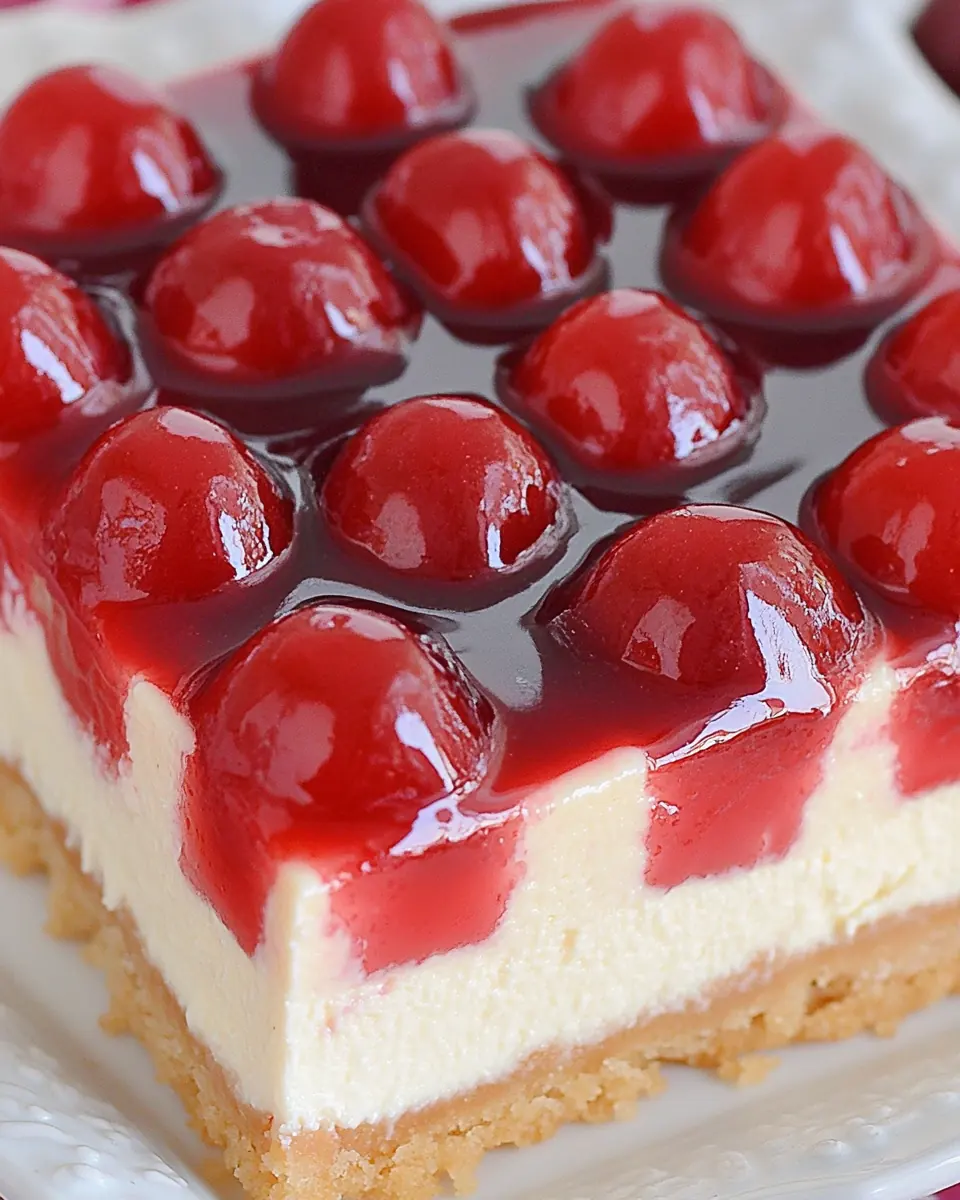
Spread cherry filling evenly over the cream cheese mixture.: Press scraps gently into thin seams so the base looks seamless, the patched areas will bake and blend in with the rest of the crust. This step ensures no filling leaks through during baking and helps the base maintain stability when slicing. Doing this carefully avoids weak spots that might break when serving; if you press too hard you can create thick lumps, so smooth the patches lightly for an even bake.
Roll the second package of crescent dough to about the size of the pyrex dish top. Cut strips of dough about 1/2" wide.: As you beat the cream cheese mixture you will see it transform from lumpy to silky, and the texture becomes glossy, which signals readiness. The sound of the mixer is steady and even, and the aroma of vanilla blooms as it combines, offering a hint of warmth. This technique matters because over mixing incorporates too much air, which can cause the filling to crack or sink; stop the mixer when the mixture is smooth. A common error is using cold cream cheese , which leaves lumps, so ensure it is softened first.
Place the strips of dough on the cheesecake the long way. Place 1 strip of dough on each edge of the pyrex and push the edges against the glass to seal the edges of the cheesecake.: Use a spatula to smooth the filling into an even layer, noticing how it holds its shape while being spread, with a satiny finish that resists dripping. The evenness ensures every slice gets the same creamy ratio of filling to crust, which is essential for consistent texture and appearance. If you press too hard you may disturb the base, so spread gently and from the center outward. An issue to avoid is piling too much in the center, which can create doming; smooth to a flat, even plane for the best result.
After all the long strips are on, cut the next set of strips in half and place them the opposite way over the cheesecake to form a lattice. Seal the edges to the pyrex dish and bake for 30-35 minute bake until the top is golden brown.: Spoon the glossy cherry topping across the creamy layer, letting the bright red fruit create a jewel like contrast, and smooth with a back of a spoon for even coverage. The sound is soft as the cherries settle, and the visual cue is a uniform red sheen across the filling, signaling readiness for the lattice. Even distribution matters to keep slices tidy and balanced in flavor. A typical mistake is dumping the filling in one spot, which makes slicing messy, so distribute it deliberately and gently.
Roll the second package of crescent dough to about the size of the pyrex dish top: Rolling the second package prepares the lattice top, and as you work the dough becomes glossy and pliable, ready to cut into strips. Achieving the right size makes the lattice fit without excessive trimming, so measure visually against the pan. This step matters for even baking and aesthetic appeal; an ill fitting top can bake unevenly or collapse. Avoid rolling it too thin, which can burn quickly and lose flakiness.
Cut strips of dough about 1/2" wide: As you slice the strips, they should feel sturdy but flexible, the edges will be clean and ready to weave. Consistent width gives a uniform bake and an attractive lattice pattern once assembled. Precision here helps the top bake evenly and ensures a pleasant mouthfeel, not too thick or too crispy. A common error is uneven strips which result in uneven browning, so use a ruler or visual guide to keep them consistent.
Place the strips of dough on the cheesecake the long way: Lay the long strips across the filling, pressing the outermost strips gently into the dish to create a sealed edge, and you will see the top begin to take an elegant shape. The long strips provide the foundation for the lattice, and sealing the edges prevents gaps where filling might bubble out. This sealing matters for tidy serving and a cohesive crust. A mistake to avoid is not sealing edges sufficiently, which lets filling escape and creates sticky messes during baking.
Place 1 strip of dough on each edge of the pyrex and push the edges against the glass to seal the edges of the cheesecake: Pressing the edges against the glass forms a secure rim that browns beautifully and keeps the lattice intact, and you will feel the dough anchor into the pan. This helps the whole assembly stay neat while baking and during slicing. If you press unevenly you can create thick ridges that bake at a different rate, so aim for an even, gentle seal to maintain uniform browning.
After all the long strips are on, cut the next set of strips in half and place them the opposite way over the cheesecake to form a lattice: Weaving the shorter strips across the long ones creates a classic lattice, and as layers intersect the top takes on a bakery quality, with little pockets of cherry peeking through. The lattice allows steam to escape and ensures the top crisps in places for texture contrast. Be mindful of spacing so the lattice looks balanced; overcrowding can cause the top to bake unevenly. A typical misstep is rushing the weave, which leads to misaligned strips that pull away during baking.
Seal the edges to the pyrex dish and bake for 30 to 35 minute bake until the top is golden brown: As the cheesecake bakes the kitchen will fill with the scent of warm pastry and sweet cherries, and visually the lattice will shift from pale to a deep golden brown, signaling it is done. The filling should be set at the edges with a slight jiggle in the center, not liquid, and the crust should be crisp and fragrant. This baking time is important for proper set and color, and underbaking leaves a soft center that is hard to slice. A common mistake is overbrowning, so tent with foil if the top achieves color before the filling is set.