Preheat the oven to 375°F. Coat an 8 by 8 baking dish with cooking spray. Set aside.: As the oven warms, you will notice a faint dry heat that tells you the baking environment is getting ready to transform the fruit and topping. A properly preheated oven ensures even baking, so the topping crisps while the fruit cooks through. Listen for the oven click or preheat cycle completion, and resist putting the dish in early, because uneven temperatures can cause soggy topping or undercooked center. One common mistake is not allowing the oven to fully preheat, which can lengthen bake time and affect texture.
In a medium bowl, combine the cherries, rhubarb, and corn starch. Stir until well coated. Set aside.: The dish will feel slick and ready, which prevents sticking and makes for clean serving. A light coat helps the crisp release easily and keeps the bottom from caramelizing too aggressively. Make sure to reach the corners and edges, since fruit juices can caramelize there. Skipping this can mean the edges stick and make serving messy.
In a separate medium bowl, combine the oats, flour, brown sugar, cinnamon, and salt. Stir well. Drop the pieces over butter over the oat mixture. Use your hands or a pastry blender to combine. Mix until crumbly. Drizzle in the honey and stir with a wooden spoon or spatula.: When you toss these together, the corn starch should cling to the fruit, giving a faint dusting that will thicken the juices as they come out. This step prevents the filling from becoming runny, creating a syrup that coats the fruit. Pay attention to even coating, and if some pieces seem dry, stir gently until uniform. A typical error is adding too much starch, which can make the filling gummy rather than silky.
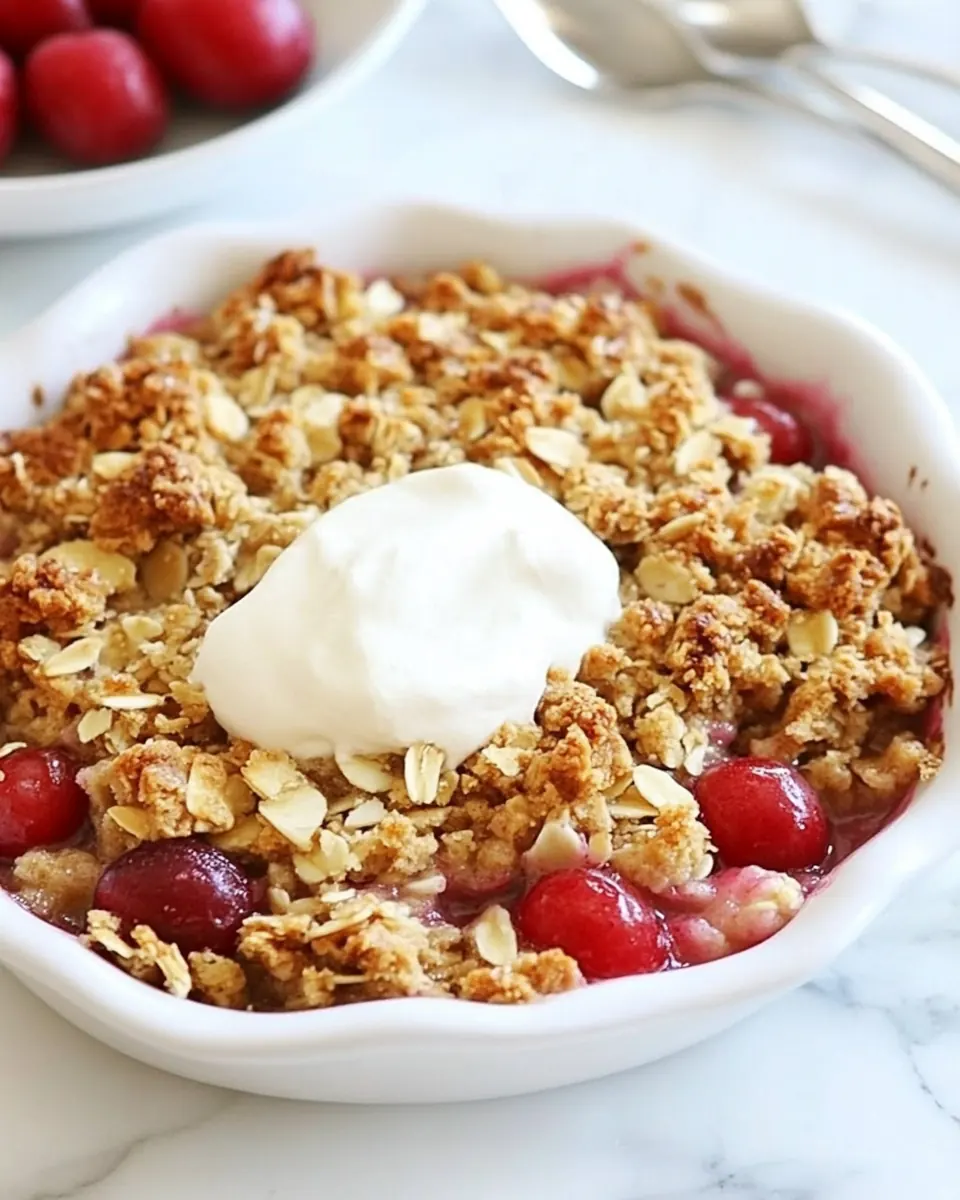
Pour cherries and rhubarb into the baking dish. Top with the oatmeal crisp mixture. Bake for 30-35 minutes or until fruit is soft and the crisp is bubbly. Serve warm.: As you stir, watch the fruit take on a slightly satin sheen from the corn starch , and imagine how it will thicken in the oven. The visual cue of a uniform coating indicates readiness. Stirring too vigorously can crush delicate cherries , so be gentle. Crushing early can release excess juice, which may alter the texture of the final filling.
Note: This crisp is best eaten the day it is made. We like it hot out of the oven with vanilla ice cream or frozen yogurt. Sometimes we make it in individual baking dishes, just divide the fruit and crisp topping and bake separately.: Letting the bowl rest gives the corn starch a moment to adhere and the flavors to settle. This short pause also allows you to assemble the topping without rushing. If you leave it too long, the fruit may start to release juices prematurely, but a brief rest is beneficial. Avoid setting it aside uncovered in a warm spot where it may begin to break down.
In a separate medium bowl, combine the oats, flour, brown sugar, cinnamon, and salt: When these dry ingredients meet, the combined aroma of brown sugar and cinnamon will hint at the toasty notes to come. Mixing them evenly ensures consistent sweetness and spice in every bite. If you see pockets of sugar or flour, work the mixture until uniform. A common oversight is measuring imprecisely, which can tip sweetness or texture off balance.
Stir well: Stirring brings a cohesive dry mixture that will accept the butter in the next step. You should see a homogenous blend, and the oats will look evenly dusted. This step sets the base for the topping structure. Overmixing is not risky here, but skipping this step leaves clumps that can bake unevenly.
Drop the pieces of butter over the oat mixture: As you scatter the cold unsalted butter pieces, you will notice little glints of pale yellow against the oats. These pockets of butter are what create flaky, golden clusters when they melt in the oven. Cold butter is crucial, it melts into pockets rather than blending completely, leaving a superior texture. Using softened butter will produce a more paste like mix and a less crisp topping.
Use your hands or a pastry blender to combine: As you press and rub the butter into the dry mix, the texture will shift from dry to pebble like crumbs. This tactile step is satisfying, and it ensures the fat is distributed for even browning. If using hands, work quickly so body heat does not melt the butter entirely. Overworking can warm the butter too much, reducing the desired crumbly clusters.
Mix until crumbly: You want visible clusters and a coarse crumb, not a smooth paste. These crumbs will toast and crisp in the oven, giving the topping its signature texture. Visual cues include small to medium sized clusters and a sandy appearance between them. If you end up with a paste, chill briefly to firm up before assembling.
Drizzle in the honey and stir with a wooden spoon or spatula: The honey will add a slight gloss and a touch of floral sweetness, helping some crumbs cling together into attractive clusters. Stir gently until the honey is distributed, and you will see the mixture gather subtly. Be mindful not to overdrizzle, as too much liquid can collapse the crumb structure. A common fault is adding excess honey which leads to a sticky, dense topping.
Pour cherries and rhubarb into the baking dish: As you transfer the fruit, note the sheen of the coated pieces and arrange them evenly so the filling cooks uniformly. Spread them into an even layer to avoid hot spots where fruit might overcook. Leaving the fruit piled in one spot can cause uneven bubbling and textural inconsistency.
Top with the oatmeal crisp mixture: Scatter the topping across the fruit, aiming for an even blanket that will brown uniformly. The contrast between the glossy fruit and the matte oat topping is visually pleasing and will lead to balanced bites. If you push the topping down, it may seal in steam and become soggy rather than crisp, so keep it loose and airy.
Bake for 30 to 35 minutes or until fruit is soft and the crisp is bubbly: In the oven, the aroma will intensify and the topping will turn golden brown. Watch for the filling to bubble at the edges and for the top to be deeply colored but not burned. These cues mean the juices have thickened and the topping has set. A common error is underbaking, which leaves raw starch taste and a soggy topping, so bake until bubbling and golden.
Serve warm: Serve the crisp while it is still warm so the contrast of temperature and texture is at its best. The fruit should be syrupy, and the topping should be crisp and slightly crackly. If served cold, the topping can soften and the experience changes. Reheating briefly can revive crispness, but watch closely to avoid drying out the fruit.
Note: This crisp is best eaten the day it is made : The textural contrast is at its peak the day of baking, with a crunchy topping and tender fruit. If you store leftovers, you can gently reheat to refresh the topping, but expect some softening over time. A frequent pitfall is letting it sit too long without reheating, which results in a less vivid texture and flavor.
We like it hot out of the oven with vanilla ice cream or frozen yogurt: The warm fruit against a cold, creamy scoop creates an irresistible temperature and texture interplay. If you do not serve with something cold, the crisp is still excellent, but that melty cold element elevates it. A common mistake is scooping ice cream too early so it melts away, wait until you are ready to serve each bowl.
Sometimes we make it in individual baking dishes: Baking in smaller dishes gives a faster bake and adorable single servings, and the edges will caramelize more. Divide the fruit and topping evenly so each dish bakes consistently. Watch baking times closely because smaller portions may finish sooner. The mistake to avoid is uneven division which leads to under or overcooked portions.