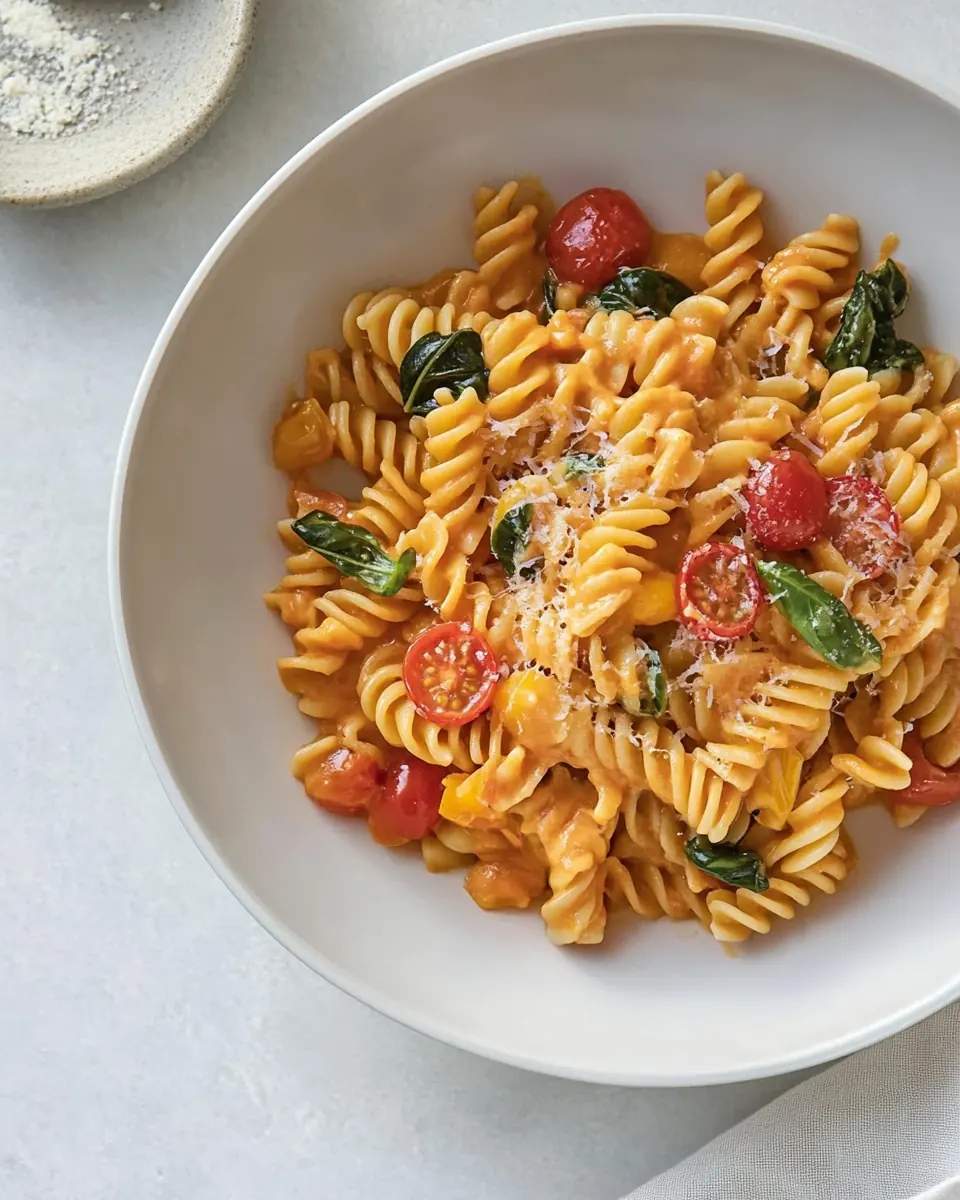
In a large pan, set over medium heat, add the olive oil. When the olive oil is warm, add the diced Vidalia onions and few generous pinches of salt. Give it a mix and let them cook, covered, for 7 minutes. You really want the diced onions to melt in the pan with the olive oil. I like to make sure the heat is low enough so they slowly cook and don’t brown or burn.: A warm, fragrant beginning lets you coax flavor from the olive oil and aromatics. You should hear a gentle ripple of oil across the pan, and the surface will shimmer slightly, not smoke. This temperature extracts fruitiness without bitter notes. The common mistake is overheating, which can make the oil taste flat or burnt; if it smokes, remove the pan from heat and let it cool a touch before continuing.
Next, add the minced garlic, crushed red pepper flakes and cherry tomatoes. Cook for an additional 5 minutes, covered, until the tomatoes are softened and have released a lot of their juices. Uncover and cook for an additional 5 to 7 minutes, until it thickens. Turn off the heat while we make the pasta.: As the onion meets the oil, you will smell the sweetening aroma as they begin to soften. The salt draws moisture out, helping the pieces to become translucent and tender. I watch for a gentle sizzle and a glossy sheen on the onion; that means they are sweating, not browning. If they start to brown too quickly, lower the heat, because caramelization will shift the profile away from the intended soft sweetness.
Meanwhile, bring a pot of salted water to a boil. Cook your pasta until al dente. I usually cook it about 1 minute before al dente because I like to finish cooking the pasta in the pan with the sauce. Reserve about 3/4 cup of pasta water. Drain the pasta and turn your attention to the pan with the cherry tomatoes.: Covered cooking traps steam, allowing the onion to collapse into the oil and become almost jam like, which builds sauce body. During this time the kitchen fills with a mellow, sweet aroma. Check once or twice to ensure the heat remains low; if the onions begin to stick, add a splash of water. A common error is leaving the lid on too long without checking, which can encourage uneven cooking or sweating that creates too much liquid.
To the sauce, add about 1/2 cup of pasta water and bring it to a rapid simmer. Cook for about 2 minutes; give it a taste and adjust the salt to taste. I added a few more pinches of salt. Add the pasta in, along with the butter and toss together for about a minute, until completely combined.: The desired texture is silky and nearly dissolved, which gives the sauce a smooth backbone. You should no longer see rigid onion edges, instead gentle, soft pieces. This melting action prevents sharp, raw onion notes in the finished dish. Rushing with high heat will preserve rawness or create unpleasant crisp bits, so be patient.
I like to make sure the heat is low enough so they slowly cook and don’t brown or burn.: Low heat creates sweet, mellow flavors and avoids bitter char. You should observe no dark edges, just translucence and a light golden hue. If your pan runs hot, reduce the flame and stir more frequently. Burnt onion is hard to mask, so preventing browning at this stage is key.
Next, add the minced garlic, crushed red pepper flakes and cherry tomatoes.: As you add the minced garlic and crushed red pepper, the aroma will brighten and the pan will smell fragrant and slightly spicy. When the cherry tomatoes hit the heat, they should hiss softly and begin to release juice. The immediate sensory cue is a sweeter, tomato forward scent. A typical mistake is adding garlic too early so it burns; add it only when the onions are soft and the pan is at a moderate temperature.
Cook for an additional 5 minutes, covered, until the tomatoes are softened and have released a lot of their juices.: Covered, the cherry tomatoes will steam and collapse, filling the pan with glossy liquid that smells bright and tangy. You want them softened, not disintegrated; the skins may wrinkle and burst. If they are not releasing juice, increase the heat slightly, but never high enough to scorch. Avoid overcooking to the point of drying, which loses the fresh tomato brightness.
Uncover and cook for an additional 5 to 7 minutes, until it thickens.: Uncovered simmering allows excess water to evaporate and the sauce to concentrate. You should see the liquid reduce into a syrupy glaze, and the aroma will become more intense. Stir occasionally and watch for bubbling that slows down as the sauce thickens. A common pitfall is walking away; if you let it reduce too far, it can become dry and lose silkiness.
Turn off the heat while we make the pasta.: Pausing the sauce prevents over reduction and gives you a window to time the pasta. The sauce should still be juicy but slightly concentrated, and turning off the heat locks in that stage. If you leave it on, it may over reduce before the pasta is ready, so switching off is a mindful way to manage timing.
Meanwhile, bring a pot of salted water to a boil.: The boiling water should roar, and the salt should season the pasta from within. I use enough salt so the water tastes like the sea, which enhances the final dish. A mistake is under salting the water, which results in bland pasta that no amount of sauce can fix.
Cook your pasta until al dente.: The spaghetti should feel tender but with a slight bite in the center when you taste it. I usually pull it about one minute before al dente if I plan to finish it in the pan, because that final minute in the sauce perfects the texture. Overcooked pasta will be mushy and will not hold up when tossed with the sauce, so watch the timing carefully.
I usually cook it about 1 minute before al dente because I like to finish cooking the pasta in the pan with the sauce.: Finishing the spaghetti in the sauce lets the pasta absorb flavor while the starch in the pasta water helps the sauce adhere. You will notice the sauce clinging more readily and the flavors melding. A frequent error is skipping the finish in the pan, which can leave the pasta tasting separate from the sauce.
Reserve about 3/4 cup of pasta water.: The reserved pasta water is starchy and helps the sauce emulsify into a glossy coating. Keep it nearby and add gradually to tune sauce consistency. If you forget to reserve it, the sauce can be thin and have a harder time clinging to the pasta.
Drain the pasta and turn your attention to the pan with the cherry tomatoes.: After draining, the spaghetti should still be slightly firm, and the sauce should be warm. This moment is where texture comes together. Avoid rinsing the pasta, because that washes away starch and prevents the sauce from binding.
To the sauce, add about 1/2 cup of pasta water and bring it to a rapid simmer.: The bubbling action helps the sauce and starchy water marry into a cohesive emulsion. You will see the sauce become silkier and slightly glossy as it simmers. If the sauce seems too thin, simmer a bit longer; if too thick, add more reserved water. A common mistake is dumping all the reserved water at once, which can over dilute the sauce.
Cook for about 2 minutes; give it a taste and adjust the salt to taste.: Tasting now lets you calibrate seasoning while the flavors are active. The sauce should taste bright with balanced salt and heat. I often add a pinch more salt to lift the tomatoes. Over salting is hard to correct, so add gradually and taste between adjustments.
I added a few more pinches of salt.: Small salt adjustments can transform the sauce from flat to vivid. When you do this, the tomato sweetness will pop and the other flavors will feel more integrated. If you go too far, try adding a small pat of unsalted butter to mellow, but prevention is preferable to correction.
Add the pasta in, along with the butter and toss together for about a minute, until completely combined.: The moment of tossing is sensory rich, with steam rising and the butter melting into a glossy finish. You will hear a soft sizzle and see the sauce cling to each strand of spaghetti . This merging moment creates cohesion and final texture. A common mistake is not tossing vigorously enough, which leaves uneven coating; use tongs or pasta forks to toss thoroughly.