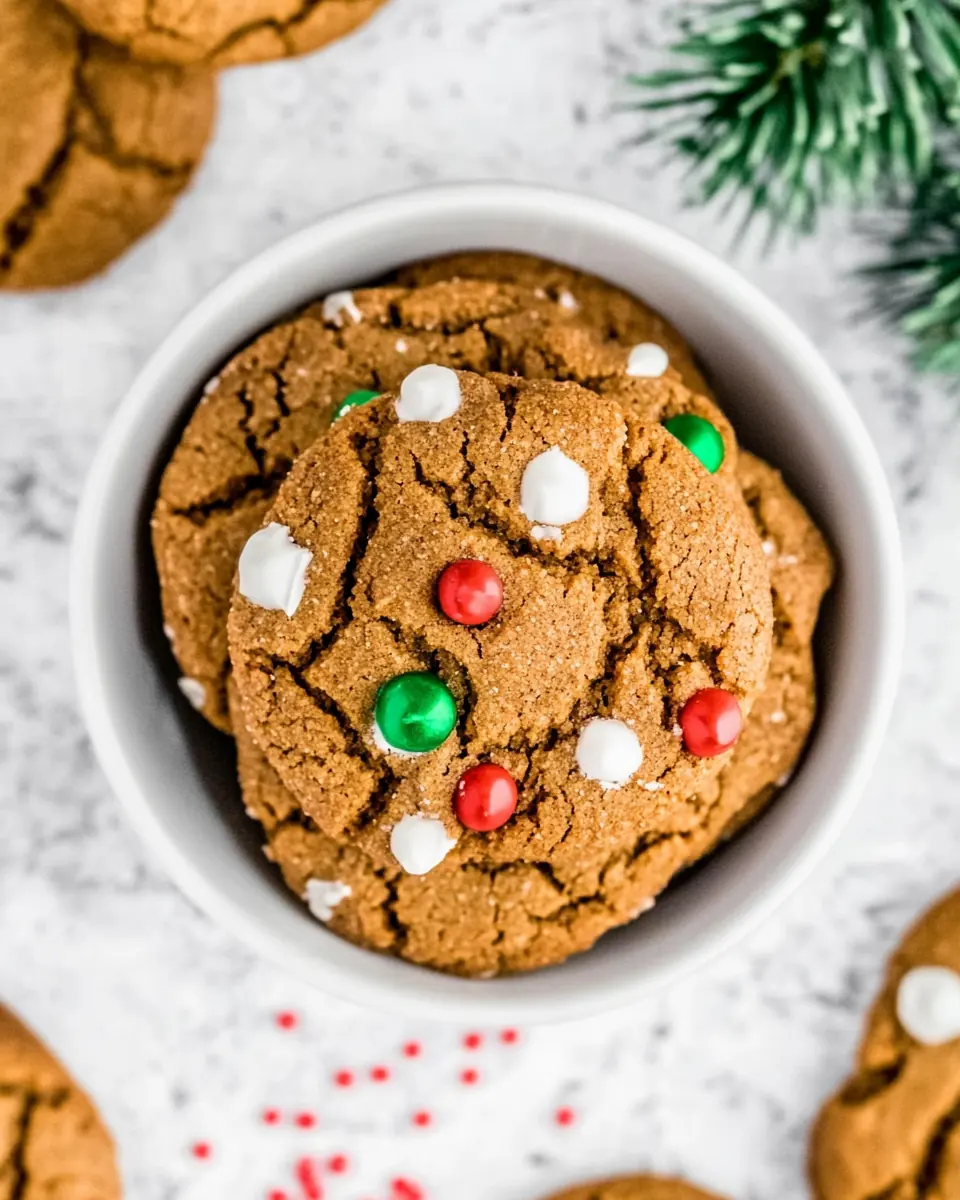
Preheat oven to 350°F. Line a cookie sheet with parchment paper or spray with cooking oil.: When you slide the pan into a properly heated oven you will notice an immediate lift in aroma as the spices bloom, which is part of knowing the cookies are baking correctly. Preheating ensures even rise and predictable spread, preventing underbaked centers or overly browned edges. A common mistake is skipping preheat, which can yield flat, dense cookies. Listen for the faint hum of the oven stabilizing and check that the racks are centered, so heat circulates evenly.
In a large bowl with an electric mixer on medium, cream together butter, granulated sugar and brown sugar together until smooth and fluffy.: The sound of the parchment being smoothed out and the way the dough rests on it helps you gauge spacing and movement during baking. Parchment prevents sticking and promotes clean bottoms, while a light oil coating can work in a pinch. Pressing the paper flat eliminates hot spots and helps with even browning. Avoid placing cookies too close together, as they will spread, and using foil without oil can cause sticking.
Add egg, molasses and milk to the butter and sugar. Mix all the wet ingredients on medium until combined.: As you cream, you will see the mixture lighten in color and become airy, which traps tiny air bubbles that contribute to a tender texture. The sound will go from noisy to smoother as the sugars dissolve into the butter . Proper creaming is why these cookies stay soft, so take the time until you get that fluffy ribbon. Overcreaming can incorporate too much air and make cookies collapse, while undercreaming yields dense cookies, so aim for a few minutes at medium speed.
In a second mixing bowl add flour, baking soda, cinnamon, ground ginger, ground cloves, and salt. Stir all ingredients together until well blended.: Once added, the mixture will become glossy and slightly darker from the molasses , and the scent deepens into the classic gingerbread profile. Mixing the wet ingredients helps them emulsify with the creamed butter , ensuring even distribution of moisture. If your egg is cold it may temper the mixture and create small lumps, so let it rest at room temperature briefly. Scrape down the bowl to incorporate any stuck bits and get uniform texture.
Add the dry flour ingredients to the wet butter and sugar mixture. Mix on low then medium with a mixer (or with a rubber spatula) until the dry ingredients are fully mixed and a dough forms. Be careful not to overmix the dough or it can become tough.: Stirring these dry ingredients together wakes up the spices, releasing volatile oils so their flavor spreads evenly. You will notice a fragrant spice cloud as you whisk, and that even distribution prevents pockets of intense flavor later on. Sifting is optional but can help with lump removal and air incorporation. A common pitfall is uneven mixing which yields bites that are too spicy or bland; take a minute to whisk thoroughly.
Scoop the cookie dough into two tablespoon balls of dough. Using clean hands, roll the cookie dough into smooth balls.: As the dry mixes into the wet the dough will transform from glossy to a pliable mass, signaling the right hydration. Mixing on low then medium helps avoid overworking the gluten in the all purpose flour , which would make cookies tough. Watch for streaks of flour to disappear, then stop. If you overmix you will notice the dough tightening and becoming elastic, which is a sign to stop and chill briefly if needed.
Place cookie dough balls on a pan lined with parchment paper with at least two inches in between cookies.: The tactile feel of the dough is slightly tacky but holds shape, and scooping ensures uniform cookies that bake evenly. Use a spoon or cookie scoop to portion consistently, because inconsistent sizes bake at different rates. A typical error is scooping inconsistent amounts which leads to some cookies burning while others remain underbaked; measure carefully for best results.
Use the bottom of a glass and press down gently on each ball of cookie dough to flatten the cookies.: Rolling smooth balls eliminates cracks and creates an even surface that will flatten predictably, giving a uniform chew across the batch. The warmth of your hands helps slightly, but avoid overhandling which will soften the dough too much. If the dough becomes greasy, chill briefly to firm it. Smooth balls also reduce imperfections when you decorate later.
Bake cookies for 11-12 minutes until cooked on the outside but still gooey in the middle. Cookies will chewy once finished.: The spacing allows cookies to spread without merging, and you can already anticipate the pattern they will form once baked. Two inches is generally enough for this recipe, and leaving air around each cookie helps them brown evenly. Crowding the pan leads to uneven baking and misshapen cookies, so use multiple pans if needed.
Remove the cookies from the oven and allow to sit for 2-3 minutes on the pan. Transfer cookies to a wire rack or clean kitchen towel to finish cooling.: Pressing down creates a uniform thickness so the center and edges finish at the same time, resulting in that desirable chewy center. The sound is subtle, and you will notice the dough relax rather than crack. Press lightly to avoid making them too thin, which would yield crisp cookies instead of chewy. If your glass sticks, dip it in flour briefly before pressing.
Place white chocolate in a medium-sized heat-safe bowl. (Taller works better, but it needs to be wide enough to dip the cookies.) Melt the white chocolate in the microwave on half power, stirring about every 60 seconds until fully melted.: As they bake the aroma of ginger and molasses will intensify and the edges will take on a light golden tone, while the centers remain slightly soft to the touch. This contrast is what produces the chewy texture once they cool. Overbaking is a frequent mistake and will dry them out, so remove them when the centers still look a bit underdone and set the timer to avoid guessing.
Once cookies are fully cool, dip each cookie halfway in white chocolate. Place on a sheet of parchment paper to harden.: During these minutes the cookies finish setting from residual heat, which helps preserve chewiness. You will see them firm at the edges but remain tender in the middle, and they will lift easily from the parchment. Transferring too soon can cause them to break, while waiting too long on the pan can lead to overcooking from carryover heat, so the 2 to 3 minute window is key.
Melt the candy melts each in a microwave safe bowl according to the directions. Fit the piping bag with a tip if you have it. Fill piping bags or strong zip-top bag with different colors of melted candy melts.: Moving them to a rack allows air to circulate underneath, preventing soggy bottoms and keeping edges crisp where desired. The cookie's surface will slightly tack before becoming set, and the contrast between warm interior and cooling exterior defines the chew. Stacking while warm can cause sticking, so let them cool sufficiently before arranging or storing.
Snip the tip of the bag with scissors and make green squiggles for trees. Add brown tree trunks and red ornaments. Let chocolate and candy melts fully cool and harden, then enjoy!: Melting white chocolate chips releases a sweet, milky aroma that pairs beautifully with the spiced cookie. Use medium heat and gentle stirring to keep the chocolate smooth, and choose a bowl tall enough for dipping. Overheating white chocolate can cause it to seize and grain, so heat gently and stir often to maintain shine and fluidity.
Melt the white chocolate in the microwave on half power, stirring about every 60 seconds until fully melted: The tactile change from solid chips to silky liquid is rewarding, and stirring regularly prevents hotspots that scorch. Warm white chocolate will have a glossy sheen and a smooth pour, perfect for dipping. A common error is microwaving on full power which burns delicate white chocolate; use half power and short intervals for control.
Once cookies are fully cool, dip each cookie halfway in white chocolate: The cool surface helps the chocolate set quickly and form a clean edge, creating an attractive two tone effect. Dipping adds creamy sweetness that contrasts with the spiced cookie, and placing on parchment keeps them tidy as they harden. If the chocolate is too thin it will drip excessively, while if too thick it will clump, so adjust by stirring and gentle warming.
Place on a sheet of parchment paper to harden: The sound of a cookie settling on paper is satisfying and lets you line them up for decorating or storage. Hardening can take several minutes at room temperature, or shorter in the fridge for quicker set. Avoid stacking until fully set, as decorations can smear and break the chocolate finish.
Melt the candy melts each in a microwave safe bowl according to the directions: Melting candy melts releases bright colors and makes piping straightforward, ideal for tree details and ornaments. The consistency should be smooth and flowy for filling piping bags, and warming in short intervals prevents scorching. Using too hot a microwave will create lumps, so follow the package timing and stir between bursts.
Fit the piping bag with a tip if you have it: Piping tips give precise control for tree shapes and small ornaments, and you will appreciate the crisp lines they create on the white chocolate base. If you do not have tips, a small snip in a bag corner can work, but the hole must be tiny for detail work. A common mishap is cutting too large a hole, which makes delicate decoration difficult to achieve.
Fill piping bags or strong zip top bag with different colors of melted candy melts: The visual contrast adds festive character, and the feel of piping is almost meditative as you craft tiny trees and ornaments. Keep the bags upright in a cup to avoid spills and to maintain a consistent flow. If candy begins to thicken, warm gently in short bursts to restore flow without overheating.
Snip the tip of the bag with scissors and make green squiggles for trees: As you pipe, watch the candy set quickly into bright, defined lines, which makes the cookies feel professionally decorated. Add brown tree trunks and red ornaments for detail, and let your hand move steadily for uniform shapes. A shaky hand can lead to uneven lines; practice a few strokes on parchment first to get comfortable.
Add brown tree trunks and red ornaments: These finishing touches bring the design together, and you will enjoy seeing the cookies transform into miniature decorated trees. Work from largest shapes to smallest so decorations do not smudge, and allow each color to set slightly before adding overlapping details. If colors blend unintentionally, a quick dab with a toothpick can refine edges before full setting.
Let chocolate and candy melts fully cool and harden, then enjoy: The final hardening yields a satisfying snap on the dipped edge while the interior remains chewy, and the aroma of spices will invite eager tasters. Proper setting ensures neat stacking and clean presentation for gifting. If humidity is high, set in a cool place to avoid sticky surfaces and keep them in an airtight container once fully hardened.