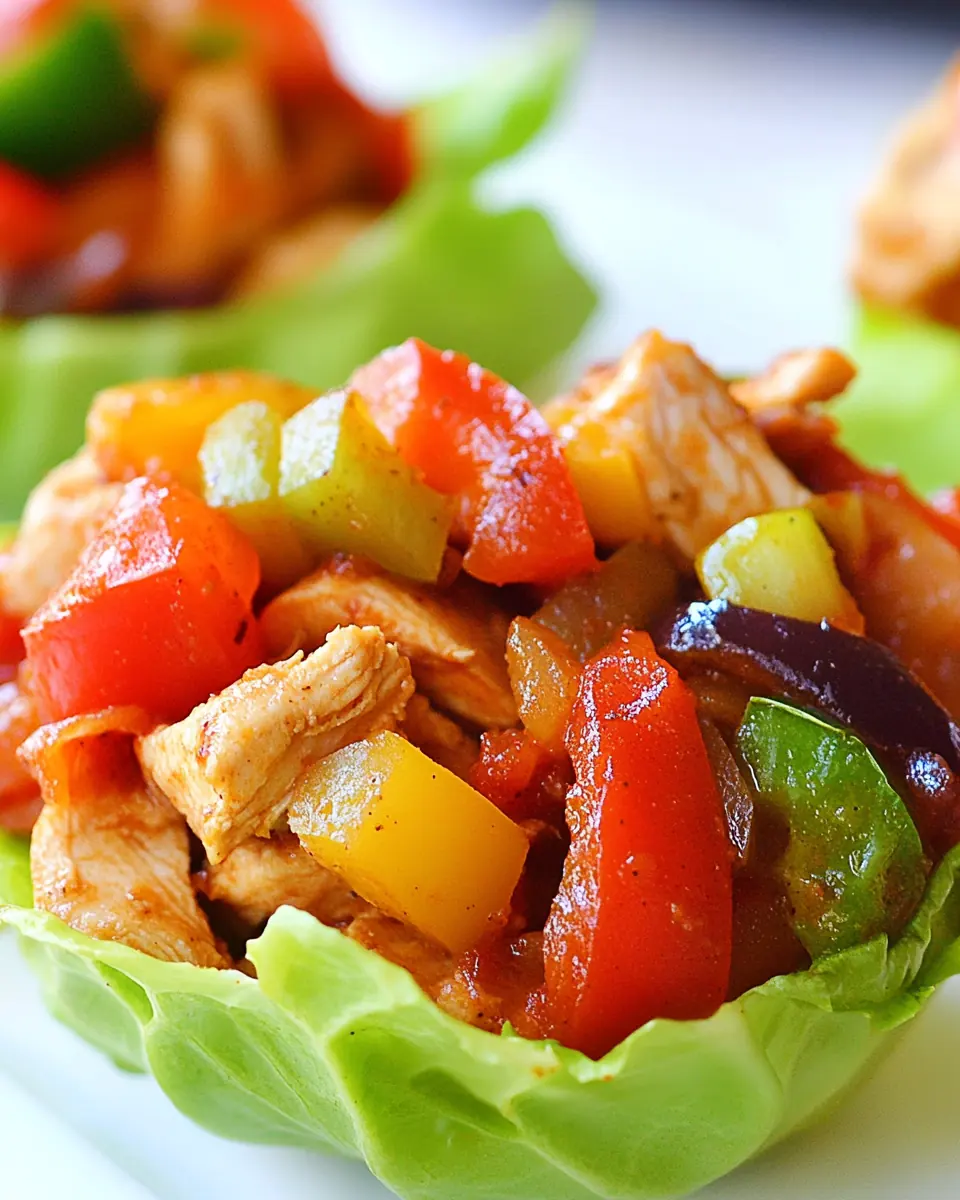
Drizzle olive oil into skillet over medium heat. Add chicken tenderloins and cook until browned on one side, about 5 minutes. Using tongs, turn chicken to the other side. Once cooked throughout, remove from skillet to a plate and set aside. Toss peppers and onions into skillet and add Worcestershire sauce. Using tongs, move peppers and onions around in the skillet to make sure they are coated and cook on all sides. Once browned and tender, about 3 minutes, add back chicken along with any drippings. Remove from heat and set aside for serving.: The moment the olive oil warms, you should see a faint shimmer and smell a light, fruity aroma. That shimmer tells you the oil is hot enough to sear without burning. A proper medium heat gives you a steady sizzle when the chicken hits the pan; too low and you will get pale, steamed meat, too high and the oil will smoke and impart bitterness. A common mistake is crowding the skillet, which cools the surface and prevents browning.
Arrange lettuce leaves, chicken and peppers, and all toppings for a self-serve fajita lettuce wrap station.: As the chicken makes contact, listen for an energetic sizzle and watch edges turn opaque. Browning creates complex flavors through caramelization, and after about 5 minutes you should see a golden crust form on that side. If the meat sticks badly, it likely needs a bit more time before turning. Avoid flipping too early or you will tear the surface and lose the fond.
Using tongs, turn chicken to the other side: When you flip, the release from the pan should be clean, and you will notice the second side catching color. The scent will deepen as the heat penetrates. Turning with tongs lets you control contact pressure so you do not flatten the tenderloins. A mistake here is pressing down, which squeezes juices out and dries the meat.
Once cooked throughout, remove from skillet to a plate and set aside: The chicken should register opaque in the center and feel springy, with juices running clear. Resting on a plate preserves juiciness and allows carryover cooking to finish gently. If you skip resting and slice immediately, the juices will escape and the meat will be drier.
Toss peppers and onions into skillet and add Worcestershire sauce: When you add the sliced bell pepper and onion , they should hit the hot pan with a lively hiss and begin to soften within moments. The Worcestershire sauce will steam and mingle, adding savory umami notes that cling to the vegetables. Stir them so the sauce distributes; failing to coat evenly leaves pockets of under seasoned veg.
Using tongs, move peppers and onions around in the skillet to make sure they are coated and cook on all sides: Rotate the vegetables so each side gets contact with the pan and a bit of char. You want a mix of tender flesh and slightly blistered skin, which adds sweetness and texture contrast. Keep an eye on timing because overcooking will make them limp and lose their bright color, a common pitfall for busy cooks.
Once browned and tender, about 3 minutes, add back chicken along with any drippings: When the veg shows golden edges and fragrant steam, return the chicken and the juices to the skillet so flavors recombine. The meat will reheat and pick up pan flavors; that final minute of mingling seals the dish. If you rush this step you may serve lukewarm chicken, so allow a few moments for everything to come together.
Remove from heat and set aside for serving: Pull the skillet off the burner and inhale the sweet roasted aroma. Let the pan rest so the heat evens out before transferring components to the table. Leaving the skillet on the heat can continue cooking and over soften the vegetables, which reduces their texture contrast.
Arrange lettuce leaves, chicken and peppers, and all toppings for a self-serve fajita lettuce wrap station: Lay out the lettuce as cool, crisp boats and pile on warm chicken and roasted veg. Add bowls of sour cream , sliced avocado , pico de gallo , and salsa so everyone can customize. The variety of textures is important here, as the crisp lettuce balances the warm, juicy filling. A common oversight is not drying lettuce leaves well enough, which causes soggy wraps; always pat them dry thoroughly.