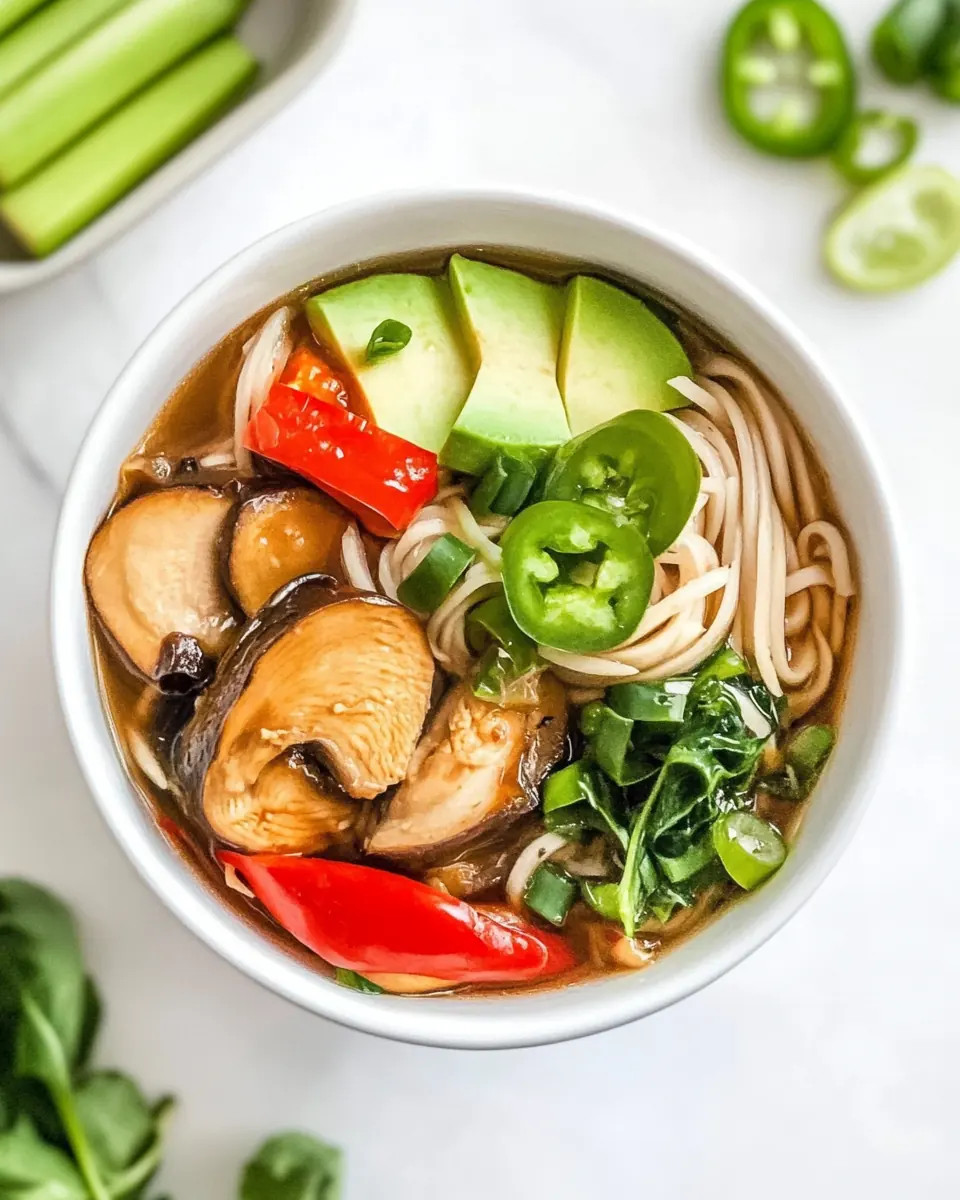
In a large pot, bring the chicken stock, water, rice vinegar, soy sauce, sesame oil, ginger and garlic to a boil. Add the thinly sliced chicken and simmer for 5-7 minutes, until just cooked through. Add the noodles. Stir, then cover and remove from heat.: The moment the liquid heats, a fragrant steam will rise with warm, toasty notes of sesame oil and the bright bite of ginger . You should hear a soft rolling roar as the surface moves and see tiny bubbles congregating along the pot edges, signaling that the aromatics are releasing into the liquid. This step builds the flavor foundation, allowing the infused broth to carry every ingredient that follows. One helpful tip is to monitor heat carefully, because boiling too vigorously will reduce the delicate aromatics and can make the broth cloudy; aim for a steady but lively boil. If your stock smells flat at this stage, increase the heat a touch and let it steep briefly to liven the flavors. A classic mistake is rushing this stage, which can leave the final soup lacking depth.
Meanwhile, chop all the veggies and place in serving bowls. When ready to serve, allow each person to fill their bowls with fresh vegetables and a bit of chile sauce.: As the chicken hits the hot broth, you will see the slices change from translucent to opaque, curling slightly along the edges, and the surface will show delicate white strands where proteins firm up. You should notice a gentle simmer sound rather than a hard boil, which keeps the chicken tender and silky. This gentle poaching yields moist meat that soaks up the umami of the broth without becoming rubbery. Use a spoon to gently separate slices so they cook evenly. A common pitfall is overcooking, which makes the chicken tough and dry, so remove it as soon as the center loses translucence.
Ladle the scalding hot soup over the veggies and let them sit for 5 minutes. Mix and enjoy!: When you slip the noodles into the pot, they will immediately begin to soften and plump, absorbing some of the broth and gaining a glossy sheen. Stir once or twice to prevent clumping, then cover the pot and remove it from the heat so the residual heat finishes the job. This technique keeps the noodles supple without becoming mushy, preserving a pleasant chew. The sound will quiet as the pot cools, and the aroma will grow more integrated. Avoid boiling the noodles aggressively in the pot, because overcooked strands will lose texture and make the bowl heavy.
Meanwhile, chop all the veggies and place in serving bowls: Preparing the fresh elements while the broth simmers is practical and creates vibrant contrast. As you slice the bok choy , separate stems and leaves for even texture; the stems are denser and give a satisfying snap, while the leaves wilt tenderly under hot broth. Arrange the mung bean sprouts , sliced mushrooms , and chopped green onions in each bowl so everyone can personalize their bowl. The visual pop of green and white makes the final presentation inviting, and the crispness of raw veggies will stand up to the hot broth. A misstep here is overcrowding bowls, which can prevent the hot broth from evenly poaching the ingredients.
When ready to serve, allow each person to fill their bowls with fresh vegetables and a bit of chile sauce: This is the moment of assembly where diners tailor their experience. Encourage guests to add a spoonful of chile-garlic sauce for heat, or to keep it mild if they prefer. The aromas of raw green onions and spicy sauce will lift the senses, and the bowls will look colorful and fresh. Letting people build their bowls also keeps vegetables crisp, since they are not sitting in broth for long periods. Don't let bowls sit too long before the broth is ladled over them, because prolonged waiting will cause wilted greens and limp textures.
Ladle the scalding hot soup over the veggies and let them sit for 5 minutes: The dramatic pour is half the fun and is essential for cooking the fresh items gently while melding flavors. You should hear the satisfying hiss of hot liquid meeting cool vegetables, and steam will swirl up as the heat instantly softens stems and slightly cooks leaves. Waiting about five minutes allows the mushrooms to open, the bok choy to tenderize, and the noodles to finish soaking up the broth, creating a harmonious texture palette. This short steeping time ensures everything is warmed through without losing crispness. A common mistake is pouring lukewarm broth, which fails to properly poach the ingredients and dimishes the transformative finish.
Mix and enjoy: After the brief sit, stir the bowl so the broth touches every element, releasing final bursts of aroma from the garlic and ginger , and melding the heat from the chile-garlic sauce . You will taste layered sensations, from savory umami to bright vinegar lift and a toasty sesame finish. Spoons will scrape noodles and sprouts, and you will notice the contrast between tender chicken and crisp vegetables. If a bowl tastes underseasoned, add a little more soy sauce or a dot of sauce, but add sparingly to avoid overpowering the balance. Avoid letting bowls sit uncovered, as this cools the broth and flattens the aromatic profile.