Preheat the oven to 400°F. Set out a 12-inch cast-iron skillet to use on the stovetop and place in the oven. If you don't have one, you can use a regular skillet and transfer the filling to a 9 x 9-inch baking dish.: The kitchen fills with warmth as the oven comes to temperature, and the air takes on a faint toasty scent that hints at the golden crust ahead. Preheating ensures the puff pastry responds with dramatic puffing once it hits a hot environment, sealing steam and creating flaky layers. A common mistake is not preheating, which can lead to a soggy, under risen crust, so always verify the oven reads the correct temperature before baking. You should feel confident that a steady, hot oven gives a crisp exterior and a properly set filling.
Place the skillet on the stovetop. Add the butter, onions, celery, and garlic. Sauté the veggies over medium heat for 3-4 minutes. Add the flour, dried thyme, and dried sage to the vegetables. Season liberally with salt and pepper. Cook for another 2-3 minutes, stirring regularly.: As the butter melts, it should become glossy and fragrant, releasing the sweet aroma of sautéing onion and the fresh green note of celery . You will hear a gentle sizzle when the vegetables hit the hot fat, which is the sound of flavor development. This step matters because the softened aromatics form the base of the sauce, creating depth. Avoid cooking over excessively high heat, which can brown or burn the aromatics and introduce bitter flavors; medium heat preserves a sweet, mellow profile.
Add the chicken broth, and stir well to create a gravy. Add in the frozen mixed vegetables, chopped chicken, and heavy cream. Stir until well combined. Then turn off the heat. Taste, and salt and pepper again if needed.: The mixture will thicken into a pasty roux and take on a faintly nutty scent as the flour cooks. Stirring constantly keeps the texture lump free and allows the herbs to release aroma without scorching. The 'why' here is crucial: cooking the flour removes raw starchy flavors and ensures the gravy will finish smooth. A typical mistake is rushing this step and leaving raw flour taste, so be patient and watch for a slightly toasted, beige color and a cohesive, glossy texture.
Lay the thawed puff pastry sheets on a clean work surface. If you plan to bake the pot pie in the cast-iron skillet, overlap the two puff pastry sheets in a star shape with eight points. Then roll the two sheets together making sure the center of the sheets is wide enough to cover the whole 12 inches of the skillet. *If transferring the chicken pot pie filling to a 9 x 9 inch baking dish, layer the two puff pastry sheets together in a perfect square and roll them together.: When the chicken broth hits the roux, it loosens into a silky gravy that should slowly thicken as it simmers; the steam will smell savory and warming. Folding in the frozen mixed vegetables and chopped chicken chills the filling slightly, which helps prevent the crust from sinking later. The final stir of heavy cream smooths the sauce and adds richness. A common misstep is boiling vigorously after adding the cream, which can break the emulsion; keep the heat gentle and finish off heat for the creamiest result.
Carefully move the puff pastry sheet to the top of the skillet. Make sure the edges hang over a little bit, this helps keep the puff pastry sheet from sinking into the filling as it bakes.: The puff pastry sheets should feel cool and slightly tacky to the touch, and when overlapped they create a sturdy, buttery top. Rolling them together spreads the layers so you can cover the vessel evenly. This technique matters because an even sheet ensures uniform puff and prevents thin spots that burn. One mistake is over handling the pastry, which warms the butter layers and reduces lift, so work briskly and keep the dough chilled until ready to place.
In a small bowl, whisk together the egg and 1 tablespoon of water. Brush the egg wash over the surface of the puff pastry. Then use a small knife to cut steam vents in the top of the puff pastry.: As you drape the pastry, the contrast between the steaming filling and the cool dough is striking; the pastry will respond by softening at contact, but the overhang helps anchor it so it does not sink. The visual cue to aim for is an even cover with a slight overhang and no large gaps where steam might escape unevenly. A common error is pressing the pastry into the filling, which can prevent proper puffing, so gently arrange it and allow the filling to exhale steam through vents later.
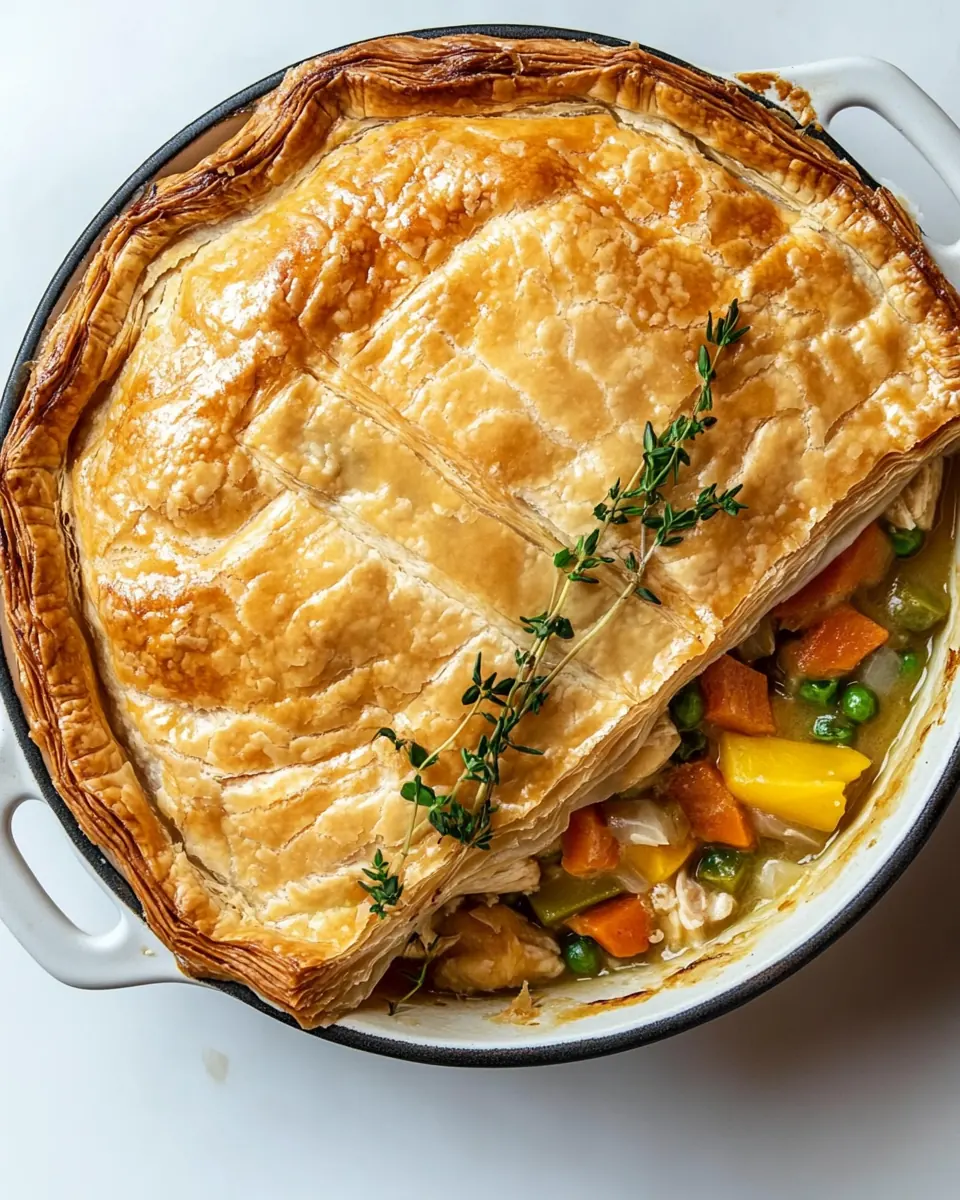
Carefully place the skillet in the oven and bake for 30-35 minutes, until the puff pastry is fully puffed up and golden-brown, and the edges are bubbly. If the puff pastry starts to get too dark around any of the edges, loosely tent the top with foil and continue baking.: The egg wash creates a glossy, deeply golden finish that shimmers in the oven light, while the vents permit controlled steam release so the layers separate and lift. You will hear the pastry make a soft crackle as it browns, and visually the top will go from pale to amber. Avoid applying too much wash so it does not pool and cause soggy areas; a light, even coat is perfect.
Allow the pot pie to rest for 5 minutes then cut and serve.: The first minutes in the oven produce a dramatic rise and a rich, toasty aroma. Look for a deep golden color and areas where the pastry has separated into distinct flaky layers; the edges should be bubbly where filling meets crust. Tent with foil if you see over browning, which preserves color while allowing bake through. A common mistake is under baking to hurry the meal, which leaves doughy layers; ensure the center is hot and the crust is uniformly colored for the best texture.
Allow the pot pie to rest for 5 minutes then cut and serve.: Resting lets the filling set slightly so it will not run out when you slice, and the steam settles into a warm, comforting scent that heightens the experience. You will notice a firmer body and clearer layers when you cut, making serving cleaner and more appealing. Avoid serving immediately from the oven to prevent burns and an overly loose filling; a brief pause is all you need for perfect slices.