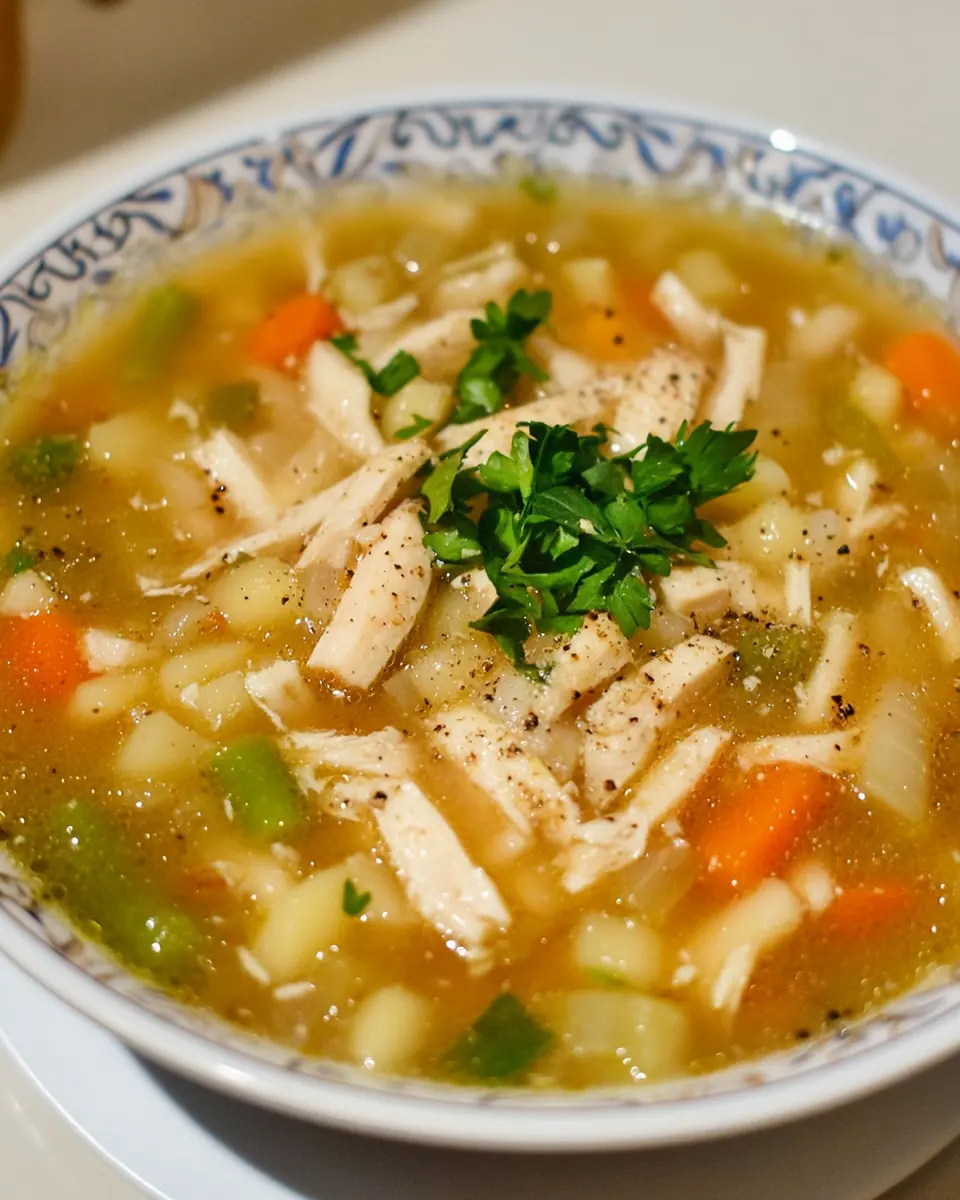
Place over medium heat a stock pot with water and add all the above ingredients (not the pasta). Add more water to cover and cook at medium low, with the lid half covering the pot for 45 minutes.: As the pot comes up to temperature you will hear a gentle rise in sound, a steady, low simmer that signals extraction. The aroma will shift from raw vegetables to a mellow, savory chorus as chicken collagen and vegetable sugars begin to leach into the water. This initial simmer is crucial for making a flavorful broth, it extracts gelatin from the bones and aroma from the aromatics, which sets the foundation for the soup. A typical mistake is boiling too vigorously, which agitates the liquid and clouds the broth, so maintain a gentle simmer. Keep an eye on the pot for foam on the surface during the first 10 to 15 minutes and skim it off with a spoon to keep flavors clean. If your stove runs hot, lower the heat slightly to prevent too rapid evaporation, which would concentrate the liquid prematurely.
When all the vegetables are tender, and the chicken fully cooked, remove from the heat and let cool for 15 minutes. In a food processor place all the vegetables and puree it all. Clean the chicken from the bones and puree as well.: The half covered lid allows steam to escape while keeping most of the heat and moisture inside, which helps flavors concentrate slowly. You will notice tiny bubbles and a soft, steady chatter as the broth simmers, and the vegetables will begin to soften and blur at their edges. This gentle evaporation concentrates savory notes and mellows sharpness from the leeks and garlic . Avoid sealing the pot completely, or you risk boiling too hard and breaking down delicate textures too fast. Check occasionally to ensure the liquid level remains sufficient to cover the ingredients, adding a splash more water if needed. A common error is rushing the process with high heat, which results in a flatter tasting broth and tougher chicken .
Return it to the stock pot and keep warm. If it is too thick, more water can be added.: Cooling slightly before handling makes it safer to separate the meat from bones and prevents burns when blending. You will sense a deeper aroma as the temperature drops, with sweetness and savory notes rounding out. This rest period lets the flavors settle and the stock clarify a bit. Resist the urge to plunge into the next step immediately, as hot liquids splatter when processed. A common pitfall is trying to shred hot chicken while still steaming, which can be messy and cause scalding, so allow the fifteen minutes to pass.
At this point I cooked small rings (ditalini) egg pasta. When done I drain and place some of the pasta in a soup bowl and add the soup over it.: As you pulse the cooked vegetables, the texture transforms to a silky, velvety body that will thicken the soup. The smell becomes concentrated and slightly sweet, with green notes from the zucchini and aromatic depth from the leeks and garlic . Pureeing helps integrate flavors evenly and creates a luscious mouthfeel. Be careful not to overfill the processor, blend in batches if needed, and pulse to control the texture. A mistake here is blending everything too long without allowing steam to escape, which can lead to splatters or an overly thin puree if you add too much water to cool it.
Clean the chicken from the bones and puree as well: Processing the cooked chicken with some broth gives the soup body and protein dispersed through the bowl, creating a comforting, cohesive texture. You will notice a savory, meaty aroma as the chicken is pureed, and the small particles help thicken the soup naturally. The why is clear, it lets each spoonful carry both protein and vegetable flavor. One troubleshooting note, avoid overprocessing into a paste if you prefer a little texture, pulse to achieve the desired consistency. Also, if any small bone fragments remain, remove them carefully to avoid an unpleasant surprise.
Return it to the stock pot and keep warm: Reuniting the pureed vegetables and chicken with the strained broth brings everything together, and gentle warmth helps the flavors marry. You will see the soup take on a cohesive color and sheen, and the aroma should be balanced and inviting. If the mixture seems too thick, add reserved cooking water a little at a time until you reach the mouthfeel you like. Over thinning will dilute flavor, so adjust patiently. A typical mistake is bringing it to a rapid boil here, which can separate the texture or over reduce the flavors, so keep the heat low and stir gently.
If it is too thick, more water can be added: Adding warm water adjusts the viscosity without shocking the soup, and it lets you tune the balance between concentration and drinkability. When you add liquid, stir and taste, because it is easier to add than to take away. The soup should coat the back of a spoon while still moving freely. A common error is adding cold water, which can cool the soup unevenly and change the perception of seasoning, so use warm or hot water from the kettle if needed.
At this point I cooked small rings (ditalini) egg pasta: Cooking the small pasta separately creates distinct textural contrast and prevents it from soaking up too much broth during storage. As the pasta finishes, it gives a gentle al dente bite and a toasted wheaty fragrance that complements the silky soup. Drain and quickly rinse under warm water to stop cooking if you are not serving immediately. The common pitfall is adding the pasta directly to the pot too early, which causes it to plump and become mushy over time, especially when stored in the refrigerator.
When done I drain and place some of the pasta in a soup bowl and add the soup over it: The final assembly is about balance, the small shapes rest at the bottom and the warm soup nestles around them, delivering a variety of textures in each spoonful. You will notice steam rising and a mingling of aromas as the bowl comes together. Serve immediately for the best contrast between the tender pasta and the silky soup. A mistake to avoid is letting the assembled bowl sit too long before serving, because the pasta will continue to hydrate and alter the intended mouthfeel.