Mix all ingredients together.: The moment you stir the salsa, you should notice a bright citrus perfume rising from the bowl and the individual colors melding visually. Gentle stirring distributes the lime and lemon juices through the corn and beans, coaxing flavors to marry without bruising delicate pieces. Listen for the soft clink of the spoon on the bowl and watch the salsa glisten, a sign that the citrus is coating each kernel. Why this matters, the even coating keeps each bite balanced and prevents pockets of blandness. One common mistake is overmixing to the point where the beans break down, creating a mushy texture. Be gentle and fold until everything is just combined.
Chill while preparing the chicken.: Chilling the salsa lets the flavors settle, giving the lime and salt time to permeate the corn and black beans so the taste deepens. You will notice the salsa cool and tighten slightly as it sits, which helps it hold up on top of warm chicken without immediately running. This rest also allows you to focus on properly searing the chicken without rushing the assembly. A pitfall is leaving it too long uncovered which can dry the surface; cover it lightly to keep moisture.
In a large zip top bag or container, combine the chicken, lime juice, taco seasoning, and 1 tablespoon oil and mix to coat the chicken.: When you massage the marinade into the cutlets, you should feel them become evenly slick and scented with spice. The oil helps the seasoning adhere, while the lime gives a touch of tenderness. Mixing in a bag keeps your hands clean and guarantees even distribution; squeeze any air out before massaging. This step primes the chicken for a flavorful crust. A common error is adding too much acid which can make the surface mushy, so keep the contact brief if your lime juice is very concentrated.
Heat a large skillet with 1 tablespoon over medium high heat. Once hot, add the chicken in a single layer and let cook for 2-3 minutes without moving. Flip to the other side, reduce heat to low and cover. Cook chicken until done, 165˚F internal temp. Remove from skillet. If there is too much chicken for a single layer in the skillet, repeat with the rest of chicken.: Heat the skillet until a drop of water dances and evaporates on contact, a clear sign it is hot enough. The oil should shimmer and thin, but not smoke. This quick heating is what creates that satisfying sizzle when the chicken hits the pan. Properly preheating prevents sticking and promotes browning. Avoid adding chicken to a cold pan as it will steam instead of sear, producing a pale and limp surface.
Flip to the other side, reduce heat to low and cover. Cook chicken until done, 165˚F internal temp. Remove from skillet.: When the chicken first makes contact, listen for a steady sizzle, and watch edges begin to turn golden. That initial stillness allows a crust to form, which locks in juices. The aroma will shift from neutral to toasty and savory as the Maillard reaction happens. Resist the urge to peek too often, since flipping prematurely can tear the surface and prevent proper browning. A typical mistake is crowding the pan, which causes the temperature to drop and invites steaming rather than searing.
If there is too much chicken for a single layer in the skillet, repeat with the rest of chicken.: As you flip, you should see a confident golden exterior; lowering the heat and covering helps the chicken cook through gently without burning the outside. The cover traps heat and creates an even cooking environment so the interior reaches a safe temperature while staying moist. You might hear a softened sizzle under the lid and smell intensified spices. Avoid leaving the skillet uncovered at this lower heat as the exterior can dry before the center cooks.
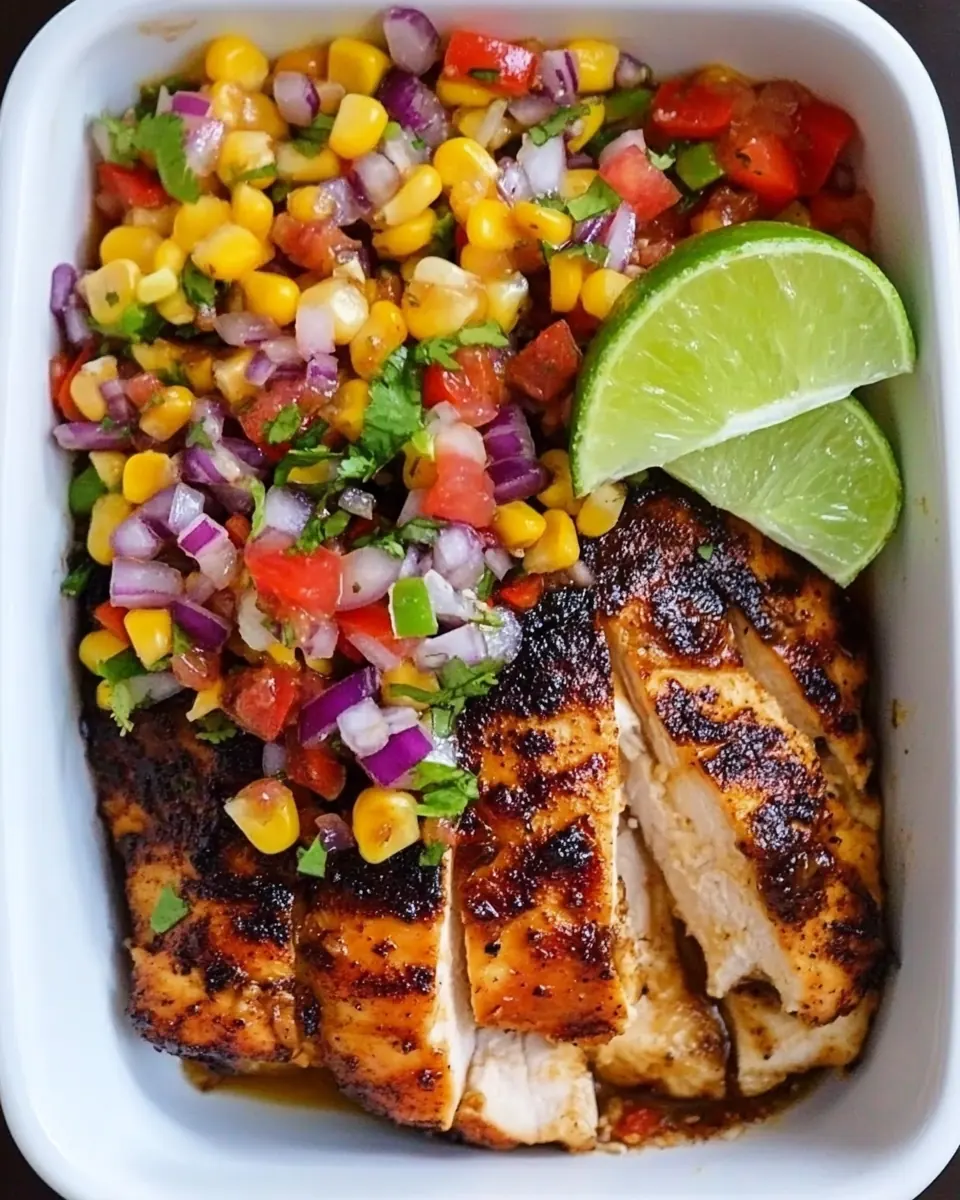
Serve each chicken breast with a scoop of corn salsa on top. Enjoy!!: Use an instant read thermometer inserted into the thickest part to confirm doneness, the most reliable cue beyond sight and feel. At the correct temperature the juices run clear and the meat gives slightly under pressure but is still springy. This precision prevents both undercooking and dryness. A common mistake is relying only on color, which can be misleading; temperature is the best judge.
Remove from skillet: Once the chicken reaches temperature, transfer it to a plate and let it rest for a few minutes. Resting lets the juices redistribute, making slices juicier and more tender. The residual heat continues gentle cooking so pull it slightly shy of the target if you prefer a tiny carryover. Avoid cutting immediately which causes precious juices to spill out onto the plate.
If there is too much chicken for a single layer in the skillet, repeat with the rest of chicken: Cook the remaining pieces in batches to preserve pan heat and achieve consistent browning. Repeating the process keeps each piece from steaming and ensures even texture across the batch. Between batches, let the pan reheat briefly so it regains that initial sizzle. A mistake is trying to cram everything in at once, producing unevenly cooked pieces with less flavor development.
Flip to the other side, reduce heat to low and cover: This instruction reiterates the importance of finishing the cooking gently, creating a tender interior while protecting the seared exterior. Listen for the softened sizzle under cover and watch that the meat does not shrink excessively which can indicate overcooking. The low and covered finish preserves juiciness. Avoid high heat finishes which can toughen the surface while leaving the center undercooked.
Cook chicken until done, 165 6F internal temp: Final verification with an instant read thermometer ensures safety and optimum texture. At this point the chicken should feel firm but not hard, and the aroma will be savory and seasoned. If a piece is under, return it briefly to the pan rather than extending the covered time excessively. The most common misstep is assuming all pieces reach temperature at the same moment, so check the thickest cut.
If there is too much chicken for a single layer in the skillet, repeat with the rest of chicken: Finish any remaining batches exactly as before, keeping timing and heat consistent so all pieces share the same browning and doneness profile. Maintain a steady rhythm to avoid overcooking earlier batches while finishing the rest. A trap here is letting cooked pieces sit in a hot pan where residual heat can overcook them, so transfer to a warm plate instead.
Serve each chicken breast with a scoop of corn salsa on top: The final assembly is where contrasts meet, and as you spoon the salsa onto warm chicken you will notice steam rising and the fresh aromas brightening further. The salsa should sit happily without immediate wilting, offering zesty, textural contrast. Serve promptly so the warm and cool elements reach the diner together. Avoid long waits after plating, because the salsa will lose its crisp edge if left too long.
Enjoy!!: Savor the layered flavors, and notice how the citrus lifts each bite while the spice and sear deliver savory depth. Encourage conversation at the table, as this is one of those dishes that invites second helpings. The only real mistake is eating it cold from the fridge, so rewarm if needed to reclaim that freshly prepared charm.