Heat a large skillet or wok on medium high heat for 3 to 5 minutes. When the pan is hot, swirl in the avocado oil and add the green beans.: The moment you introduce the avocado oil the pan should sing slightly as it heats, and you will see the oil shimmer, indicating it is ready. When the green beans hit the surface you'll hear an immediate sizzle, a lively popping that tells you the pan is doing its job. That sizzle encourages blistering which leads to caramelized flavors and a slightly smoky aroma. Visually, you're aiming for small brown flecks appearing on the bean surfaces while the overall color stays bright green. One common mistake is overcrowding the pan, which causes steaming rather than blistering. If the beans sit in a cold bath of oil, they will turn limp instead of getting that desirable snap. Another tip is to give the beans a quick toss or shake rather than constant stirring so hot spots develop, creating uneven but appealing char. Keep an eye on the heat and reduce it if the oil starts to smoke aggressively.
Cook, stirring frequently, for 3 to 5 minutes or until the green beans are blistered and tender. Transfer the cooked green beans to a platter, leaving the oil in the skillet.: As you cook, listen for the change in sound from vigorous popping to a steadier sizzle, and watch the beans carefully for patches of brown that indicate blistering. The smell will deepen as sugars caramelize, adding a subtle toasted scent that complements the vegetal notes. The interior should remain slightly firm, offering a satisfying bite, not mushy. When the beans reach this point, move them to a platter to prevent overcooking, while leaving the flavored oil behind. A frequent error I see is leaving the beans in the skillet while preparing the sauce, which steams them and softens their texture. Removing them early preserves that crisp tenderness and ensures they finish perfectly when returned to the sauce later. If some beans are thicker, poke one to check doneness before plating them off.
Turn down the heat to medium and add the minced garlic to the empty pan. Cook, stirring frequently, until the garlic is fragrant. Don't burn the garlic! Pour in the broth and scrape up the browned bits. Bring the sauce to a simmer.: Once you lower the heat, add the generous amount of minced garlic and pay attention to aroma. You'll notice a rapid shift from raw sharpness to a warm, nutty fragrance as the garlic softens and releases its oils. Stir frequently so pieces brown evenly, and the moment they turn a soft golden hue, quickly pour in the broth . The broth will hiss as it meets the hot pan, and you should use a wooden spoon to scrape up the fond, those caramelized brown bits that hold concentrated flavor. Bringing the sauce to a gentle simmer lets it reduce slightly and thicken just enough to cling to the beans later. The key mistake here is allowing the garlic to darken past golden, which results in bitterness. If you see dark flecks forming too quickly, remove the pan from heat for a few seconds while adding the broth to cool the pan.
Next, add the coconut aminos, and Umami Stir-Fry Powder, Spicy Sichuan Powder, or Diamond Crystal kosher salt and stir up any browned bits. Taste and adjust the sauce for seasoning.: At this stage you'll introduce the coconut aminos and your finishing seasoning, which will deepen the sauce and add a counterpoint to the garlic . As you stir, small bubbles will form and the sauce will take on a glossy sheen, signaling that everything is melding. Taste carefully, because the powdered blends or salt can vary in intensity. The ideal balance is savory with a hint of sweetness, and if you opted for the Sichuan style powder you'll detect a mild numbing warmth layered in. A common pitfall is oversalting; add a little, taste, and then add more if needed. Also avoid reducing the sauce too far at this point, or it can become too concentrated and overpower the delicate bean flavor.
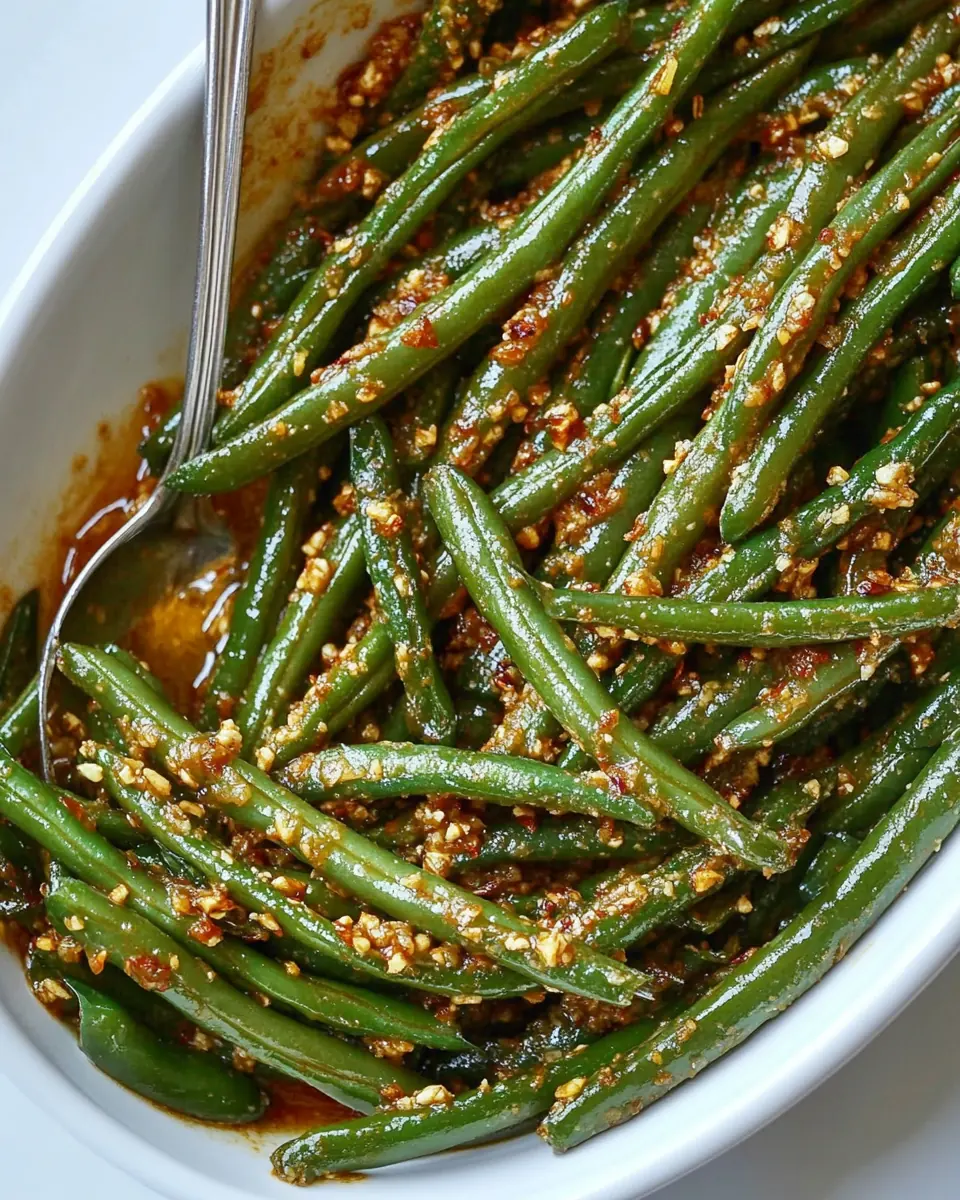
Add the blistered green beans back in the pan and toss well to coat the beans with the garlic sauce. Plate and serve!: When you return the green beans to the skillet, you'll hear the sauce hiss and see it cling to the blistered skins. Use tongs or a spatula to toss them thoroughly so every bean is sheathed in the aromatic, glossy coating. The final mouthfeel should combine the bean's snap with the silky sauce and pops of garlic . Serve immediately to enjoy the contrast between warm beans and the fragrant sauce. A mistake to avoid is letting the beans sit too long after tossing, which softens their texture and dulls the bright color. If you need to hold them briefly, keep them loosely covered but not sealed, so steam does not make them soggy.