Stir together 2 tablespoons of oil and all remaining 'Shrimp' ingredients in a freezer size plastic bag or an airtight container. Add shrimp, seal tightly and turn to coat. Let the shrimp rest on the counter for 15 minutes.: You will smell the citrus and warm spices as they mingle, which signals the marinade is active. The lime juice and adobo blend into the oil, carrying the aroma of minced garlic and chipotle through the mixture. When the shrimp hits the marinade, it should look glossy and evenly coated, not clumped. The acid from the lime begins to lightly cure the surface, which helps the flavor penetrate quickly. A common mistake is overcrowding the bag, which prevents even coating; spread the shrimp in a single layer if possible so each piece soaks up flavor. If you have time, a brief ten to fifteen minute rest lets the flavors meld, though the dish is forgiving if you proceed sooner.
Heat a large stainless steel pan over medium-high heat. Add the remaining 2 teaspoons of olive oil to the pan and swirl to coat.: As you work the bag, you should feel the marinade lubricate every piece of shrimp , and visually each shrimp will appear uniformly speckled with spices and herbs. Light pressure against the bag helps the marinade reach crevices around the tails. This tactile step ensures no bit is left bland. Avoid leaving the shrimp in the marinade for too long, because extended acid exposure can change the texture toward mushy; the goal here is flavor enhancement, not full cure. If you are prepping ahead, refrigerate rather than leaving at room temperature for safety reasons.
Add shrimp in a single layer and discard any remaining marinade. Let shrimp cook for 2 minutes then turn over and cook an additional 1 minute or until they’re pink. Increase the heat to high for 30-60 seconds to slightly reduce any liquids. Remove shrimp from the pan when they’re finished cooking.: During this rest, the air will carry the citrus and smoky notes, and you will notice the marinade cling more firmly to the shrimp . The short waiting period allows the surface flavors to set, which helps create a caramelized exterior when you cook. Pay attention to texture, the shrimp should still feel springy; if it becomes floppy, it has sat too long. A common error is to over-marinate in acid, which changes the texture, so stick close to the recommended resting time for the best result.
Divide rice between 4 bowls and top with shrimp and other desired Burrito Bowl ingredients. Drizzle with Cilantro Lime Dressing. Shrimp can also be served on top of a salad or in wraps.: You want a hot pan that will give you immediate contact and sizzle. Stainless steel will show a thin shimmer when it is at the right temperature, and a drop of water should dance across the surface. That audible sizzle is your cue that the pan is ready to sear, not steam, the shrimp . If the pan is not hot enough the shrimp will release moisture and braise instead of browning. Avoid using a cold pan, because that robs the shrimp of the caramelized crust that carries so much flavor.
Add the remaining 2 teaspoons of olive oil to the pan and swirl to coat.: The oil should shimmer but not smoke, and you will smell a faint toasted note. Swirling ensures an even slicking so the shrimp does not stick and browns uniformly. If the oil begins smoking, reduce the heat slightly to avoid burning the spices in the marinade. A typical pitfall is adding shrimp to a dry pan, which causes sticking and tears; the thin film of oil prevents that and encourages clean browning.
Add shrimp in a single layer and discard any remaining marinade.: Laying the shrimp in one layer ensures each piece touches the pan and forms a golden edge. You should hear a healthy sizzle right away. Discarding the leftover marinade prevents excess liquid from steaming the shrimp and creating a diluted flavor. Watch for even spacing; overcrowding lowers the pan temperature and results in uneven cooking. If your pan cannot fit all the shrimp comfortably, cook in batches to preserve that lovely sear.
Let shrimp cook for 2 minutes then turn over and cook an additional 1 minute or until they’re pink.: In these minutes you will see the shrimp transition from translucent to an opaque pink with slightly curled tails. The exterior should show light golden caramelization where the sugars in the marinade have toasted. Listen for a steady sizzle and look for minimal liquid pooling in the pan, which means the heat is right. Overcooking is the most common mistake here; once pink and opaque, remove them promptly because they will continue to firm slightly as they rest.
Increase the heat to high for 30 to 60 seconds to slightly reduce any liquids.: That final burst concentrates the pan flavors, caramelizing residual marinade and intensifying aroma. You will notice a deeper toast color and a richer scent of chipotle and honey. Keep the shrimp moving just a little so nothing scorches, and watch carefully because sugars burn quickly at high heat. If you leave them too long, the shrimp can become tough, so this is a short, purposeful step to finish the flavor profile.
Remove shrimp from the pan when they’re finished cooking.: Once out of the heat, the shrimp relax and the juices redistribute. On a plate they will hold their opaque pink hue and tender bite. Letting them sit briefly prevents residual pan heat from overcooking them. A common oversight is plating directly into a warm bowl and returning them to heat; resting on a cool surface for a minute preserves peak texture.
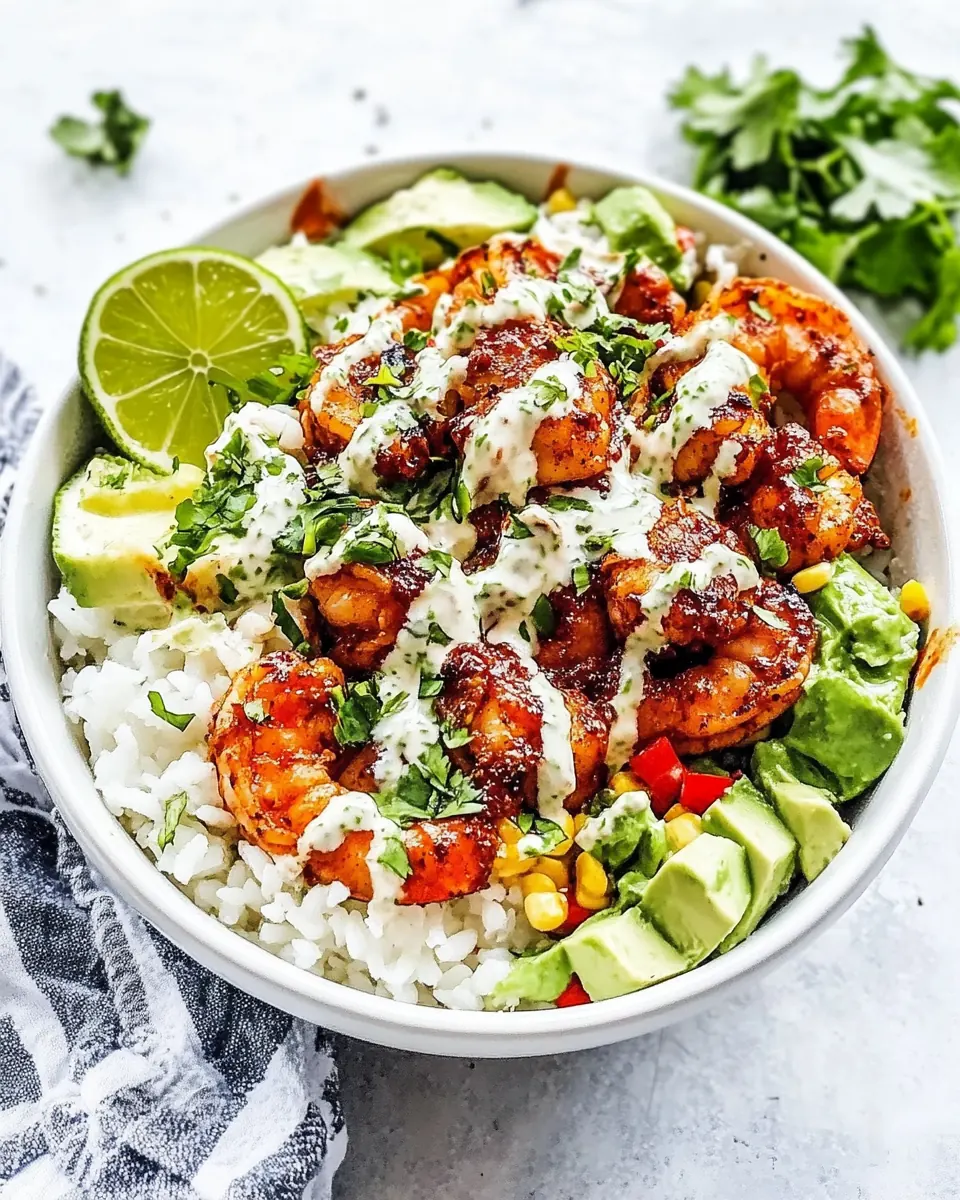
Divide rice between 4 bowls and top with shrimp and other desired Burrito Bowl ingredients.: As you assemble, the steam from the hot rice will warm the beans and melt a little of the dressing into the grains, creating pockets of flavor. Arrange the toppings so each spoonful gets a bit of everything, and note how colors and textures balance visually. If your rice seems dry, a squeeze of fresh lime brightens it without adding fat. Avoid piling everything in one corner; distributing toppings ensures consistent flavor in every bite.
Drizzle with Cilantro Lime Dressing.: The creamy dressing binds the components, softening heat and adding a herby finish. Look for a pale green gloss across the bowl which signals even coverage. If you prefer, serve the dressing on the side so everyone can control creaminess. A mistake to avoid is over dressing, which can drown delicate flavors rather than complement them.
Shrimp can also be served on top of a salad or in wraps.: Serving options are flexible, and you will notice different textures when the shrimp meet crisp greens or a soft tortilla. On salad, the warm shrimp slightly wilts leaves for a pleasing contrast, while in a wrap they create handheld convenience. If you choose wraps, warm them briefly so they are pliable, and don’t overfill, because that makes wrapping messy.