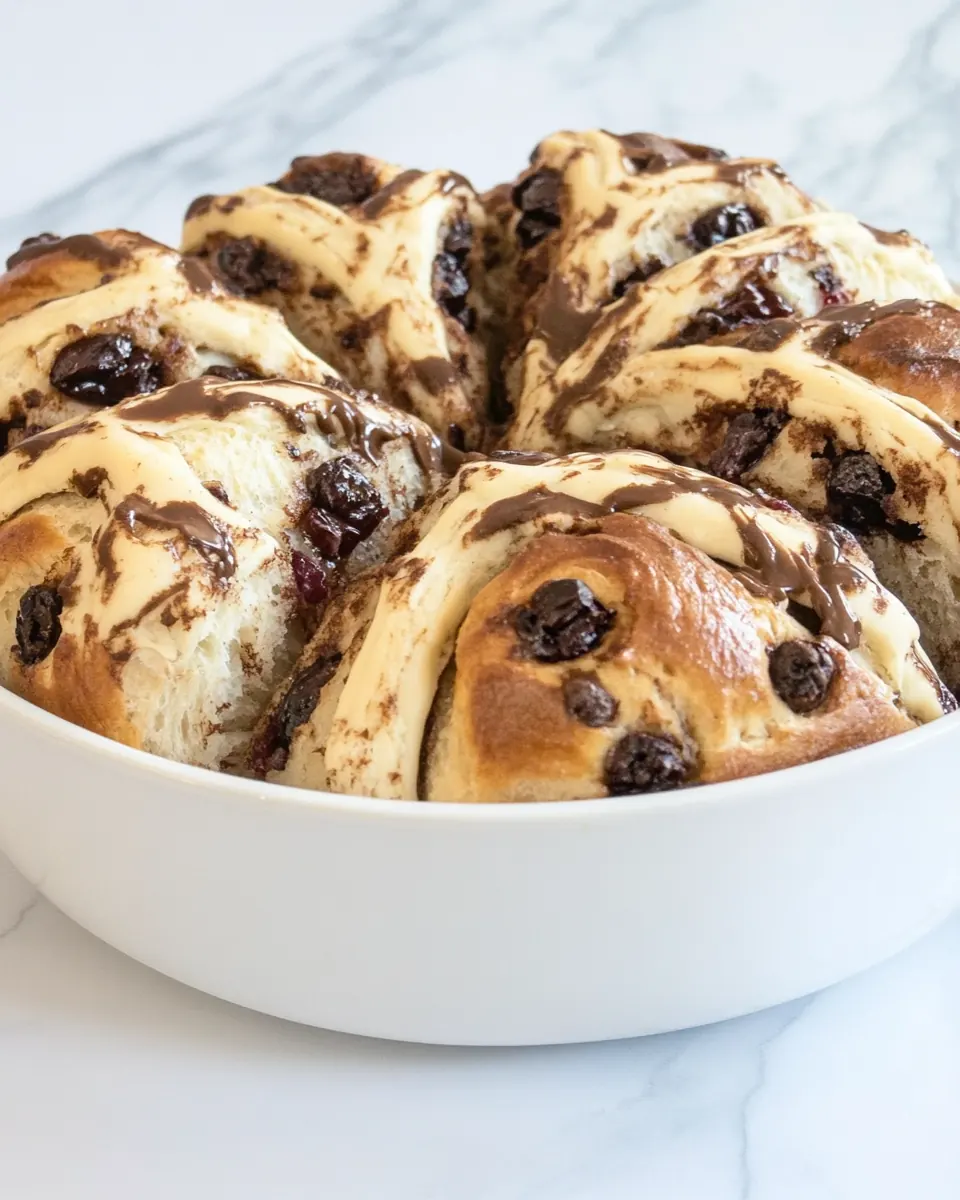
In a large bowl, combine cherries and apple juice. Cover with plastic wrap, and let stand for 20 minutes. Strain, discarding excess liquid.: You will notice the cherries begin to plump and glisten as they absorb the apple juice , releasing a faint fruity aroma that signals they are rehydrating properly. This step softens the dried fruit so the cherries are tender in the finished rolls rather than leathery, and the small amount of released liquid concentrates the cherry flavor. A common mistake is leaving too much juice clinging to the fruit when folding into dough, which can make dough wetter than intended; make sure to drain well and pat lightly with a paper towel if needed. If cherries are still a bit dry, give them a few extra minutes to soak, they should be supple but not falling apart. The texture of the cherries after draining should be slightly yielding, and you may notice a sticky sheen on your fingers when handling them, which is normal.
Prepare Hot Cross Buns Dough as directed through step 2. Stir in cherries, and continue as directed.: Once your enriched dough has been mixed and given time to develop, folding in the plumped cherries ensures even distribution without deflating the dough. At this point the dough smells yeasty and slightly sweet from any sugar in the recipe, and you should see a smooth surface and elasticity when stretched gently. Use a gentle folding motion so you do not overwork the dough, which could tighten the gluten and make the buns dense. A frequent error is pushing the fruit in too aggressively, creating uneven pockets; instead fold with care and rotate the bowl to disperse the fruit. The dough will feel slightly tacky but manageable, and you should still be able to shape it without it sticking excessively to the counter.
Preheat oven to 375°F (190°C). Spray 2 (9 1/2×5 1/2-inch) loaf pans with cooking spray.: The oven should reach a steady, even heat so the rolls bake uniformly and the center sets without the tops burning. Preheating ensures the initial oven spring happens immediately, creating a lighter interior. Greasing the pans prevents sticking and encourages a clean release, and you might notice a faint scent of warm metal as the oven comes to temperature. Avoid putting the pans in before the oven is fully hot, as inconsistent heat will affect rise and browning. If your oven has hot spots, rotate the pans halfway through baking for even color and doneness.
Lightly punch down dough, and let rest for 5 minutes. On a lightly floured surface, turn out dough. Pat dough into a 16×8-inch rectangle. Sprinkle with chocolate. Starting with one long side, roll dough into a log, pinching seam to seal. Using a serrated knife, cut log into 12 pieces. Roll each piece into a ball, concealing as much chocolate inside roll as possible. Arrange 6 rolls in each prepared pan. Cover and let stand in a warm, draft-free place (75°F/24°C) until puffed and rolls have risen three-fourths of the way up pan, about 25 minutes.: After the light punch down, you will feel the dough relax and a slight yeasty scent will return as it rests. Patting into a rectangle gives a predictable shape for even filling distribution, and sprinkling the chopped chocolate on top before rolling creates ribboned pockets inside each bun. Rolling tightly seals the chocolate so it stays internal rather than melting out; the sound of the dough smoothing under your palms is a reassuring cue that gluten is relaxed. When cut and shaped, the pieces should hold a rounded form without collapsing, and arranging them snugly in pans encourages soft sides and a uniform rise. A common pitfall is overfilling with chocolate which can cause leakage during baking, so distribute the chocolate evenly and conceal it well in the roll so the seams hold. During the final rise the buns should look puffy and almost touch; if they remain flat, a warmer spot or slightly longer rise will help.
In a small bowl, whisk together egg and milk. Brush tops of rolls with egg mixture.: Brushing with the mixture produces a deep, even golden color and a faint sheen once baked, and the aroma of baked egg and milk is warm and inviting. Use a light hand so the wash does not pool in the seams or weigh down the dough. The wash also helps the apricot glaze adhere later on, boosting shine and appearance. A typical mistake is over brushing which can create a mottled finish or cause the crosses to blend in, so aim for a thin, even layer. If you want extra shine, apply a second thin coat just before the end of baking, but be careful as this can accelerate browning.
In a medium bowl, whisk together flour, cocoa, and 6 tablespoons (90 grams) water, 1 tablespoon (15 grams) at a time, until a thick paste forms. Using a pastry bag fitted with a Wilton #10 tip, pipe paste over top of buns to form a cross.: The paste should be pipeable but not runny, holding a defined ridge as you draw the cross. The smell of cocoa will intensify as you work it into a paste, and the contrast of the dark cross against the golden roll is visually striking. Piping requires steady pressure and a light wrist, and a serration or wobble indicates the paste may be too thin; if it spreads, add a touch more flour to thicken. One common error is piping too close to the edges where the paste can slip off as the buns expand. Keep movements confident and even, and if the cross loses shape during rise you can touch it up gently before baking.
Bake until golden brown, 25 to 30 minutes. Brush warm rolls with Apricot Glaze.: As the buns bake you will hear faint cracking and notice the kitchen filling with the mixed scents of fruit, cocoa, and baked bread. The tops should become a warm, deep brown, and the centers should feel springy when pressed gently. Brushing with Apricot Glaze while warm seals in moisture and adds a glossy finish that intensifies the fruit notes. Avoid overbaking which dries the crumb and dulls the chocolate pockets; remove when tops are richly colored and an inserted skewer comes out clean or with a few moist crumbs. If glaze is too thick, warm it slightly to make spreading easier and more even.