Preheat oven to 350 degrees F, and spray a 9 x 5 inch loaf pan with non-stick baking spray.: The kitchen will begin to warm and that first little smell of heat signals that the oven is coming to life, which helps the batter begin rising as soon as it goes in. I always make sure the rack is centered so heat circulates evenly and the top browns gently. A common mistake is not preheating fully, which can lead to an underbaked center, so wait until the oven reaches the full temperature before you slide the pan in. If you do not have non stick spray, rub the pan with a little melted butter and dust with flour to prevent sticking. Listen for the click of the oven elements and watch the oven thermometer if you want to be precise.
Next, in a large bowl mash the bananas using a fork until creamy. Add melted butter, oil and sugar and combine using a hand mixer.: Right away you will notice the sweet, fruity aroma of the bananas as they break down, and the texture will become silky as you mash. When you pour in the warmed melted butter and neutral canola oil , the batter takes on a glossy look, and the sugar begins to dissolve, softening under the motion of the mixer. Use a low setting so you do not over aerate the batter, which can alter the loaf's texture. A typical issue here is adding very hot butter, which can cook the egg if added too soon, so ensure the butter has cooled slightly. Stir just until combined, you want a smooth, slightly thick batter that still holds some body.
Then add egg, vanilla and mix again.: At this point the batter will feel more cohesive as the egg binds the fats and mashed bananas . The vanilla will lift the aroma and add depth. Mix until the egg is fully incorporated and the batter appears homogeneous, scraping the bowl edges so no streaks remain. Overmixing is easy here, and can develop gluten from the flour later on, so keep the mixing brief. If the batter seems curdled, a few gentle stirs will bring it back together; don’t panic. The batter should be smooth and thick, coating the back of your spoon.
Combine flour, baking powder, and salt in a separate bowl and whisk. Slowly add dry mixture to wet mixture and stir.: The dry ingredients create the framework for the loaf, and whisking them aerates and removes lumps. As you fold the dry mix into the wet batter, you will notice the color lighten slightly and the texture firm up. Add the flour mixture gradually to avoid clumping and to control how much mixing the batter gets. The right texture is a thick, spoonable batter that holds some volume. A frequent error is dumping all the dry ingredients in at once, which leads to pockets of flour; add slowly and use a gentle fold to integrate. Stop mixing when you no longer see streaks of flour, the batter should remain tender, not elastic.
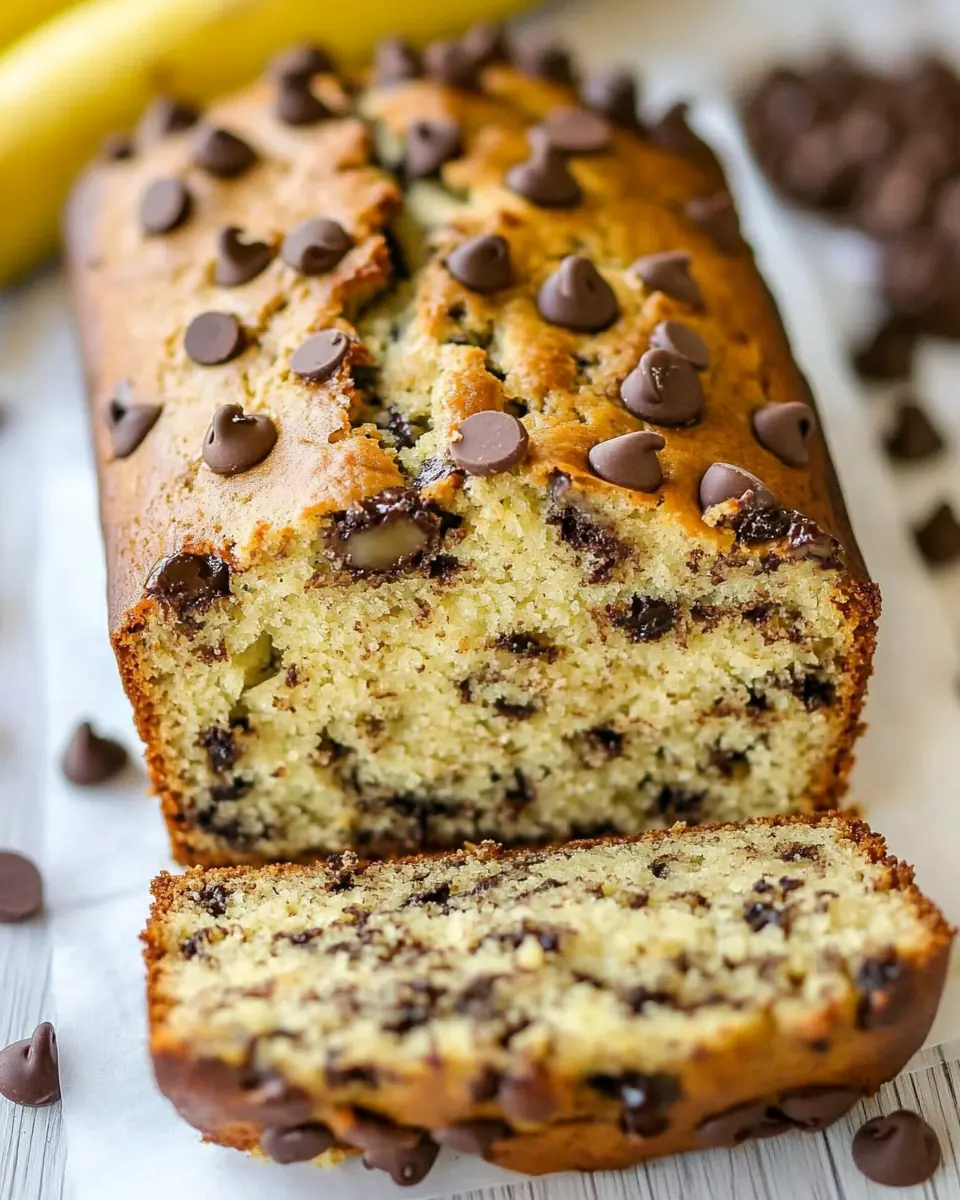
Next, fold in chocolate chips using a spatula.: The batter will feel dense now, and folding in the chocolate chips should be done with care so you do not knock out all the air. Use a spatula to scoop from the bottom and fold over a few times until the chips are evenly distributed. You will feel the chips moving through the batter and see the dark flecks settle in. Overworking will make the loaf tighter, so aim for even distribution without prolonged mixing. If you notice chips sinking, a brief chill of the batter will help keep them suspended, though it is rarely necessary with this batter.
Add the mixture to the loaf pan and bake for 55-60 minutes, or until a toothpick comes out clean.: As the loaf bakes the kitchen fills with a warm, toasty banana scent and the top slowly browns to a golden color. You should see the center set and the edges pull away slightly from the pan, which are visual signals of doneness. The toothpick test is the final word, but aim for a clean or slightly moist crumb on the pick. A common mistake is removing the loaf too soon, resulting in a gummy interior, or leaving it too long, which dries it out. If the top is browning too quickly while the center is not set, tent loosely with foil during the last 15 minutes. When finished, let the loaf cool in the pan for about 10 minutes before transferring to a rack, this helps it finish setting and slices cleaner.