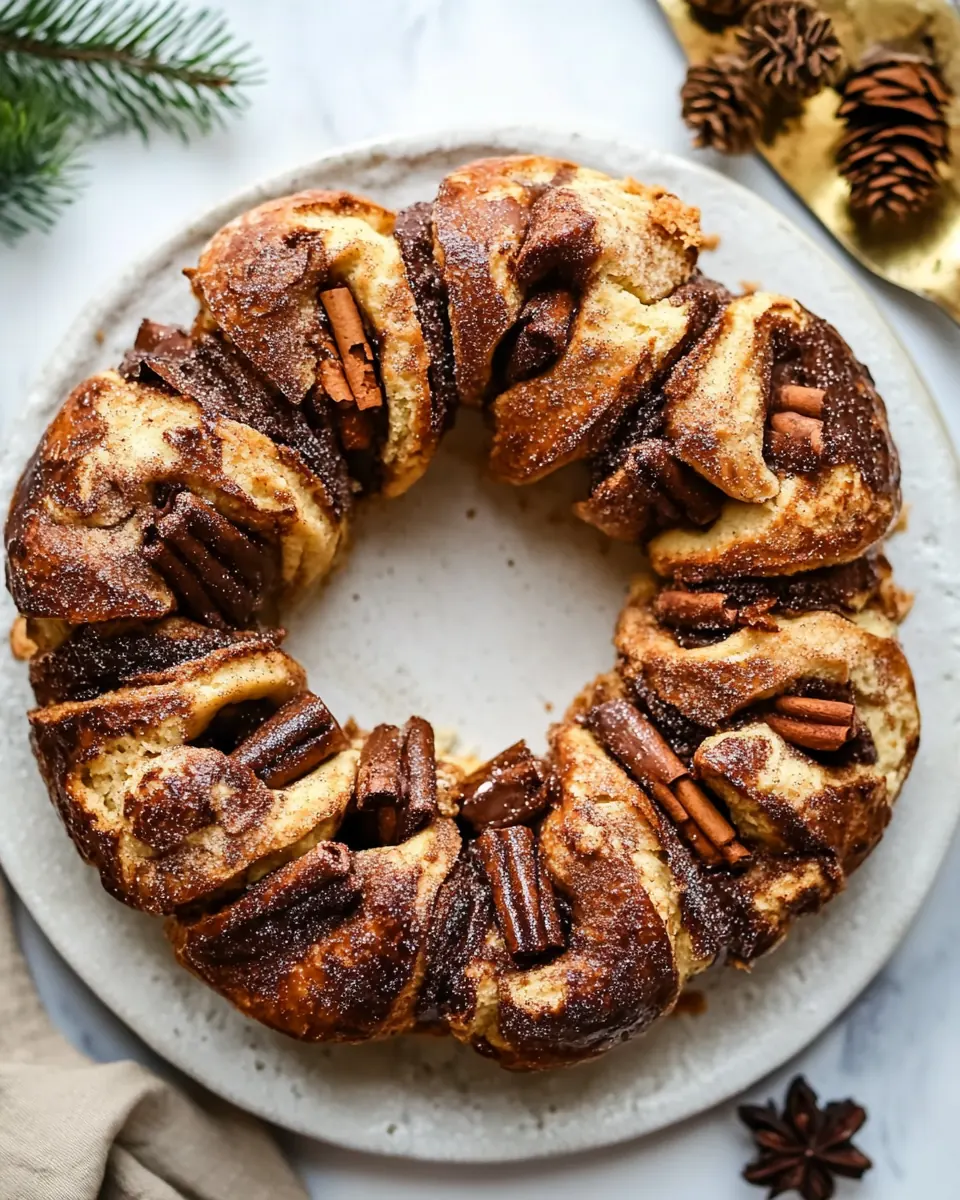
In the bowl of a stand mixer fitted with the dough hook, combine the milk, yeast, and honey. Let sit 5-10 minutes, until bubbly on top. Add 4 tablespoons butter, eggs, 3 1/2 cups flour, and salt. Using the dough hook, mix until the flour is completely incorporated, about 4-5 minutes. If the dough is still sticky, add the additional 1/2 cup flour, adding more as needed until the dough is smooth to touch. Cover the bowl with plastic wrap and let sit at room temperature for 1 hour or until doubled in size. Meanwhile, mix the filling. In a bowl, combine the brown sugar and cinnamon. Butter a tube pan. Transfer the dough to a work surface and cut into 4 equal pieces. Working with 1 dough piece at a time, on a lightly floured surface, roll the dough into a large rectangle (roughly 14×10 inches). Spread 2 tablespoons butter over the dough, then sprinkle with 1/4 cup cinnamon sugar and 2-4 tablespoons chocolate chips. Gently press the chips into the dough. Cut the dough lengthwise into 3 strips. Cut the strips crosswise into 4 strips each, making 12 squares (see above photo). Stack all 12 dough squares, 1 on top of the other. Repeat with the remaining 3 dough pieces and remaining butter. Arrange stacks in the buttered tube pan, standing up like little books, allowing gaps between dough pieces (see above photo). Cover the pan with plastic wrap, and let rise in a warm place until the dough almost reaches the top, about 1 hour. Preheat oven to 350° F. Bake until the bread is golden brown, 30 to 40 minutes. Let stand in the pan 5 minutes, then carefully remove. Serve warm.: You will notice the mixture first smell lightly floral and sweet as the honey dissolves into the warm milk . Within minutes tiny bubbles form, which is the yeast waking up, and that foamy cap smells faintly yeasty and alive, a reliable indicator that fermentation is starting. If the milk felt too hot it might have smelled sharp or alcohol like, a sign the yeast was killed. Avoid that by testing temperature on your wrist and aiming for comfortably warm, not hot.
Let sit 5 to 10 minutes, until bubbly on top: As the minutes pass you should see the surface transform from smooth to frothy, and the scent will shift to a gentle, yeasty sweetness. This step is crucial because it confirms active yeast; skipping or rushing it risks a dense, under risen wreath. A common pitfall is to assume bubbles will appear instantly; if they do not after ten minutes, your yeast may be old and should be replaced.
Add 4 tablespoons butter, eggs, 3 1/2 cups flour, and salt: When you add softened butter and eggs , the bowl takes on a creamier texture and the aroma becomes richer. The initial mix will look shaggy as flour hydrates. Salt helps round the flavors and slightly tightens the gluten, which you can often sense in the way the dough pulls together. If the mixture resists gathering, check that your butter was room temperature and not melted.
Using the dough hook, mix until the flour is completely incorporated, about 4 to 5 minutes: During mixing you will hear a change in sound from clumpy to a quieter, steady knead, and the dough will start to climb the hook slightly, then settle into a smooth, elastic ball. This texture means gluten development is progressing, which ensures the dough will hold gas for a fluffy crumb. Overmixing can make the dough tough, so stop once it feels smooth and slightly tacky.
If the dough is still sticky, add the additional 1/2 cup flour, adding more as needed until the dough is smooth to touch: Touching the dough gives you the best feedback, feeling the slight tack without it leaving a heavy residue on your fingers. Add flour sparingly, because too much will dry the crumb. A sticky dough that is manageable will give you a softer, moister bread, while a dry dough yields a dense result.
Cover the bowl with plastic wrap and let sit at room temperature for 1 hour or until doubled in size: This resting period lets fermentation expand the dough, and you will notice the volume swell and the surface smooth. The aroma becomes mildly fermented and nutty. If your kitchen is cool, find a warm corner for a faster rise; a slow rise might make the flavor more complex, but too fast and the texture could be irregular.
Meanwhile, mix the filling. In a bowl, combine the brown sugar and cinnamon: Stirring these dry ingredients releases the deep, molasses like scent of brown sugar and the warm spice of cinnamon . The mixture should look uniformly speckled and smell fragrant. If lumps appear, break them up so they distribute evenly when sprinkled, otherwise you will get pockets that are overly sweet or overly spiced.
Butter a tube pan: Greasing the pan with softened butter ensures the finished wreath releases cleanly and gives a little extra flavor to the outer edges. Use your fingers or a brush to get into crevices. If you skip this step you risk sticking, making removal messy and potentially collapsing the structure.
Transfer the dough to a work surface and cut into 4 equal pieces: As you divide the dough, it should feel pillowy and resilient under your palms. Equal portions make for even layers and a balanced rise during the second proof. Uneven pieces bake inconsistently, with smaller sections browning faster than larger ones.
Working with 1 dough piece at a time, on a lightly floured surface, roll the dough into a large rectangle roughly 14×10 inches: Rolling it out releases a faint wheaty aroma, and the dough should spread without snapping back excessively. The size ensures you have enough surface for layers and filling. If the dough resists, let it rest a few minutes to relax the gluten, otherwise it will retract while you work.
Spread 2 tablespoons butter over the dough, then sprinkle with 1/4 cup cinnamon sugar and 2 to 4 tablespoons chocolate chips: The glossy sheen of melted butter helps the cinnamon sugar adhere, and the mini chocolate chips should be gently pressed so they nestle into the dough. You will smell warm butter and sweet spice together, and the chocolate will add that enticing chocolate note even before baking. Too many chips can weigh down the layer, so distribute evenly to avoid dense pockets.
Gently press the chips into the dough: Pressing makes sure the chips stay in place when you cut and stack, which prevents them from spilling during the second rise. You want them embedded but not squashed flat, so they will melt into small molten bits while the dough puffs. Overpressing flattens the texture and can cause them to bleed out too much.
Cut the dough lengthwise into 3 strips: These long strips form the basis for the smaller squares, and they'll reveal layered edges once stacked. The cuts should be clean to maintain structure. Jagged edges from tearing will produce irregular stacks that can collapse or bake unevenly.
Cut the strips crosswise into 4 strips each, making 12 squares: Each square should be similar in size so stacks are consistent; when you place them upright in the tube pan the variation will affect how evenly they rise. If pieces are wildly uneven you may end up with sections that are underbaked or overly browned.
Stack all 12 dough squares, 1 on top of the other: As you stack, you will feel the layers compress slightly and the scent of cinnamon intensify. The stacked books create the pull apart effect once baked, so neat, centered stacking is important. If stacks lean, arrange them straighter to prevent collapsing during baking.
Repeat with the remaining 3 dough pieces and remaining butter: Repeating the process builds multiple identical stacks; the rhythm of rolling, spreading, and cutting becomes comforting. Ensure you use the remaining butter so each section is properly filled, because any dry stacks will bake differently and create texture inconsistencies.
Arrange stacks in the buttered tube pan, standing up like little books, allowing gaps between dough pieces: The gaps let the dough expand and brown between stacks, creating the visual pull apart effect. You should be able to see small channels between stacks. Overcrowding will prevent even expansion and can lead to dense interiors.
Cover the pan with plastic wrap, and let rise in a warm place until the dough almost reaches the top, about 1 hour: This second proof puffs each stack and blends flavors; the aroma becomes deeper and slightly yeasty. Watch for the dough to nearly touch the pan rim but not overflow, which signals readiness. If you let it overproof the structure can weaken, causing collapse when baked.
Preheat oven to 350° F: Preheating ensures the oven is at the right temperature for immediate oven spring, which helps the wreath set and brown properly. You will see the dough slowly expand and take on a light tan, then deepen to golden in the final phase. An oven that is too cool will yield a pale, dense result.
Bake until the bread is golden brown, 30 to 40 minutes: During baking the aroma transforms into a rich, toasty note and you will hear a gentle crackle as the crust sets. The top should be golden and firm; if it becomes too dark, tent with foil to prevent burning while the interior finishes. Undercooked centers will feel doughy, so use visual cues and, if needed, a skewer to check for doneness.
Let stand in the pan 5 minutes, then carefully remove: Resting lets the bread stabilize and makes extraction smoother, preserving the shape of the stacks. The residual heat finishes the interior. If you try to remove it immediately you risk tearing the structure, so patience here pays off.
Serve warm: Warm slices offer the best contrast of molten chocolate and crisped cinnamon sugar edges, and the aroma is most inviting right out of the oven. If you cool it fully the chocolate pockets will set, which some prefer, but for maximum indulgence serve while still warm.