Whisk sugar, salt, cocoa, and cornstarch in a medium saucepan. Add milk and whisk over medium low heat until the powder is dissolved. Switch to a wooden spoon or heat safe spatula and stir continuously until the mixture starts to thicken. Once it thickens, stir in the vanilla bean paste then remove the pan from the heat and stir in the baking chocolate. Stir until smooth. Pour into 2 (6 oz) creme brûlée dishes or 3 smaller ramekins.: The aroma here is dry and dust like, with the cocoa powder giving a deep, earthy scent while the granulated sugar and cornstarch sit like fine sand. Whisking these together first is critical because it ensures the powders are evenly distributed and reduces the chance of lumps when you add the milk . You should notice a uniform, slightly darker powder once combined. If you skip this step, you risk getting pockets of cornstarch that clump when heated, which will create an uneven texture. A common error is rushing and not whisking thoroughly, leading to a gritty mouthfeel. Take your time, and use a fine whisk to aerate and integrate the dry ingredients for an even start.
Cover and let the pudding cool to room temperature. Chill for at least 4 hours before your brulee.: As you add the milk , the mixture will begin to transform, softening into a chocolate tinted liquid. Keep the heat at medium low so the milk warms gently without scalding, and whisk continuously so the cocoa powder and cornstarch suspend evenly. You will smell warm dairy and a more pronounced chocolate scent as the cocoa blooms in the milk . If you notice small bubbles around the edge but no vigorous simmer, you are at the right temperature. A typical mistake is turning the heat too high, which can cause the milk to burn and impart a scorched flavor. Patience here yields a smooth, integrated base and prevents curdling or graininess.
To make the brûlée topping, you can use a torch or the stovetop method. Do this right before serving.: Now the action becomes tactile; the liquid will gradually come together and you will feel resistance as it thickens. The sound is quiet, a soft, steady stir, and the surface will take on a glossy sheen as the starch activates. This thickening is where the custard begins to form structure, so continuous stirring prevents lumps and keeps the texture silky. If it seems to cling or form quick ridges, you are approaching the right thickness. Beware of stopping too soon, which leads to a runny custard, or overheating, which can make it gluey. Stirring constantly and keeping the temperature steady ensures a velvety result.
To brûlée using a torch: top each creme brûlée with about 2-3 teaspoons granulated sugar. Evenly toast the sugar until it bubbles, then turns translucent, being careful not to burn it.: The mixture will be warm and aromatic when you add the vanilla , which amplifies the chocolate notes. Remove from heat before adding the semi sweet baking chocolate so the residual warmth melts it gently, creating a satin smooth texture and glossy finish. Stir until no streaks of chocolate remain and the mixture looks homogeneous. If you add the chocolate while the pan is over heat, you risk overheating and altering the texture. A common pitfall is not stirring long enough, leaving little pockets of unmelted chocolate; stir until it feels silky on your spoon.
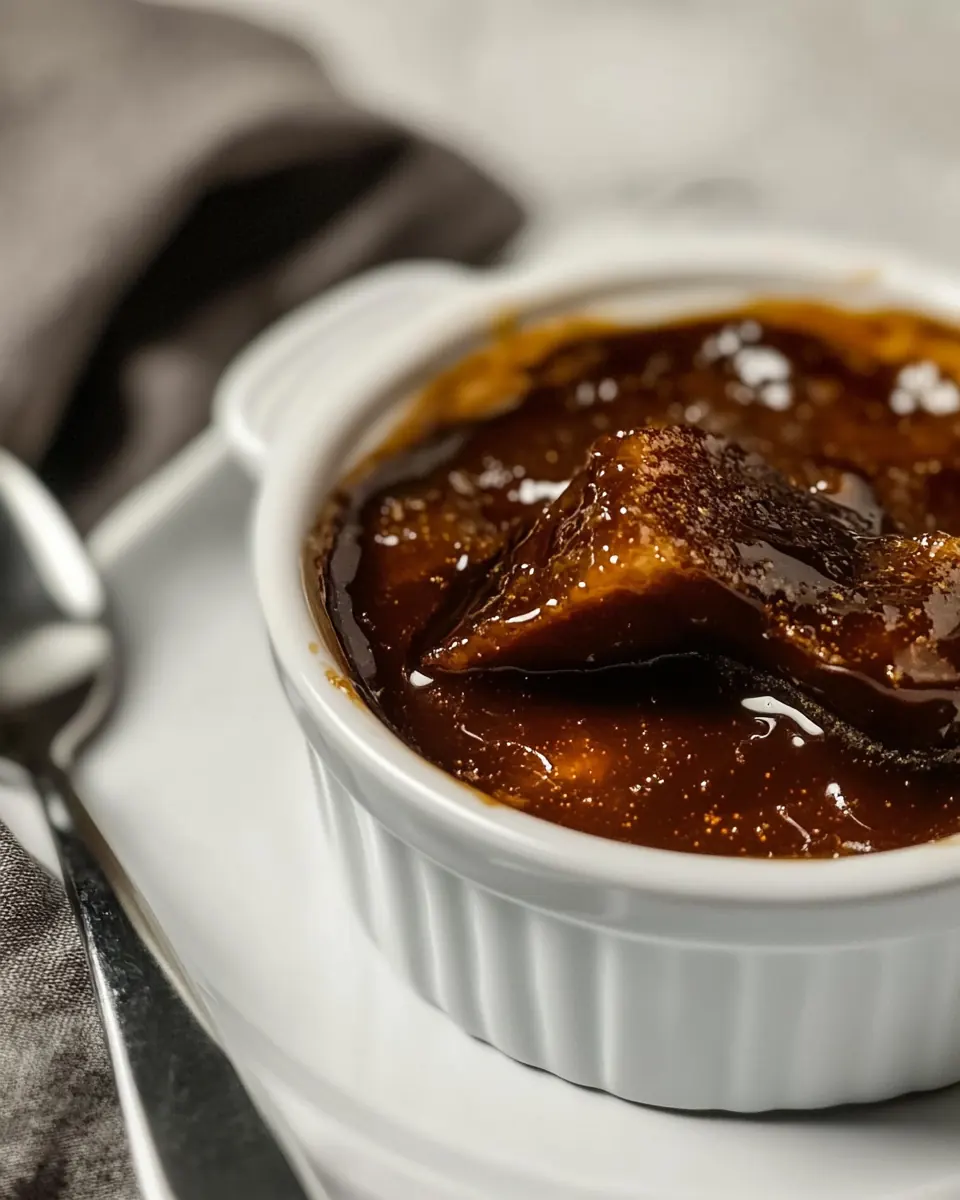
To brûlée using the stovetop method: add 1/4 cup granulated sugar to a small saucepan. Place over low heat and do not touch it, but watch it closely. Once it starts to turn to liquid, stir with a wooden spoon, being careful not to get it on the sides of the pan, until the sugar turns to crystals then to liquid again, and turns a light amber color. Drizzle some onto each chocolate creme brulee. Note: this sugar hardens more than it does with the torch. Err on the light side of adding it to the top – you don’t need the entire amount for the 2 brûlées but it’s hard to make less than 1/4 cup – and be cautious eating it.: As you transfer the custard, notice its thickness as it flows; it should move slowly and coat the back of a spoon. Pouring into individual dishes sets up the classic presentation and helps the custard chill evenly. Wipe any drips from the rims for a clean finish. Filling unevenly can lead to inconsistent chilling and texture differences between servings, so aim for uniform levels for the best results.
To brûlée using the broiler: sprinkle each dish with 2-3 teaspoons granulated sugar and cook under the broiler until melted – it won't be as crackly as with the torch method.: The surface will lose some of its steam and the aroma will settle, leaving a calm, chocolate scent. Covering keeps out refrigerator odors and protects the surface. Cooling slowly to room temperature before chilling helps prevent condensation which can interfere with the final texture. A common mistake is refrigerating while the custard is still hot, which can create watery condensation that affects consistency.
Chill for at least 4 hours before your brulee: Chilling firms the custard body and lets flavors meld; you will notice the custard becomes denser and develops a clean, smooth mouthfeel. The minimum resting time is about four hours, though overnight is often better if you have the time. Rushing this step results in a softer, under set custard that may not hold up to the pressure of caramelizing sugar. Plan ahead to allow proper chilling.
To make the brûlée topping, you can use a torch or the stovetop method: The moment you caramelize the sugar is sensory gold, with hot sugar singing and melting into a glassy surface. Choosing a torch offers precise control and the classic crack, while stovetop caramel gives a more rustic drizzle if you cannot torch. Timing is everything, do the caramelization right before serving to maintain the contrast between cold custard and warm top. If you caramelize too early, moisture from the custard can soften the sugar layer.
To brûlée using a torch: top each creme brûlée with about 2-3 teaspoons granulated sugar : As you sprinkle the granulated sugar , aim for an even, thin coating so it melts uniformly. When you torch, the sugar will bubble and then turn translucent before taking on a faint golden hue; listen for small popping sounds as trapped air escapes. Move the torch in steady circles to avoid burning any one spot. Burning the sugar will create bitter notes, so keep the flame moving and stop when the sugar becomes glassy. If the sugar remains grainy, you may not have applied enough heat or you moved too quickly.
To brûlée using the stovetop method: add 1/4 cup granulated sugar to a small saucepan and melt over low heat, then drizzle some onto each chocolate creme brulee : Watching sugar transform on the stovetop is dramatic, as it first liquefies and then deepens to a light amber color. Stir gently when needed and avoid scraping the pan sides, which can crystallize the sugar. Drizzling the warm caramel over the chilled custard creates a hardened shell as it cools. Use caution with hot caramel, as it can harden very quickly and becomes brittle; also be mindful that this method sometimes yields a harder set than the torch method. Err on the lighter side when applying so the sugar does not become too thick or dangerously hot.
To brûlée using the broiler: sprinkle each dish with 2-3 teaspoons granulated sugar and cook under the broiler until melted : The broiler can melt the sugar quickly, though the crust will generally be less crackly than with a torch. Keep the dishes on a tray and watch closely, as the sugar can go from melted to burnt in seconds. The visual cue is a glossy melted surface that may take on a slight golden tint. A frequent mistake is stepping away from the oven, so stand by and check every few seconds to prevent scorching. If done carefully, the broiler still yields a presentable, caramelized top.