In a heavy saucepan combine egg whites, sugar, salt and coconut flakes and cook over medium-low heat, stirring frequently until all the ingredients combine together, about 12-15 minutes.: Warmth begins to change the mixture, releasing a toasty coconut aroma and a gentle steam that tells you proteins and sugar are marrying. You will hear a soft bubbling as the moisture evaporates, and the sound should be steady not furious; a vigorous boil will dry the mix and can scorch the bottom. Stirring frequently prevents hotspots and assures an even glossy texture. The goal here is not to fully cook the egg whites into a firm mass, but to marry the sugar into the coconut and coax out moisture so the mixture holds together when scooped. One common mistake is using too high heat which leads to rapid evaporation and a scorched flavor, so keep it medium-low and patient.
The mixture should be sticky and moist, not dry. Remove from heat and stir in the almond and vanilla extracts. Set aside on a dish and let it cool in the refrigerator about 30 minutes.: The tactile cue is key, you want a tacky, cohesive mass that pulls away slightly from the pan. Cooling in the fridge firms the mixture so scoops keep their shape while baking and concentrates flavors. When you stir in the almond extract and vanilla extract , the steam lifts their aromatics so you get an immediate fragrant hit. A common error is skipping the chill which results in spread out, flat macaroons; chilling firms the center so they bake tall and tender.
Preheat the oven to 300°. Using a tablespoon, scoop tightly packed tablespoonfuls onto a baking sheet covered with a silpat or parchment paper.: You should feel and smell the first warm air from the oven as it stabilizes, it will be gentle not aggressive which prevents the coconut tops from scorching before the center sets. Preheating assures consistent bake times and accurate browning. An unpreheated oven causes uneven texture and extended baking, which can dry out the interior. Verify the rack position is centered to get even color on the domes.
Bake 27-30 minutes or until golden.: Press each scoop slightly so it holds together, the sides should be smooth not crumbly, and spacing matters because they will expand slightly. The silpat or parchment gives an even surface and prevents sticking, making removal clean and preserving shape. You should see slightly glossy mounds that are compact, indicating the right moisture balance. A common mistake is loosely scooping which creates irregular shapes and can cause the macaroons to spread or crack unevenly while baking.
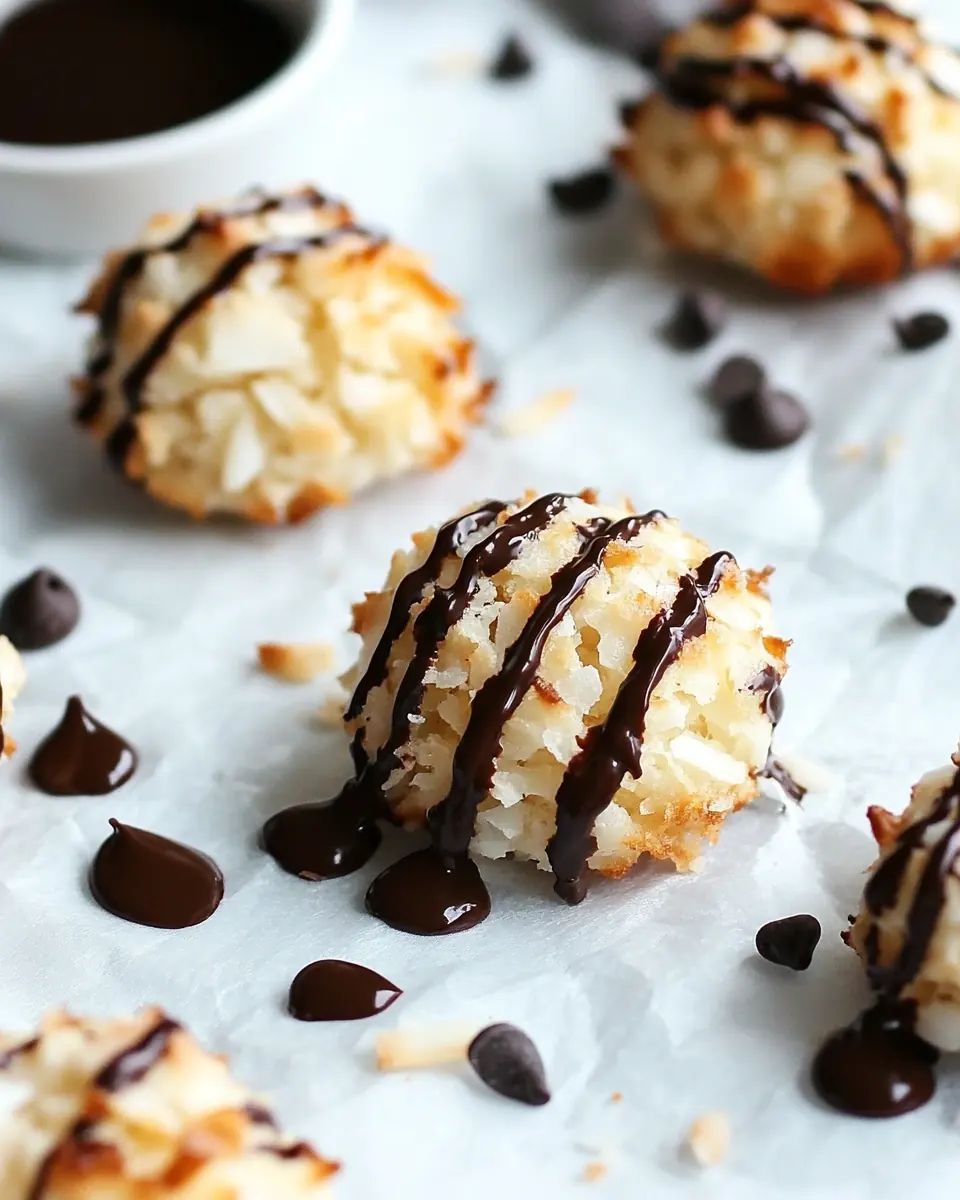
Let them cool then melt the chocolate in the microwave and drizzle on top of the cookies using a spatula or a spoon.: As they bake, listen for a quiet crackle and watch for a golden top, the edges will deepen first and the tops will take on a warm, toasty hue. Smell is also informative, a faint caramel coconut scent means they are approaching doneness. The interior should remain soft when you touch lightly, and the exterior should have a set golden crust. Overbaking yields a dry, brittle inside, so pull them once the outer shell is golden and set, not deeply browned.
Let them cool then melt the chocolate in the microwave and drizzle on top of the cookies using a spatula or a spoon.: Cooling allows the interior to stabilize, and when you melt the semi sweet chocolate it should be glossy and smooth, not grainy. Drizzling with a spoon lets you control the pattern, adding visual contrast and a flavor counterpoint to the sweet coconut. The final chocolate sets with a slight snap, giving a pleasant textural contrast. A frequent problem is overheating the chocolate which makes it dull and thick; melt slowly and stir frequently to keep it silky.