Preheat oven to 350 degrees (F). Generously grease a 6 mold donut pan; set aside.: As the oven warms you will feel a gentle heat rising and the kitchen will begin to smell faintly warm, which primes the batter to bake evenly. Getting the pan well greased is essential so the donuts release cleanly; brush or spray every cavity, paying attention to the center tube area which can stick. If the oven temperature is too low the donuts will bake slowly and dry out, and if too high they will brown too fast on the outside while remaining underdone. A common mistake is skipping the greasing step, which leads to broken donuts when you try to remove them.
In a large bowl combine the peanut butter and sour cream; beat until smooth and creamy. Add in the brown sugar and beat smooth. Add in the egg, milk, and vanilla, beat well. Add in the flour and baking powder and use a fork to lightly toss them together on top of the wet ingredients before folding them into the mixture, stirring until just combined. Fold in the peanut butter chips, if using.: Right away you will notice the aroma of peanut butter intensify as it warms slightly under gentle mixing. The texture should evolve from thick and slightly grainy to smooth and glossy; stopping at this point preserves tenderness. Tossing the flour with baking powder and folding them in prevents lumps and ensures even distribution of leavening. Over mixing at this stage tightens gluten and makes the crumb tough, so fold until you see no streaks of flour. A typical error is overbeating after adding the flour , which yields dense donuts.
Spoon the batter into the prepared donut pan. Bake for 9-10 minutes, or until the donuts spring back when gently pressed. Cool completely before topping with the glaze.: As the batter bakes you will see the tops set and edges pull slightly from the pan; little cracks may appear and the aroma becomes warm and toasty. The spring back test is reliable, press lightly in the center, and if it bounces the interior is set. Cool time matters because warm donuts will melt the ganache and create a messy coating; patience ensures a neat finish. A common slip is checking too early, which can cause deflated centers when the donuts settle.
Place chocolate chips in a wide and shallow heat proof bowl. Heat the cream in a small sauce pan over medium-heat. Bring to a boil, watching very carefully as it will happen fast. When the cream has come to a boil, remove from heat and pour over the chocolate chips. Allow the cream and chocolate to sit for minute, then whisk completely smooth. Let the ganache cool for a few minutes before you dip the donuts.: When the hot heavy cream meets the bittersweet chocolate chips you will see a glossy emulsion forming, and the scent will shift to deep, warm chocolate. Letting the mixture rest for a minute lets the chips melt gently without overworking, producing a silky surface. If you whisk too aggressively while the mixture is too hot, it can trap air and look dull rather than glossy. Another pitfall is using a narrow bowl which makes stirring awkward and slows the cooling process.
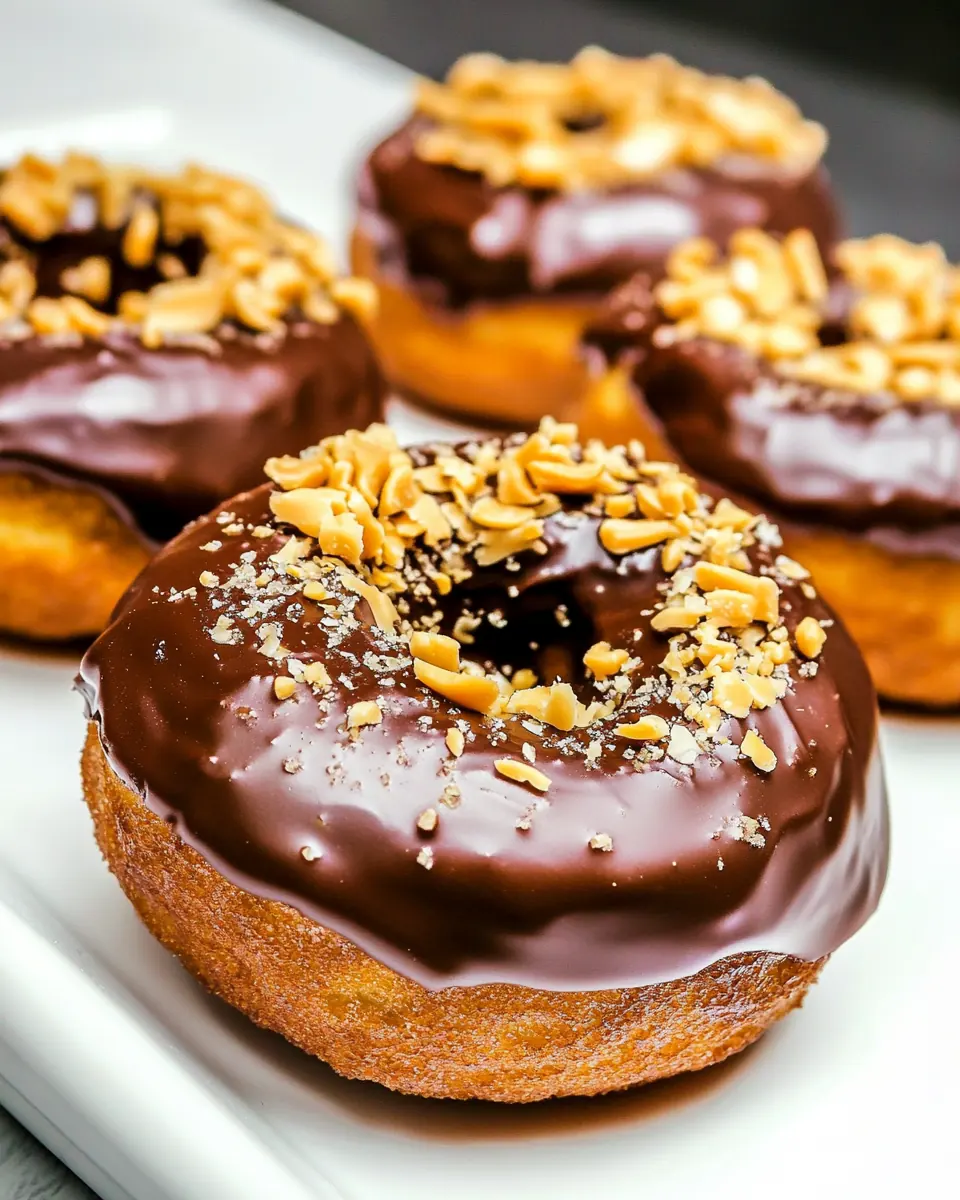
Once the donuts are cool enough to handle, dip them in the chocolate ganache, allowing excess ganache to drip back into the bowl before placing them back on the cooling rack; repeat with all donuts. Decorate wet ganache with chopped peanuts and sea salt, if desired. Let ganache set a few minutes, then serve! These donuts are best eaten the day they are made.: When you dip, the ganache should cling and form a smooth, reflective coat that catches light as it settles. Allowing excess to drip back creates a clean edge and keeps the underside tidy. Immediately sprinkling chopped peanuts and a pinch of flaky sea salt adds crunch and lifts the flavors. If the ganache is too warm it will slide off, and if it is too cool it will be thick and clumpy, so aim for a pouring but not scorching temperature. A frequent misstep is dipping while the donuts are still warm, which will cause the glaze to melt and pool.