In a large mixing bowl cream butter and sugar together until light and fluffy. Mix in eggs, one at a time. Add vanilla and mix until combined. Add cocoa, salt, baking soda, baking powder and flour. Mix until combined.: You should notice a pale, whipped texture and a soft, airy sound as your beaters move through the mixture, indicating air has been incorporated which lightens the final cookie. The aroma will be sweet and buttery, and the sugar should no longer feel grainy between your fingers. This step matters because it creates structure and a delicate crumb, helping cookies rise evenly in the oven. A common mistake is using cold butter , which prevents proper creaming and results in dense cookies, so be sure the butter is soft. If the mixture appears greasy, you likely overworked it or the butter was too warm; chill briefly before proceeding.
Roll dough into 1 in. balls. Place on greased baking sheet or baking sheet lined with parchment paper. Press thumb into center of cookie to make a well.: As you add each egg , the mixture will momentarily look curdled then smooth out as the eggs incorporate, producing a glossy, slightly elastic batter. The sound changes to a quieter, more cohesive beat, and the scent becomes richer. Eggs help bind and provide moisture, yielding a tender interior. A trap to avoid is adding cold eggs which can seize the mixture; room temperature eggs mix more evenly. If the batter separates, beat briefly on medium to re-emulsify, but avoid overmixing which can lead to tough cookies.
Bake at 350 degrees for 12 minutes. If the “thumbprint” disappear while cooking press center of cookie down again with the back of a wooden spoon or spatula. Cool on baking sheet 2 minutes. Remove to wire rack to finish cooling.: The addition of vanilla will add an aromatic warmth and deepen the chocolate notes, and folding it in produces a uniform, fragrant batter. You will notice the scent shift subtly, with vanilla rounding the edges of sweetness. This small addition elevates the overall flavor profile, helping all components taste cohesive. Don’t overmix at this stage, as it’s mainly to distribute flavor. If vanilla pools in spots, gently fold with a spatula to maintain texture.
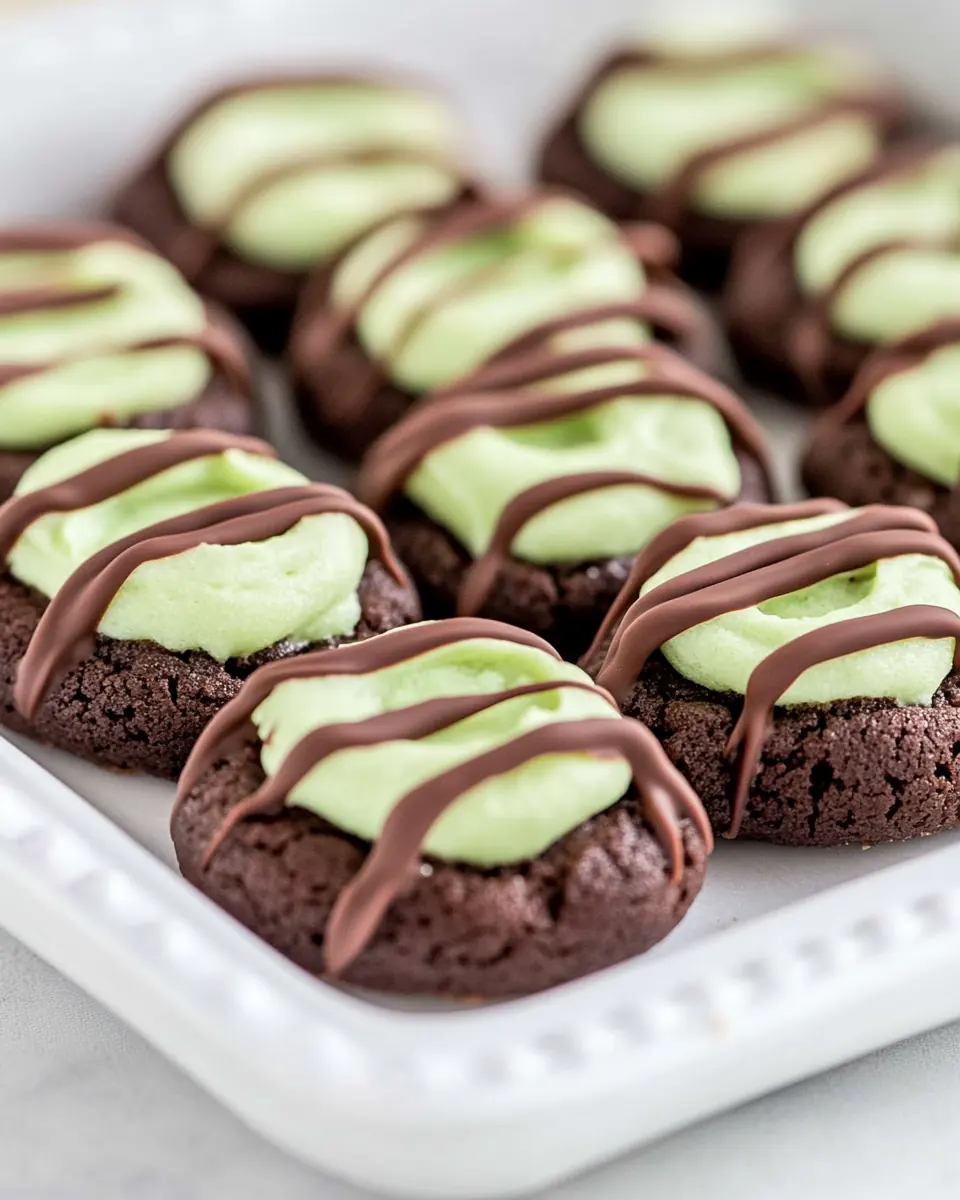
For the fudge melt together white chocolate chips and sweetened condensed milk in small saucepan over medium heat, stirring continuously. Stir in mint extract. Spoon into center of cookies.: After adding the dry ingredients, the dough becomes noticeably firmer and darker in color, with a rich chocolate aroma from the cocoa powder . The texture should be pliable and slightly tacky, not sticky. These ingredients create the cookie structure and proper rise; the leaveners give lift while the cocoa balances the sweetness. Overworking during incorporation can develop gluten, leading to a chewier result rather than tender, so use slow, steady mixing until just combined. If the dough seems crumbly, add a teaspoon of milk to bring it together, but do so sparingly.
Melt chocolate Candiquik according to package directions. Drizzle over cookies. Let the chocolate set and serve immediately or store in an air tight container.: When shaping, the dough should feel cool and hold together easily, with a matte finish and a faint chocolate scent. Rolling creates uniform cookies that bake evenly and is essential for consistent size. Press with gentle pressure so the balls remain compact, avoiding overheating in your hands which can make them glossy and prone to spreading. A common error is rolling too large or too small, affecting bake time and texture, so aim for consistent size using a small scoop if helpful.
Place on greased baking sheet or baking sheet lined with parchment paper: Arrange the dough balls with adequate spacing so they have room to expand, and you will notice a slight sheen on the bottoms where they touch parchment or pan. Using parchment yields cleaner bottoms and easier transfer to a cooling rack. This step matters for even heat distribution and preventing sticking. If you skip lining, cookies may brown too much on the bottom; reduce heat slightly and watch carefully. If they stick, let them cool longer before removing to avoid breaking.
Press thumb into center of cookie to make a well: The well should be a neat indentation about a quarter inch deep, with the edges still holding their shape. You'll feel a slight resistance from the dough giving way, and the surface may crack slightly in a pleasing way. This cavity is crucial so the filling sits cleanly and does not overflow during baking or filling. A common mistake is pressing too hard, which makes the walls too thin and can cause collapse; press gently and check the oven spring during the first batch to adjust pressure.
Bake at 350 degrees for 12 minutes: As they bake, watch for the edges to set and the surface to develop a faint dry sheen while the centers remain slightly soft, and you may hear a subtle shift in the oven as moisture escapes. The aroma will deepen into an intense chocolate note with a hint of caramelized sugar at the edges. This precise time and temperature ensure the cookies are fully baked yet not overdone, preserving that tender interior. If the thumbprint disappears while cooking, press the center down again with the back of a wooden spoon or spatula. An error here is overbaking, which dries the center; remove when edges are set and centers still slightly yielding.
Cool on baking sheet 2 minutes: After the oven, the cookies continue to set, and you will feel them firm slightly under a fingertip, the surface becoming less glossy as steam escapes. This brief rest prevents breakage during transfer and finishes residual cooking gently. It also allows the structure to stabilize so the wells remain defined for filling. Rushing to move them when too hot can deform the centers, so wait the specified time. If a cookie seems too soft, let it rest longer before moving.
Remove to wire rack to finish cooling: Transferring to a wire rack prevents moisture buildup on the bottom, letting air circulate so cookies cool evenly and maintain their crisp edges. You will notice the aroma settle into a more balanced scent as the heat dissipates. Cooling fully is key for the filling to set properly without melting into the cookie. A common oversight is filling while warm, which causes the filling to spread, so ensure cookies are completely cool.
For the fudge melt together white chocolate chips and sweetened condensed milk in small saucepan over medium heat, stirring continuously: As the mixture warms, it will transform into a glossy, viscous ribbon, releasing a concentrated, sweet aroma. Continuous stirring keeps the heat even and prevents scorching on the bottom, which would create graininess. This combination forms a stable, thick filling once cooled slightly, and a smooth texture ensures nice presentation. If overheating occurs, the mixture may seize or become grainy; lower the heat and stir briskly to recover, or remove from heat and add a little cream if needed.
Stir in mint extract: Adding the mint extract will scent the filling immediately, and a light stir distributes it so the flavor is consistent. The strong, refreshing note will cut through the rich sweetness of the white chocolate blend, creating a lifted finish. This small addition dramatically changes the profile, so measure carefully. If the mint taste is too strong, temper it by adding a touch more melted white chocolate or a few drops less next time.
Spoon into center of cookies: The filling should be warm but not piping hot, and as you spoon it in the wells you will see a glossy mound that settles slightly as it cools. The contrast of temperatures is inviting, and the fill will firm up to a fudgy consistency. Fill to just shy of the rim to avoid overflow when chilled or drizzled. Overfilling can make the surface messy, so aim for a neat dome. If the filling is too runny, let it cool and thicken a bit before spooning.
Melt chocolate Candiquik according to package directions: When melted properly, the chocolate Candiquik will be shiny and fluid, perfect for drizzling. The scent will be pure cocoa sweetness, and the texture should coat and set quickly for a tidy presentation. Following package instructions ensures correct melting without burning. If the chocolate becomes grainy, it may have overheated; gently warm over a double boiler to restore smoothness.
Drizzle over cookies: As you drizzle, a steady stream will create ribbons of dark contrast across the pale mint filling, adding visual and textural interest. The drizzle will set with a gentle snap and give a final glossy accent that ties the cookie together. This finishing move elevates appearance and adds a slight additional chocolate note. Drizzle from a height for thin lines and close for thicker ribbons. If the drizzle pools, the chocolate may be too runny; let it cool slightly before continuing.
Let the chocolate set and serve immediately or store in an air tight container: Allowing the drizzle to firm up ensures clean presentation and prevents smudging, and you will notice a satisfying gloss turn to a delicate sheen as it sets. These cookies can be enjoyed right away or stored, keeping shape and flavor for days when kept sealed. Storing at room temperature in a single layer or separated by parchment is best to maintain texture. Avoid refrigeration which can dull the surface and make the filling firmer than intended.