Preheat oven to 350 degrees F. Line a baking sheet with parchment paper or Silpat baking mat. Set aside.: As the oven warms, you will notice a faint aroma of heated air, and the element hum signals readiness. I always set a timer for preheat and let an oven thermometer confirm the temperature, because accurate heat helps the cookies spread and set consistently. If your oven runs hot, reduce the baking time by a minute or lower the temperature by 5 degrees, otherwise the edges can overbake before the centers finish. A common mistake is not allowing the oven to reach the target temp, which results in pale, underbaked cookies that never get those desirable crisp edges.
In a medium bowl, whisk together flour, baking soda, salt, and cocoa. Set aside.: When you whisk these dry elements, you encourage an even distribution of leavening and cocoa, which prevents streaks of powder and ensures uniform flavor. You'll see the cocoa darken the flour to a rich brown and the mixture will feel slightly powdery and fine. This step reduces the chance of pockets of baking soda that could create odd bitter spots. A typical error is skipping the sift or whisk, which can lead to uneven crumb and inconsistent rise.
With a mixer, cream butter and sugars together until smooth. Add in eggs, one at a time. Next, add in vanilla extract and mix until combined.: Creaming until smooth aerates the butter and sugars, creating tiny bubbles that contribute to the cookie's lift. The texture should transform from grainy to fluffy, and as you add the first egg the mixture will look glossy and more cohesive. Adding eggs one at a time ensures they emulsify properly, avoiding a broken batter. When the vanilla joins, the aroma becomes warm and fragrant. Overmixing at this stage can incorporate too much air, causing the cookies to puff and then collapse, so stop once combined.
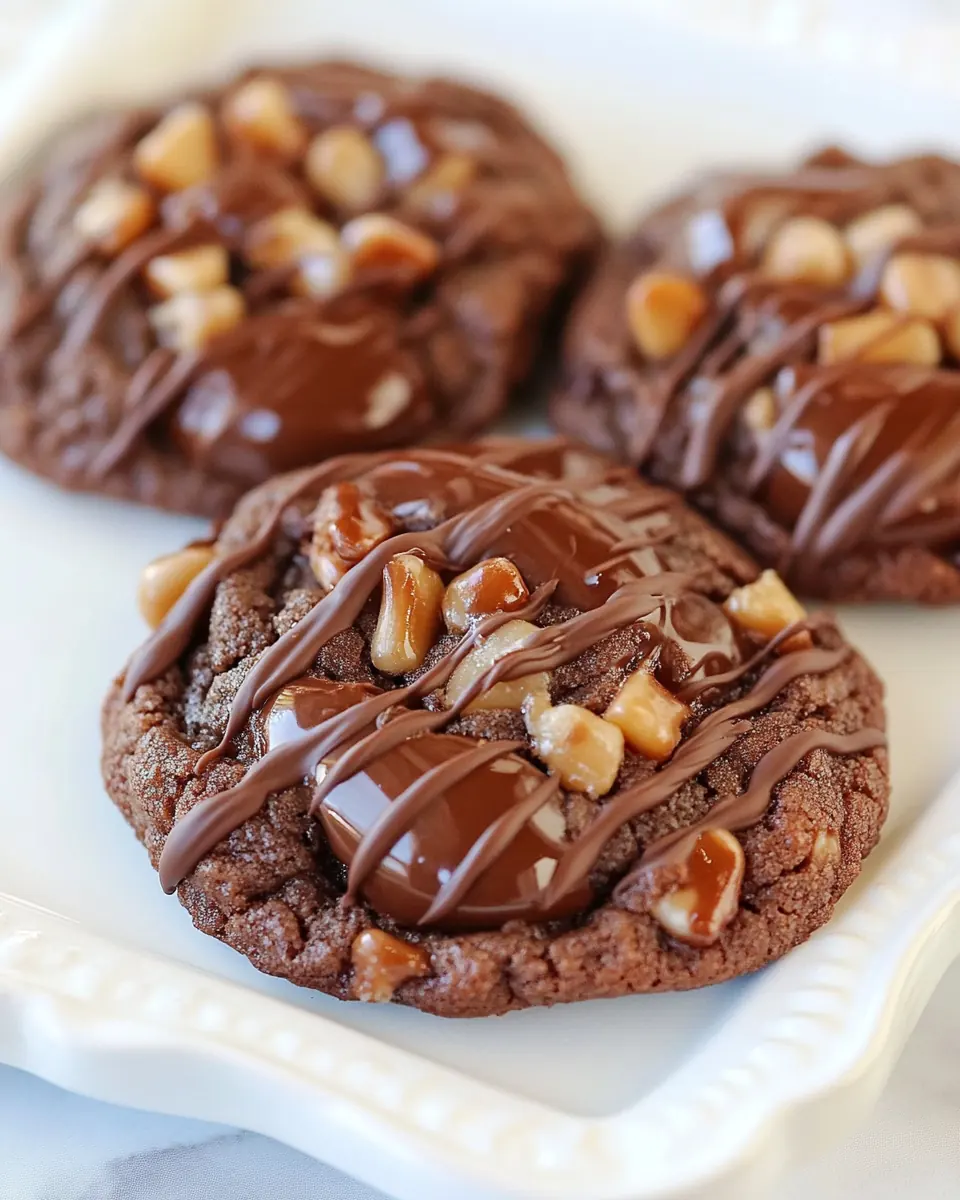
Gradually add flour mixture and beat until just combined. Stir in the chocolate chips, pecans, and caramels. Scoop the dough into rounded tablespoons and place on prepared baking sheet, about 2 inches apart.: As you add the dry mix, the dough will thicken and become more resistant on the paddle or beater. Mixing just until combined protects a tender crumb; you should still see faint streaks before the final incorporation. Folding in the chocolate chips , pecans , and caramels creates pockets of texture and flavor that will melt and toast as the cookies bake. Scoop the dough into rounded tablespoons and space them so they have room to spread, about the distance of two inches, which prevents merging. A common mistake is overworking the dough, which develops gluten and yields tougher cookies.
Bake cookies for 8-10 minutes, or until cookies are set, but still soft in the center. Remove from oven and let sit on baking sheet for 3 minutes. Move to a cooling rack and cool completely. Drizzle cookies with caramel sauce and serve.: During baking you will watch the edges set and the centers appear just soft and slightly glossy, a sign they are not overbaked. The aroma shifts to a more complex cocoa and toasty butter scent, and if you press gently the center should yield a little and then slowly rebound. Letting them sit on the hot sheet for three minutes continues gentle cooking and helps the cookies hold their shape when moved to a cooling rack. Once cool, drizzle with salted caramel sauce to add a shiny finish and that irresistible sweet salt contrast. Avoid leaving them in the oven too long; baked cookies should not be browned deeply, or they will lose the desired chewiness.
Note - we use our homemade caramel sauce, but you can use store bought caramel sauce.: Homemade caramel tends to be richer and more complex, offering deeper notes and a silkier texture when drizzled on the cookies, while store bought versions are convenient and reliable. I favor a slightly warm drizzle because the caramel flows better and creates thin ribbons, but be careful not to heat it too much, or it will be too thin and run off. If your caramel is very thick, warm it gently over a double boiler to achieve drizzle consistency. One pitfall is overheating caramel, which can separate or burn, altering the flavor negatively.