Beat egg white and vanilla until fluffy.: As you whisk, you will hear a soft, airy sound and see the egg white transform from clear to glossy and slightly frothy; this texture helps the sugar cling to each almond in a thin, even film. The mild vanilla scent will start to mingle with the egg aroma, creating a comforting base note. Why this matters, the light froth provides just enough surface area for the sugar crystals to attach, producing a consistent crust. Troubleshooting tip, if the egg white stays runny you may not achieve full coverage, so whisk until it thickens but avoid overbeating which can make it too stiff and hard to work with.
In a separate bowl, combine sugars, cinnamon and salt.: As you mix, inhale the combined sweet and spicy fragrance, especially the warm, woody notes of cinnamon against the rich smell of brown sugar . This dry blend ensures the flavor is evenly distributed later on. Why do it this way, premixing prevents clumps and gives each almond a uniform coating when tossed. Troubleshooting tip, if the mixture forms lumps, break them up with a fork so the sugar sprinkles evenly over the nuts and avoids uneven caramelization.
Dump 1 pound of almonds into egg white mixture and stir to coat.: The moment you add the almonds the texture changes, and you will feel them become tacky as the frothy egg white clings. Use a sturdy spoon to fold and turn the nuts, ensuring every surface gets a thin veil of egg. Sensory cue, they should look glossy and slightly damp but not dripping. Why this technique matters, it sets the stage for the sugar to adhere uniformly, resulting in a consistent crackle. Troubleshooting tip, if some almonds remain dry, stir longer and make sure the egg was whisked sufficiently; uneven coating leads to patchy sugar on the final batch.
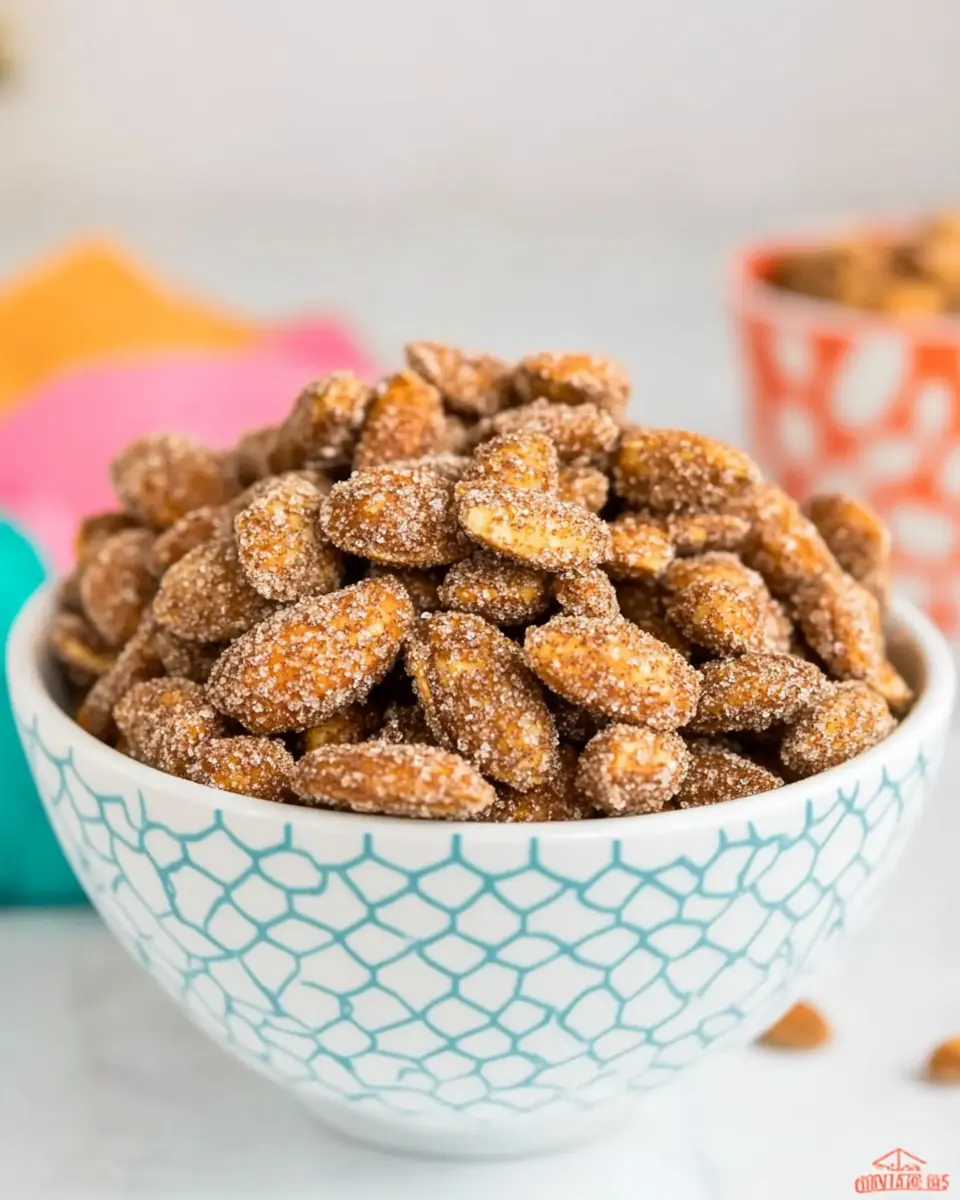
Dump sugar mixture on almonds and stir to coat.: When the dry sugar hits the tacky almonds , you will notice an immediate matte dusting that gradually starts to look almost crystallized as the sugar adheres. Work quickly but gently to fold the sugar through so every nut is fully covered. Why this step is critical, it allows the sugar to form a shell that will dry and crisp in the oven rather than melt into a syrupy pool. Troubleshooting tip, avoid adding too much sugar at once which can clump; sprinkle and stir so the coating is even.
Pour nuts onto a cookie sheet, in a single layer.: Spread the coated almonds in a single layer so they toast evenly and do not stick together; visually they should sit apart with some small gaps between pieces. The even layout promotes uniform airflow and consistent browning. Why this matters, overcrowding traps moisture and leads to chewy spots instead of a crisp shell. Troubleshooting tip, if you see clusters, gently separate them now with a spatula so each nut has exposure to the warm air in the oven.
Bake at 225 F for 1 hour, stirring every 15 minutes.: During the hour the kitchen will fill with a slow, toasty scent and the sugar will shift from grainy to a delicate, crackly shell; listen for the faint shift in aroma as caramel notes deepen. Stirring every 15 minutes exposes all sides of the almonds , prevents hot spots, and encourages even drying. Why low and slow works, the gentle heat evaporates moisture without burning the sugar, creating that prized crispiness. Troubleshooting tip, if the nuts brown too quickly raise the rack or lower the temperature slightly, because high heat can burn the sugar and create bitterness.