Preheat oven to 350 degrees F.: The kitchen fills with a faint warmth that starts to crisp the air, signaling the transition from raw to toasted. Preheating ensures the pretzels bake evenly, promoting that slight caramelization of the granulated sugar . If the oven is not properly heated you may end up with uneven texture, so use an oven thermometer if yours runs hot or cold.
Line a large sheet cake pan with parchment paper. Set aside.: The parchment creates a nonstick surface so the sugared pretzels release cleanly once baked. It also makes cleanup effortless and protects the pan from sticky residue. Avoid skipping this, because without parchment the sugar can harden to the pan and be hard to remove.
Place pretzels into a large bowl.: Dropping the pretzels into a roomy bowl lets them move freely during tossing, so the coating reaches every piece. A crowded bowl yields uneven coverage, and small containers can leave clumps. Listen for the dry rattle of the pretzels as a cue that they are ready to be dressed.
In a small mixing bowl, whisk together melted butter, sugar and cinnamon.: The aroma of warm butter and cinnamon blooming together is immediate and inviting. Whisking dissolves the granulated sugar into the fat, creating an emulsion that will coat the pretzels uniformly. If you skip proper whisking you might find gritty pockets of sugar, so ensure the sugar is well incorporated.
Pour over the pretzels. Toss to coat.: The sight of the glossy mixture clinging to the pretzels is satisfying, and the tactile motion of tossing helps distribute the coating. Tossing also breaks apart any stuck clusters so each piece bakes crisp. A common mistake is overmixing, which can crush delicate shapes, so toss gently with a spatula or hands if needed.
Spread the pretzels in one layer on the prepared baking pan.: An even single layer ensures consistent exposure to heat, producing uniform toasting and sugar set. Crowding the pan leads to steaming instead of crisping. Visually, you want space between pieces for the edges to brown and the sugar to snap.
Bake for 12 minutes.: The oven amplifies the baking spices and melts the sugar to a glossy coat, and you will notice a toasty, nutty scent as the pretzels color. The short bake time keeps them crisp without burning the sugar. A frequent error is leaving them too long, which can darken the butter flavor and create bitterness, so watch through the oven window.
Remove from the oven and let cool completely.: Cooling lets the coating firm and the sugars set, transforming from tacky to crisp. The sound of the cooling pretzels is a gentle snap when you pick one up, and the texture is at its best after this rest. Cutting this rest short risks a sticky finish that clumps.
Melt the white chocolate over a double boiler or in a microwave.: Melting the white chocolate chips carefully preserves silky texture. Overheating results in graininess or separation, so use short bursts in the microwave, stirring frequently, or a gentle double boiler. If the chocolate seizes, a small spoon of neutral oil can sometimes revive it, but prevention is better.
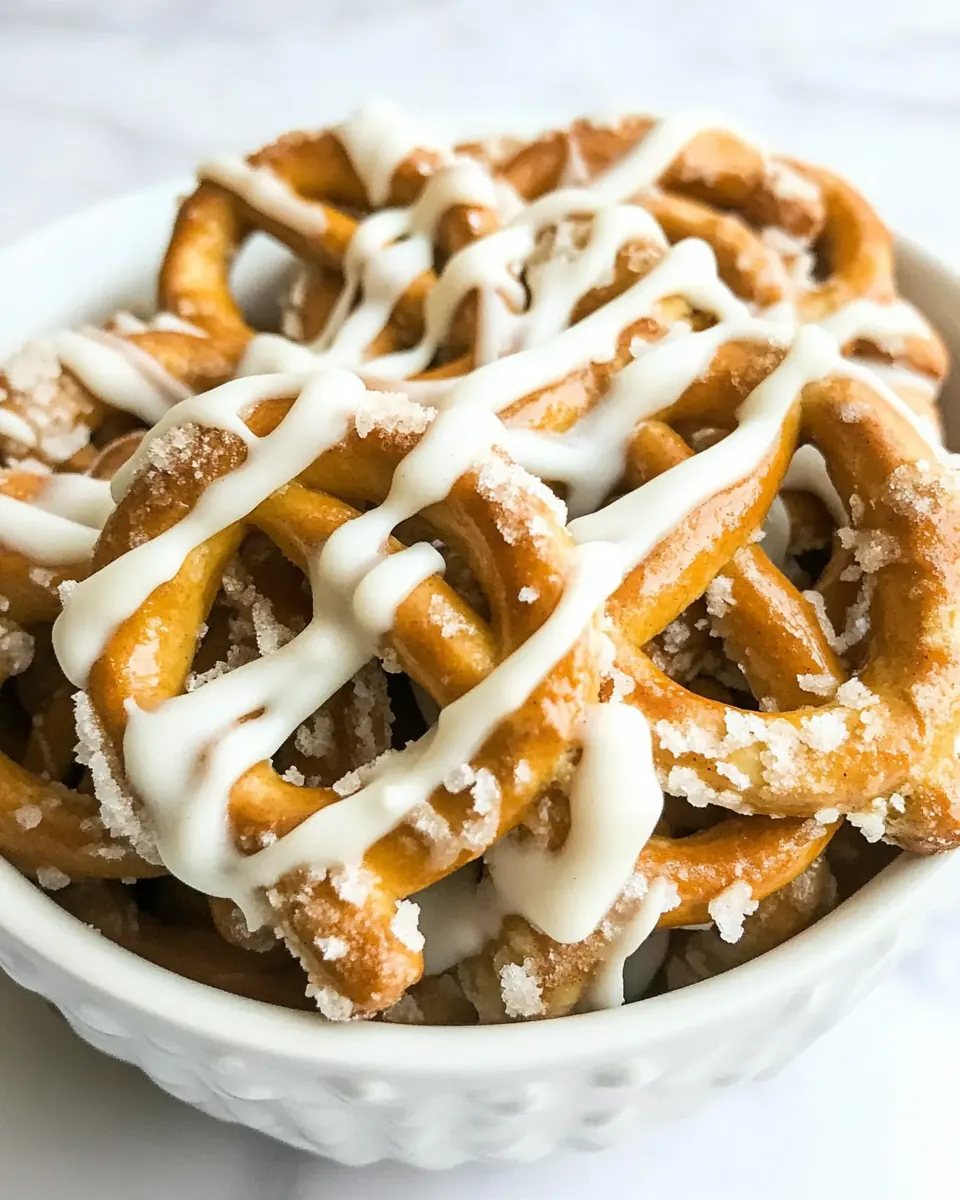
Drizzle the pretzels with white chocolate.: The creamy ribbon of melted white chocolate chips contrasts the crunchy, spiced surface and visually lifts the snack. Use a spoon or piping bag for controlled lines. Work with a light hand to avoid pooling, which can create sticky clumps that lose their delicate snap.
Let sit until the chocolate is set.: Allowing the coating to harden ensures the pieces remain separate and easy to handle. You will notice the sheen dull and the texture firm. Rushing to pack them while tacky invites sticking and messy presentation.
Serve.: Arrange the cooled, drizzled pieces on a platter and enjoy the interplay of salty crunch with sweet, creamy ribbons. The first bite should offer contrast and balance. If the pieces seem too warm or soft, let them rest a bit longer to achieve the ideal texture.
Store in an air-tight container for up to 5 days.: Proper storage preserves crunch and prevents moisture from softening the sugar coating. Keep in a cool, dry place away from heat sources. A common mistake is storing while still warm, which traps steam and leads to a loss of crispness.