Preheat oven to 425 degrees F. Line a large baking sheet with parchment paper or a Silpat and set aside.: As you preheat, take a moment to notice the tiny change in the room atmosphere, that anticipatory warmth. A properly preheated oven ensures the scones puff quickly, creating flakiness, so do not skip this, and avoid opening the oven door during preheat. One common mistake is shortening the preheat time, which can yield dense scones instead of light ones.
In a large bowl, whisk together flour, baking powder, sugar, cinnamon, and salt. Cut in the butter, using your fingers, two knives, or a pastry blender. Mix until mixture resembles coarse meal, with mostly pea-size lumps of butter. Stir in the cinnamon chips. Pour heavy cream over the ingredients and stir with a spatula until dough begins to form. Don't over mix.: After combining, rub a small pinch of the dry mix between fingertips to detect the even dispersion of baking powder and cinnamon. This step prevents clustered pockets of leavening or spice, which would create uneven flavor or rise. A trick I use is sifting or vigorous whisking to ensure a uniform mix. Avoid adding wet ingredients too soon, which can make the dough gluey.
Transfer dough to a floured countertop and knead dough by hand just until it forms a ball. Form scones by patting the dough into a 3/4-inch thick circle. Cut the scones into triangles or use a biscuit cutter for round scones.: When the butter is worked into the flour, you will see pea sized lumps of butter; that visual is key. Those buttery pieces melt in the oven and create steam pockets that make the scones flaky. The tactile feel should be coarse and crumb like with visible butter bits. A common error is overworking the butter so it fully blends, which eliminates those pockets and leads to a tougher crumb.
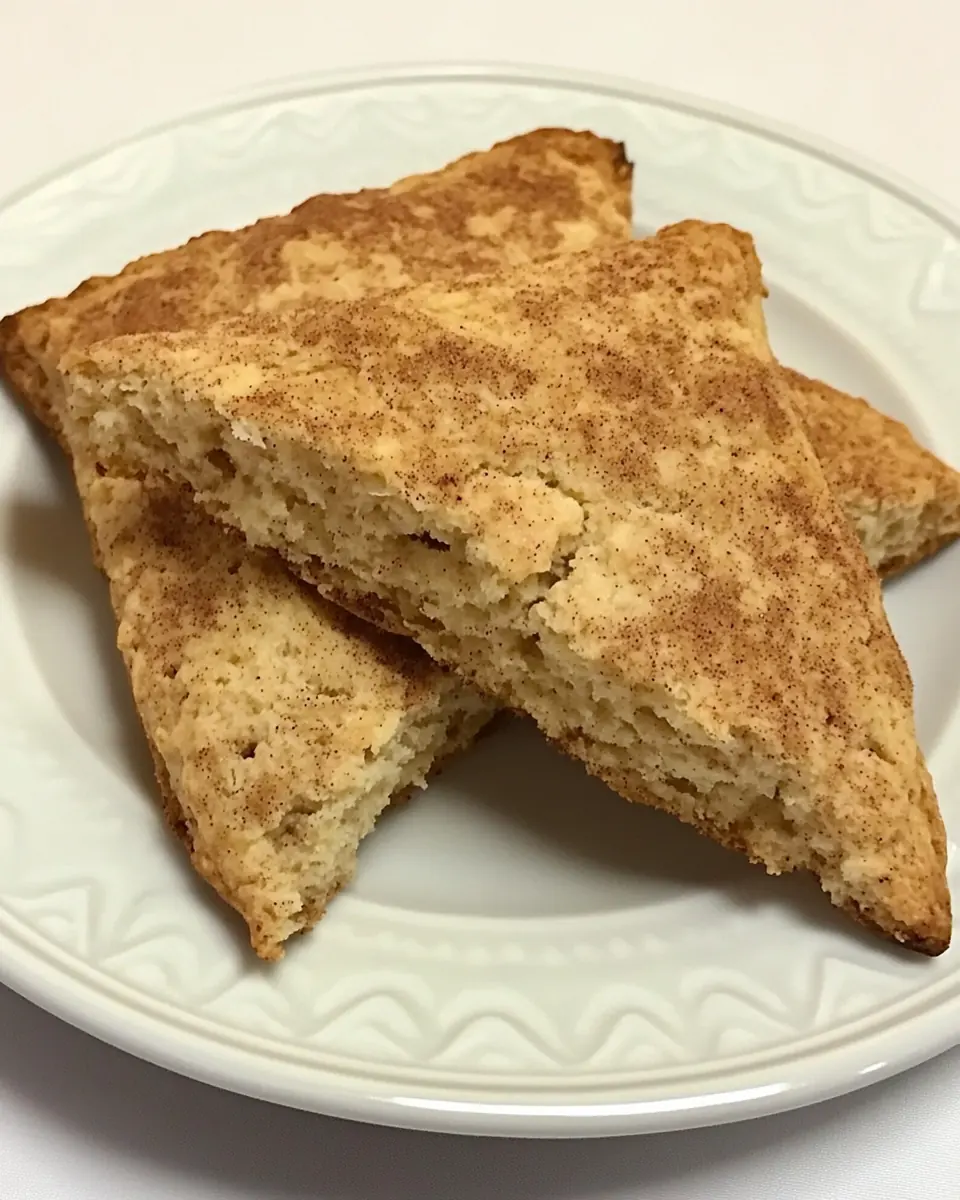
Place scones on prepared baking sheet. In a small bowl, combine sugar and cinnamon. Using a pastry brush, lightly brush the scones with heavy cream. Sprinkle scones with cinnamon/sugar mixture. Bake scones for 12 to 15 minutes, or until light brown. Cool scones on a wire cooling rack and serve. Store leftover scones in an airtight container at room temperature for up to 2 days.: The crumb should feel slightly sandy but still yield small clusters when pressed. This texture helps the dough bind without becoming dense. If the mixture looks uniformly powdery or overly smooth, you may have under or overworked the butter. Resist the urge to keep cutting once the pea-size pieces are visible.
Stir in the cinnamon chips: Fold the chips in so they are distributed evenly, leaving small pockets throughout the dough. The visual cue is small bits of contrasting color against the flour, and when baked these will soften to pockets of sweet spice. Avoid vigorous stirring which can crush the chips and bleed their color into the dough.
Pour heavy cream over the ingredients and stir with a spatula until dough begins to form: As the cream hits the mixture you will see it come together in soft clumps, and a slight sheen on the dough indicates enough hydration. The dough should be tacky but not wet. Stir gently to avoid over mixing, since aggressive mixing leads to gluten development and tougher scones. A frequent slip is adding too much cream; add only enough until the dough just holds.
Don't over mix: Stop when the dough just comes together and still has small dry flecks, as that yields a tender interior. Overmixing builds gluten and creates dense scones, so I press with a spatula and finish by hand if needed. If you notice the dough becoming sticky and elastic, you have likely overworked it and should chill briefly before proceeding.
Transfer dough to a floured countertop and knead dough by hand just until it forms a ball: Light, gentle kneading brings the dough together without activating too much gluten. You will feel it smooth slightly under your palms and the surface take on a cohesive look. Keep movements minimal and use a light dusting of flour to prevent sticking. A common misstep is vigorous kneading, which tightens the dough and reduces tenderness.
Form scones by patting the dough into a 3/4-inch thick circle: The thickness influences baking time and interior crumb. Patting with your hands gives control over thickness and helps preserve those butter pockets. Using excessive force will compact the dough, so use gentle, even pressure. If the dough cracks at the edges, a quick press with moistened fingertips smooths it out.
Cut the scones into triangles or use a biscuit cutter for round scones: Clean cuts help the scones rise evenly; if using a cutter, press straight down rather than twisting. Twisting seals edges and can prevent rise. After cutting, arrange with space on the sheet to allow for expansion. A common mistake is re-rolling scraps too many times, which toughens the final scones.
Place scones on prepared baking sheet: As you transfer them, keep a small gap to allow hot air to circulate. The visual should be pale dough sitting on parchment, ready to brown. Crowding the sheet can inhibit browning and even baking.
In a small bowl, combine sugar and cinnamon: Mix until evenly blended so the topping tastes consistent. This mixture will create the crisp sugary crust, so even distribution is important. A sloppy mix will leave uneven flavor pockets.
Using a pastry brush, lightly brush the scones with heavy cream: The cream helps the topping adhere and promotes a golden finish. Brush gently to avoid flattening the scones, and look for a slight sheen on the surface as your cue. Over brushing can lead to soggy tops or excessive browning.
Sprinkle scones with cinnamon/sugar mixture: Apply a thin, even layer for a crunchy top that balances the interior. The sugar will caramelize slightly in the oven, giving visual cues of golden edges. A common error is piling on too much sugar which can cause burning or overly sweet bites.
Bake scones for 12 to 15 minutes, or until light brown: As they bake you will smell warm cinnamon and see the tops puff to a delicate dome with light golden color at the edges. This visual cue indicates proper doneness, and an internal check will show a tender crumb. Underbaking leaves a raw center, while overbaking yields heavy, dry scones.
Cool scones on a wire cooling rack and serve: Cooling briefly firms the crumb and prevents a gummy bottom from residual steam. I usually let them rest for about 10 minutes so the interior sets and the topping becomes crisp. Cutting too soon can compress the crumb and make the texture dense.
Store leftover scones in an airtight container at room temperature for up to 2 days: Allow them to cool completely first to avoid trapping moisture, which can make them soft. For longer storage, freeze individually wrapped scones for up to 2 months. A common mistake is sealing them while warm, which invites condensation and sogginess.