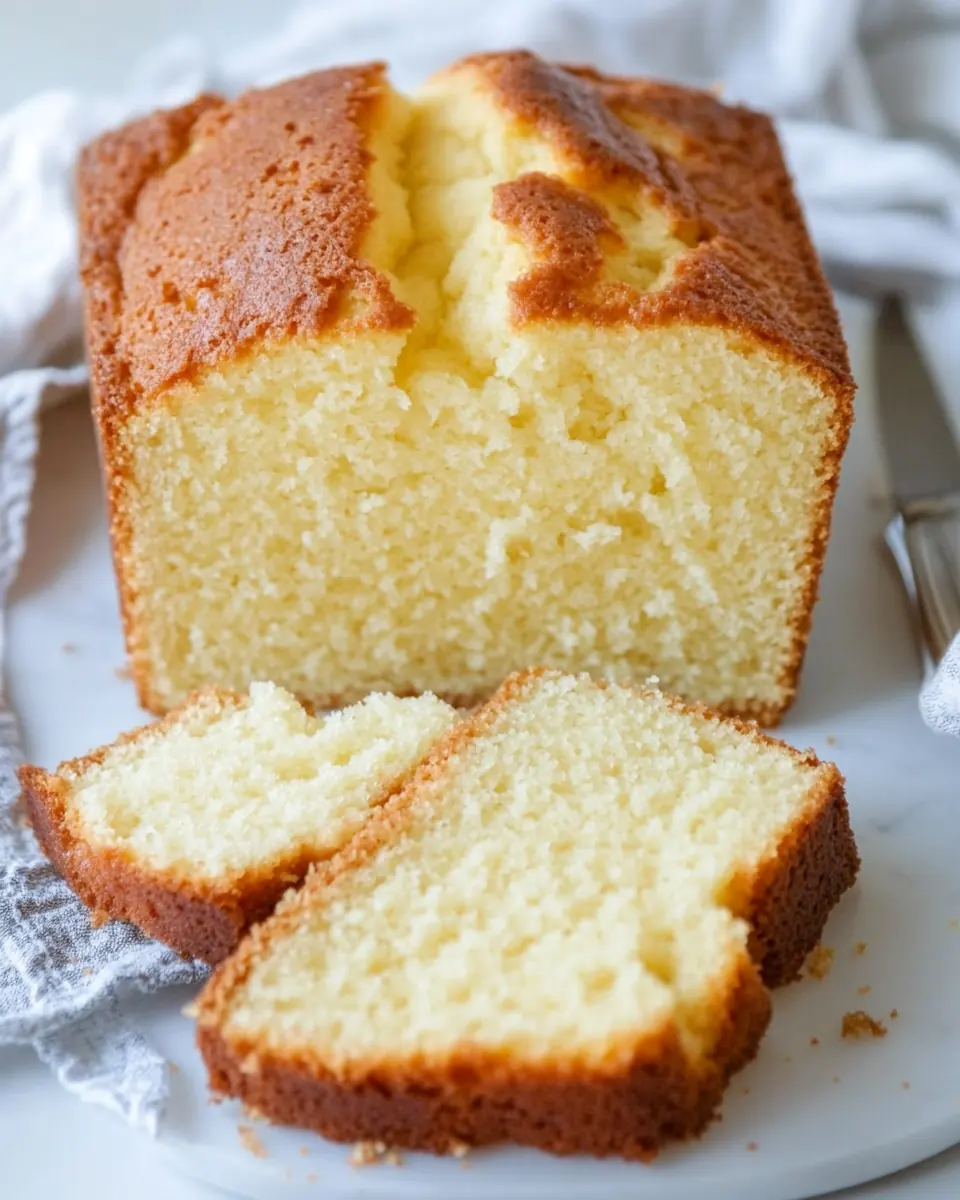
Cut butter into 16 pieces and place in the bowl of an electric mixer; let stand at room temperature for 30 minutes to soften slightly. In a small bowl, use a fork to beat together the eggs, yolks and vanilla extract. Let stand at room temperature until ready to use.: The faint scent of dairy will begin to come through as the butter relaxes, and the pieces will yield to gentle pressure when ready. Softening evenly avoids greasy pockets and allows the creaming to trap consistent air, which is crucial for lift. A common mistake is leaving the butter too soft so it becomes oily, which prevents proper aeration; if that happens chill the bowl briefly. I like to test by pressing a piece between fingers, it should deform but still hold shape. Scrape any melted edges into the bowl so the overall temperature stays even. If your kitchen is warm, place the cut butter in a slightly cooler spot for five to ten minutes to prevent over softening.
Preheat oven to 325 degrees F. Grease and flour an 8 1/2 by 4 1/2-inch loaf pan.: As you whisk, the mixture becomes glossy and the aroma of vanilla extract lifts, hinting at the richness to come. Combining the eggs and egg yolks ahead ensures they incorporate smoothly when added, reducing the risk of curdling the creamed butter . One pitfall is adding cold eggs to warm butter , which can cause the batter to seize; always keep ingredients closer to room temperature. After beating, the color will deepen slightly and the texture will be homogenous, making for an even stream when poured into the mixer.
Beat the butter and salt at medium-high speed until smooth and creamy, about 3 minutes, stopping to scrape the bowl once. Reduce the mixer speed to medium and gradually pour in the sugar. Once all of the sugar is added, increase the speed to medium-high and beat until light and fluffy, 5 to 8 minutes, scraping the bowl once. Reduce the mixer speed to medium and gradually add the egg mixture in a slow, steady stream. Scrape down the bowl, then beat the mixture at medium-high speed until light and fluffy, 3 to 4 minutes. Scrape down the bowl.: When the oven reaches temperature, a faint dry, warm smell signals readiness, and the heat will gently set the batter for an even crust. An oven thermometer is helpful because many ovens vary, and incorrect heat is a frequent culprit when cakes bake too quickly on the outside while remaining underdone inside. If your oven runs hot, reduce by 5 to 10 degrees and monitor color early. Proper preheating ensures a steady rise and a uniform golden brown finish rather than a cracked or overbrowned top.
Sift the flour over the batter in 3 additions, folding gently with a rubber spatula after each addition.: Rubbing a thin layer of butter into the pan and dusting with a light coating of flour prevents sticking while still allowing the sides to brown nicely. The tactile cue here is a smooth, even coating with no clumps of flour. A common oversight is using too much grease, which can cause the crust to slide; instead wipe out excess with a paper towel. For a cleaner release, you can line the bottom with parchment, but keep it minimal so the crust develops properly.
Pour the batter into the prepared pan and smooth the top. Bake until golden brown and a toothpick inserted in the center comes out clean, 70 to 80 minutes, rotating pan halfway through baking. Let cake cool in the pan on a wire rack for 15 minutes, then turn out onto a wire rack and cool completely, at least 120 minutes, before serving. The cake can be stored, wrapped tightly in plastic wrap, at room temperature for up to 3 days.: You will hear a steady smooth whir as the butter breaks down into a spreadable cream, and its color will lighten slightly. This creaming step starts the incorporation of air, which contributes to the cake's lift and tender crumb. If you rush it or use too low a speed, the butter will not aerate adequately; conversely overbeating can cause it to become too soft. Scrape the bowl to keep the mixture uniform and check texture by tapping the paddle, it should look glossy and hold soft peaks.
Reduce the mixer speed to medium and gradually pour in the sugar: As the granulated sugar dissolves into the butter, the mixture will take on a paler, almost whipped look, and you may hear a faint change in the motor as the resistance shifts. Adding the sugar too quickly can knock out air or leave grains undissolved, which affects texture, so pour steadily. If the batter feels gritty after a minute, scrape and mix a bit longer. Properly creamed sugar and butter set the stage for a light yet dense crumb.
Once all of the sugar is added, increase the speed to medium-high and beat until light and fluffy, 5 to 8 minutes, scraping the bowl once: You will notice the batter grow in volume and change to a lighter, cloudlike hue, a sign that enough air is trapped. This is essential for an even crumb structure, and the sound of the mixer will shift to a higher pitch as the mixture becomes aerated. A typical mistake here is impatience, stopping too soon; under-creamed batter yields dense cake. Keep an eye on texture rather than strictly the clock, and pause to scrape the sides so everything folds in evenly.
Reduce the mixer speed to medium and gradually add the egg mixture in a slow, steady stream: As the liquid enters, the batter will momentarily look looser, and a sweet, warm scent of eggs and vanilla extract will bloom. Adding too quickly can cause the emulsion to break and create curdled pockets, which shows as streaks; pour slowly to maintain a stable mixture. If separation happens, stop and scrape the bowl, then mix a little longer at low speed. The correct rhythm is patient and steady, allowing the batter to absorb the eggs while keeping air pockets intact.
Scrape down the bowl, then beat the mixture at medium-high speed until light and fluffy, 3 to 4 minutes: After scraping, the batter should re-emulsify and fluff up again, gaining height and a smooth surface. This second aeration reinforces the structure created earlier, resulting in a consistent crumb. If the batter looks curdled or separated now, continue mixing briefly; if it becomes overly glossy and runny, you may have overworked it. Look for a satin finish and a texture that holds when lifted with the paddle.
Sift the flour over the batter in 3 additions, folding gently with a rubber spatula after each addition: You will hear a soft rustle as the cake flour falls into the bowl, and the batter will thicken in stages, becoming more cohesive without losing air. Folding preserves the trapped air and prevents gluten overdevelopment, which keeps the loaf tender. A common error is stirring aggressively, which yields a tight, heavy crumb. Use a light hand and fold until you no longer see streaks of flour, aiming for an even, smooth batter that still holds some loft.
Pour the batter into the prepared pan and smooth the top: As you transfer the batter, it should flow slowly and settle into the pan with minimal bubbles, and the top should be leveled with a spatula for even rising. Tapping the filled pan gently on the counter helps release any large air pockets that could create tunnels in the crumb. Avoid overworking the batter while smoothing, or you risk compressing the air. The visual cue is a glossy, even surface that will brown evenly during baking.
Bake until golden brown and a toothpick inserted in the center comes out clean, 70 to 80 minutes, rotating pan halfway through baking: During baking, the kitchen fills with a warm, buttery aroma and the top gradually deepens to a rich golden brown. Rotating the pan at the halfway point promotes even color and prevents one side from overbrowning. The toothpick test should yield minimal crumbs when done; if the center jiggled or appears wet, return to the oven in five minute increments. A typical mistake is opening the oven too often, which drops the temperature and can cause the cake to sink. Trust the cues of color and the toothpick test for timing.
Let cake cool in the pan on a wire rack for 15 minutes, then turn out onto a wire rack and cool completely, at least 120 minutes, before serving: Cooling in the pan allows the loaf to set so it holds its shape, and the subsequent full cooling on the rack stabilizes moisture and texture. The aroma will mellow and the crumb firms, making slicing cleaner and more attractive. Cutting too soon can result in a gummy interior and torn slices. I recommend patience here, because the final texture improves as the loaf reaches room temperature and the crumb relaxes.
The cake can be stored, wrapped tightly in plastic wrap, at room temperature for up to 3 days: After cooling fully, wrapping preserves moisture and keeps the crust from drying out, while the flavor continues to develop. Keep it away from strong odors, because the loaf can absorb surrounding scents. A common storage mistake is leaving it unwrapped, which leads to a dry exterior and stale crumb. For longer keeping, freeze wrapped slices for future treats.