To make the crepes, combine all the ingredients in a blender or food processor and pulse for 30 seconds to 1 minute or until well combined. Place the crepe batter in the refrigerator for about 30 minutes. This allows the bubbles to subside so the crepes will be less likely to tear during cooking. The batter will keep for up to 48 hours.: The sound of the blender will shift from choppy to a steady hum, and you should see a smooth, pale batter without streaks of flour, indicating proper hydration. This quick blitz minimizes overmixing by using blades to do the work, which helps keep the crepes tender. A common mistake is blending too long and warming the batter excessively, which can thicken it and affect resting behavior. If the batter feels warm to the touch, cool it briefly before chilling to preserve the eggs and maintain the right viscosity.
Meanwhile, prepare the whipped mascarpone. Add the mascarpone and heavy cream to a mixing bowl. Using an electric mixer, beat on high speed until soft peaks form, about 5 minutes. Beat in the honey and vanilla until just combined. Cover and place in the fridge until ready to serve.: Cold batter relaxes and the tiny air bubbles created by blending will subside, yielding thinner, less tear-prone crepes. During this rest you may notice the batter thicken slightly as the flour absorbs liquids. That is normal and helps with even spreading in the pan. Avoid skipping this step; cooking right away often results in crepes that are more fragile and prone to holes.
To prepare the Blood Orange Compote, zest one of the oranges, set the zest aside. Slice four oranges into 1/4 inch rounds. Using a sharp paring knife, cut the peel and white pith away from the flesh. Add the blood orange rounds to a bowl.: As the batter rests you will hear nothing, but visually you can see fewer foam bubbles and a smoother surface. The calmer batter spreads more uniformly on the skillet, producing even browning. If you see large bubbles while cooking, tap the pan gently to disperse them, otherwise they can create holes or uneven thickness.
In a skillet, mix 1/2 cup of the blood orange juice with the reserved zest, honey and vanilla. Bring to a boil, reduce heat, and simmer for 5 minutes. Remove from the heat and add the blood orange slices. If desired you can then return the compote to the heat for a minute to cook slightly the oranges, I did not. Set the compote aside or place in the fridge for a later use. I liked mine warm though!: Stored in an airtight container the batter stays usable, though you may notice slight separation which is resolved by a gentle stir. This is handy for making crepes over two days, but be mindful that prolonged storage can slightly change flavor due to flour oxidation. If you detect an off smell, discard and make a fresh batch.
Now let's make the crepes. Heat a 12 inch non-stick pan. Add butter or cooking spray (I like to use cooking spray) to coat. Pour 1/3 cup of batter into the center of the pan and swirl to spread evenly. Cook for 30 seconds and flip. Cook for another 10 seconds and remove to a cutting board. Lay them out flat so they can cool. Continue until all batter is gone. Makes about 10 crepes.: As you combine cold mascarpone and heavy cream , the mixture should feel cool and velvety to the touch. Cold ingredients whip better and hold peaks more reliably. A shallow bowl helps air incorporate efficiently; if you use a deep bowl it will take longer and you may overwork the cream before the cheese is fully aerated.
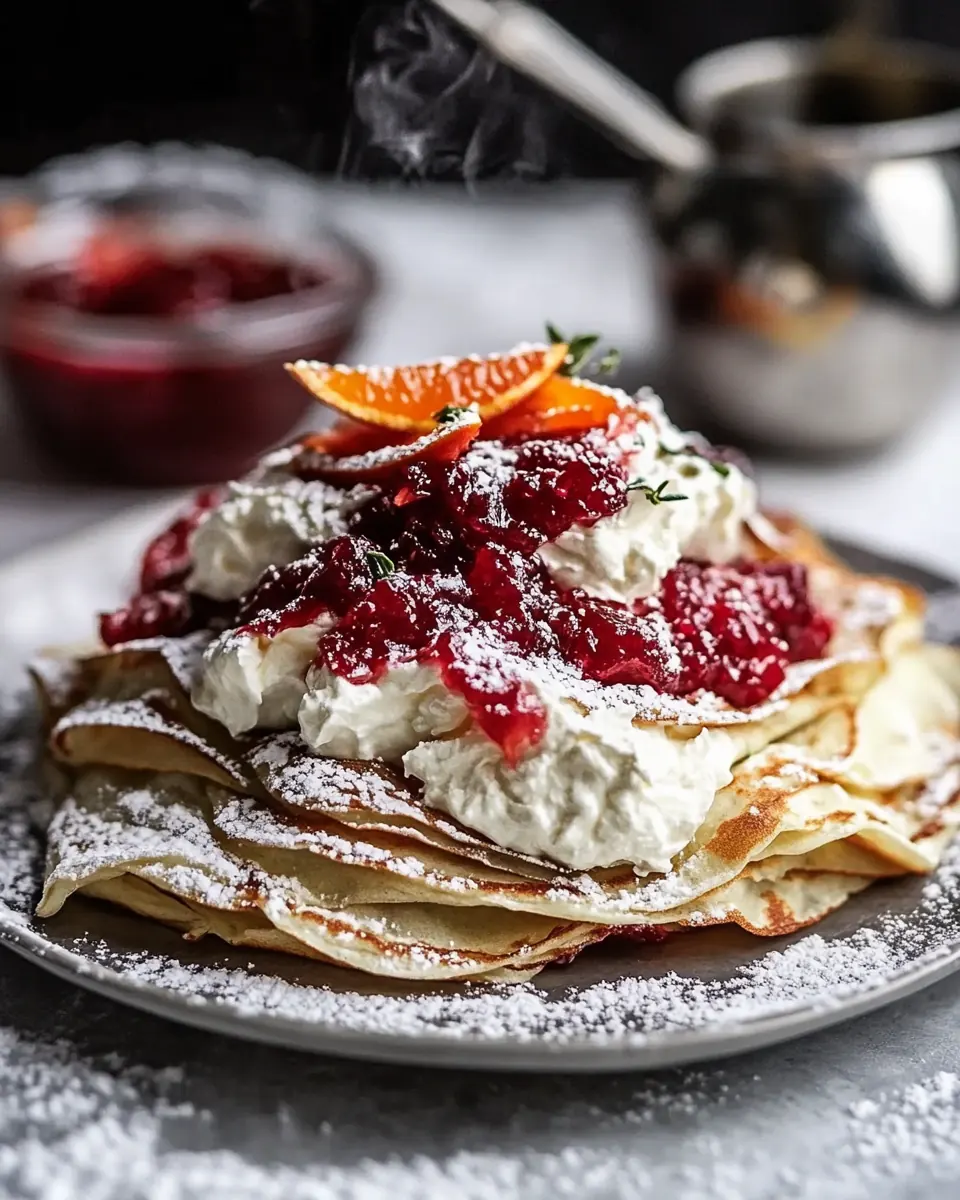
To assemble, spread the whipped mascarpone inside a warm crepe. Top with blood orange compote. Dust with powdered sugar and drizzle with honey. Add a mint leaf for garnish if desired.: The rhythm of the mixer will change from splashy to thicker, and you’ll see soft peaks that gently fold back on themselves. This airy texture is crucial so the filling is light, not dense. Overbeating risks breaking down the structure into butter-like clumps, so stop as soon as the peaks hold.
Beat in the honey and vanilla until just combined: Adding honey and vanilla at low speed preserves the whipped texture while infusing flavor. You’ll notice a glossy sheen as the honey incorporates. A common error is adding too much sweetener which can weigh down the mixture, so taste and add gradually.
Cover and place in the fridge until ready to serve: Chilling firms the filling and allows flavors to meld; you should feel the bowl become cool and the filling set slightly. If left out too long it will soften and lose its shape when spread, so keep refrigerated until assembly time.
To prepare the Blood Orange Compote zest one of the oranges set the zest aside: Zesting releases fragrant oils that are more aromatic than juice alone, and you will smell a bright citrus perfume. Use a fine grater to avoid pith. Saving the zest separately ensures it can be added to the syrup to infuse flavor without becoming bitter.
Slice four oranges into 1/4 inch rounds using a sharp paring knife cut the peel and white pith away from the flesh: The clean sound of a sharp blade should produce neat rounds; removing the pith prevents bitterness and shows the vivid blood orange flesh. Work over a cutting board to catch juices, and handle gently to keep slices intact. A dull knife will tear the fruit and make presentation messy.
Add the blood orange rounds to a bowl: As the slices stack you can admire their deep color and fragrant juices. The bowl catches any juice you might use in the compote. Avoid stacking too high which can crush the slices and release excess liquid prematurely.
In a skillet mix 1/2 cup of the blood orange juice with the reserved zest honey and vanilla: The mixture will begin to steam as it warms and the honey will liquefy into a glossy syrup. Aromas will bloom quickly, filling the kitchen with citrus and vanilla. Stir constantly when heating to prevent scorching, especially once the syrup starts to bubble.
Bring to a boil reduce heat and simmer for 5 minutes: The syrup will thicken and turn slightly syrupy, coating the back of a spoon when ready. Simmering concentrates flavor and balances acidity. A common mistake is boiling too aggressively which can caramelize the sugars and darken the syrup excessively; use a gentle simmer for control.
Remove from the heat and add the blood orange slices: Adding the slices off heat preserves their texture and bright color, and the residual warmth helps them soak up the syrup flavors without getting mushy. If you prefer a softer fruit, briefly return to heat for about a minute, but watch carefully, as overcooking makes them fall apart.
If desired you can then return the compote to the heat for a minute to cook slightly the oranges I did not: Returning briefly to heat melds the fruit into the syrup and softens the slices a touch, creating a jam like consistency. If you enjoy a firmer segment, skip this. Overheating will make the compote lose its fresh citrus character, so stir constantly during any return to heat.
Set the compote aside or place in the fridge for a later use I liked mine warm though: Cooling concentrates flavors and allows the syrup to thicken further, while warm compote feels more immediate and comforting. If refrigerating, bring it to room temperature before serving to restore aroma. Never leave the compote at room temperature longer than a few hours to avoid quality loss.
Now let's make the crepes heat a 12 inch non stick pan: The pan should feel evenly hot to the touch when you hold your hand a few inches above it, and a small drop of water should sizzle gently. Using an even heating element ensures uniform browning across the crepe; hot spots will create uneven color and texture. If the pan smokes, reduce heat slightly to avoid burning the batter.
Add butter or cooking spray to coat: A thin sheen prevents sticking and encourages a delicate crust to form. I prefer cooking spray for even coverage, but a small amount of butter gives a nutty, brown edge. Too much fat pools and fries the crepe, so use just enough to coat.
Pour 1/3 cup of batter into the center of the pan and swirl to spread evenly: You should hear a soft hiss as the batter hits the pan, and the surface should level into a thin circle within seconds. The motion of swirling ensures edges cook thinly while the center cooks through. If the batter doesn't spread, the pan may be too cool or the batter too thick; adjust temperature or add a splash of water to the batter.
Cook for 30 seconds and flip: Look for the edges to lift slightly and small bubbles to form on the surface as visual cues for flipping. The underside should have light golden spots. Flipping early or late can yield undercooked centers or overly browned crepes, so time this carefully.
Cook for another 10 seconds and remove to a cutting board: A brief second side cooks just enough to set the crepe while keeping it flexible. The sound will soften and the surface should be matte, not wet. Stack them flat to cool so they remain pliable for filling; stacking too warm can cause steam and sogginess.
Lay them out flat so they can cool continue until all batter is gone makes about 10 crepes: Cooling flattened crepes prevents them from sticking into a folded mass, and gives you a clean surface for spreading filling. If you stack while hot, they may adhere and tear when separated. Count out your portions so you know how many crepes to use per serving.
To assemble spread the whipped mascarpone inside a warm crepe: The combination of warm crepe and cool filling creates a delightful contrast; the filling will soften slightly without melting away. Use a thin layer to keep the bite balanced. Overfilling makes rolling messy and causes the crepe to tear.
Top with blood orange compote: Spoon a few slices and some syrup onto the filling so each bite has fruit and glaze. The compote's glossy syrup will add visual appeal and moisture. Be mindful of syrup quantity, as too much will make the crepe soggy.
Dust with powdered sugar and drizzle with honey: Powdered sugar adds a pretty, velvety finish while warm honey provides shine and an extra layer of sweetness. Apply honey sparingly to avoid overwhelming the citrus brightness.
Add a mint leaf for garnish if desired: A small leaf adds herbal color and a fresh scent at the finish. It is optional but uplifting. Avoid heavy garnishes that compete with the elegant balance of flavors.