Preheat oven to 350°F (180°C).: As the oven warms, you should notice a faint scent of dry heat and the kitchen will begin to hum with anticipation. Preheating is essential so that when the conchas go in they begin baking immediately, helping the topping set and the crumb rise properly. A common mistake is skipping preheat, which can lead to uneven bake and a denser interior. If your oven runs hot or cold, use an oven thermometer to confirm the temperature for reliable results.
In a microwave-safe bowl, heat milk until it reaches 110°F. Add yeast and sugar and set aside for 5 minutes or until foamy.: Warm milk to about body temperature, it should feel warm but not hot to the touch, and it will smell faintly sweet as the proteins loosen. This temperature wakes the yeast without killing it; you will see foam when the yeast is active after adding sugar . If the liquid is too cool, rising will be sluggish; if too hot, the yeast can die, leaving the dough flat. Always test with a thermometer or by touch to avoid this pitfall.
Melt the butter and let it cool to room temperature.: Watch closely as the surface becomes bubbly and foamy, a clear sign the yeast is alive. The foam smells slightly yeasty and sweet, and it signals that fermentation has begun, which will create the airy crumb. If no foam appears, your yeast may be expired or the liquid temperature was wrong, so start again with fresh yeast to ensure proper rise.
In a large bowl or stand mixer bowl, whisk together the flour and salt. Add melted butter, eggs, and yeast mixture. Stir or mix on medium-low speed until the dough becomes smooth and elastic. The dough will be slightly tacky, but not completely sticky. If your dough is sticky, add another tablespoon of flour.: Melted butter will smell rich and toasty; letting it cool prevents it from cooking the eggs or killing the yeast when mixed in. Warm but not hot butter blends smoothly into the batter, adding tenderness. Adding hot butter is a common error that can scramble eggs or reduce yeast activity, so allow enough cooling time.
Transfer the dough into a clean bowl, greased with some oil, and let it sit for 2 hours or until doubled in size.: The dry mix should look uniform, pale, and slightly dusty, which means the salt is evenly distributed. Mixing dry ingredients first avoids pockets of salt that could inhibit yeast in those spots. If you skip this step, you might end up with uneven flavor and inconsistent dough behavior later.
Divide the dough into 10 equal pieces. Shape the dough into balls. Place the balls onto two baking sheets lined with parchment paper. Set them aside for 30 minutes.: When combined, the bowl will emit a warm, eggy aroma with butter undertones, and the dough will begin to pull away from the sides as gluten develops. This mixture is the foundation of the enriched dough, providing fat and structure. Overmixing can make the dough tough, so stop once it is smooth and elastic. If the dough feels too sticky, add small extra spoonfuls of flour to correct it.
Make the topping; whisk flour and powdered sugar in a bowl. Add butter and work it in with clean hands or process it all in a food processor until you have a streusel-like topping.: You will notice the dough change from shaggy to cohesive, and under the mixer it should create strands that stretch rather than tear. This indicates proper gluten formation for a soft yet sturdy crumb. Rushing this stage can result in underdeveloped structure, while overworking makes it stiff, so aim for that elastic feel.
Divide the topping in two and add vanilla in one part and cocoa powder into the second part. Stir well to combine.: As the dough proofs, it will expand and smell fragrant, slightly sweet and yeasty. The visual cue is a smooth dome and a soft spring when poked gently. If it does not double, it might be in a cool spot or the yeast was weak; move it to a slightly warmer area and give it more time rather than increasing temperature drastically.
Divide each topping into five portions. Roll out the topping by rolling pin until lightly flattened, or use a tortilla press to flatten them out. Drape the topping over the dough and pat gently to secure it.: The dough should feel airy and yield slightly when pressed, and cutting into equal portions ensures uniform baking. When you shape into balls, the surface should be smooth and taut, which helps even expansion. Unequal sizing will lead to inconsistent bake times, so weigh portions or estimate carefully.
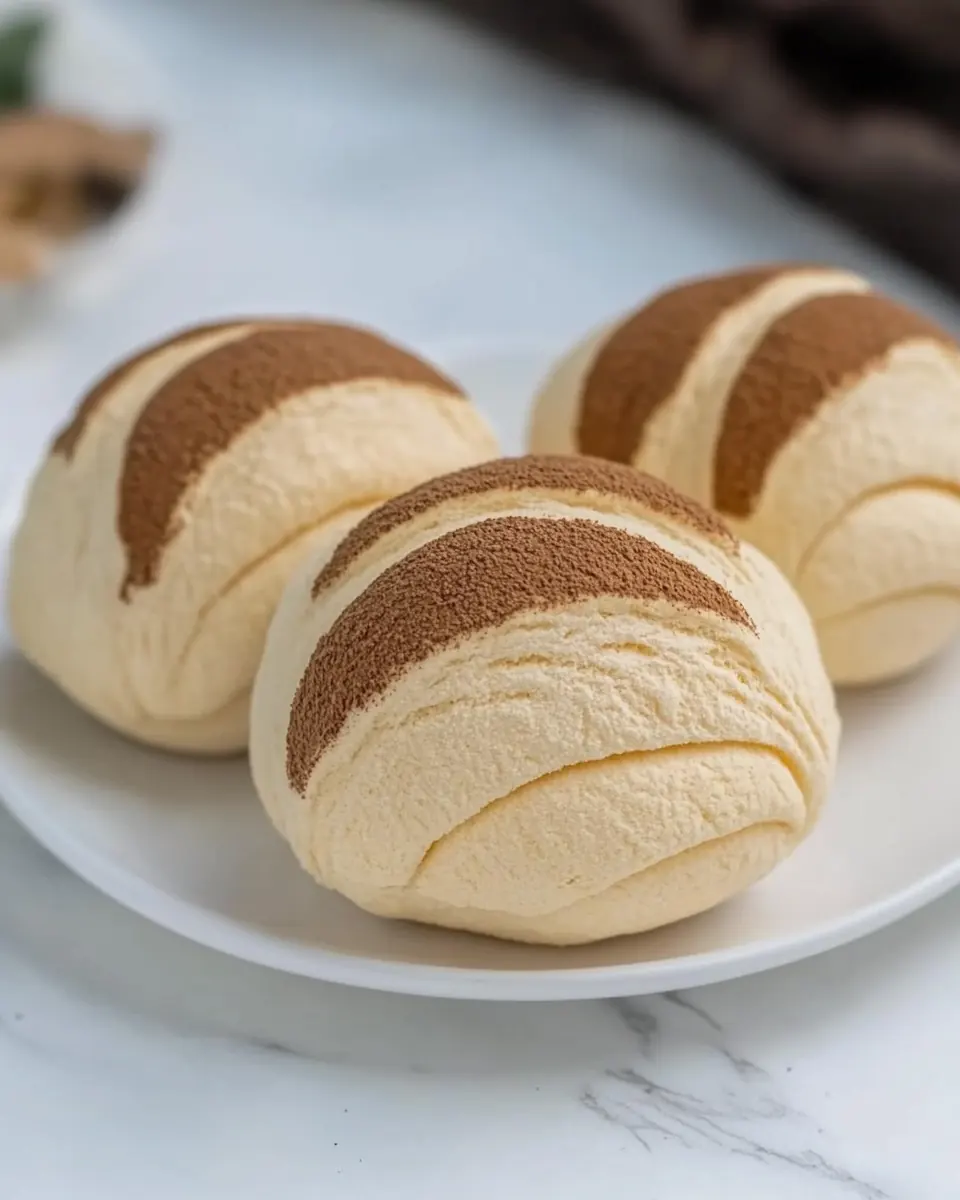
With a sharp knife cut grooves into the topping so it resembles a clam shell. You can also use a concha cutter.: Rolling each portion between your palms creates surface tension which helps the rolls rise up and not spread. The finished balls should look round, glossy, and satiny. If seams appear, pinch them closed to preserve shape, because open seams can tear during baking and ruin the shell pattern.
Bake the concha bread for 20-22 minutes or until the dough is lightly golden.: Spacing matters, so leave room for expansion, you should hear the soft thud of dough meeting parchment. Parchment prevents sticking and promotes even bottom browning. Crowding the tray will cause conchas to bake into each other and alter their shape badly.
Allow to cool for 10 minutes before serving.: During this short rest they relax and undergo a final proof, slightly puffing up. The dough surface will look less taut and a gentle press should spring back slowly, indicating readiness. If you allow too long at this stage without baking, the topping can sag or the dough can overproof, resulting in a deflated final loaf.
Make the topping; whisk flour and powdered sugar in a bowl: The mixture should look fine and pale, and whisking aerates it slightly. It will smell sweet and powdery, a perfect contrast to the dough's yeastiness. Lumps in the sifted mix can create uneven patches, so ensure it is well combined.
Add butter and work it in with clean hands or process it all in a food processor until you have a streusel-like topping: The texture should be cohesive and pliable, not greasy or crumbly, with a soft, buttery scent. Using your hands helps judge consistency, while a processor speeds the job. If the topping is too dry it will crack excessively; if too wet it will slide off during baking, so aim for a dough that holds together when pressed.
Divide the topping in two and add vanilla in one part and cocoa powder into the second part: The vanilla portion will smell warm and floral, while the cocoa adds an earthy, chocolate note and darker color. Splitting creates visual variety and flavor contrast on the same baking sheet. Make sure both portions are evenly mixed so the flavor is consistent across pieces.
Divide each topping into five portions: This portioning step ensures each roll gets an even blanket of topping, and it makes rolling or pressing manageable. You should feel the weight and malleability in your hands as you shape each piece. If portions are unequal, some conchas will bake with thicker shells and others too thin, so keep them consistent.
Roll out the topping by rolling pin until lightly flattened, or use a tortilla press to flatten them out: As you roll, the mixture should spread into thin discs that still hold together, and you will notice a slightly buttery aroma intensify. Thinner toppings bake to a delicate crisp, while thicker ones remain cookie like. If the topping tears, the dough beneath may not get full coverage, so press gently and patch as needed.
Drape the topping over the dough and pat gently to secure it: The act of draping should feel tactile and satisfying, the topping adhering to the dough and smoothing over curves. Pat to remove air pockets and ensure full contact, which helps the shell form uniformly. If not secured, the topping can separate and blister away from the roll during baking, so press lightly to adhere.
With a sharp knife cut grooves into the topping so it resembles a clam shell: The visual pattern is created by shallow cuts that reveal the dough beneath and encourage the topping to crack in characteristic lines. You should hear a soft scraping sound and see neat arcs form. Cut too deep and the topping may fall away, cut too shallow and the pattern may not show, so aim for controlled, even incisions.
You can also use a concha cutter: Using a cutter gives uniform, decorative impressions and speeds up the process, the patterned impression should look crisp and evenly spaced. Manual cutters can press slightly into the dough to help guide the expansion during baking. Relying solely on a cutter without gentle pressing can leave loose edges, so smooth them by hand afterwards.
Bake the concha bread for 20 to 22 minutes or until the dough is lightly golden: As they bake, the kitchen will fill with a warm, buttery aroma, and the topping will set and crack attractively. Look for a pale golden hue on the sides and bottom to know they are done, and the tops should sound hollow when tapped. Underbaking leaves a gummy interior, while overbaking makes them dry, so watch closely towards the end of the time range.
Allow to cool for 10 minutes before serving: The aroma will remain inviting as the structure firms slightly, and a brief rest helps the crumb settle so the rolls slice cleanly or hold their shape when bitten. Serve warm for the best contrast of soft interior and crisp shell. Cutting into them too soon can smear the topping and compress the crumb, so exercise a little patience for the best result.