Preheat the oven to 350 degrees F.: You will notice a gentle warmth spreading through the kitchen as the oven comes to temperature, which helps ensure the phyllo shells crisp uniformly when baked. Preheating is crucial so the shells do not warm unevenly and become soggy in spots. A common mistake is placing the tray into a cold oven, which gives inconsistent results and a limp texture.
Heat the oil in a saute pan over medium heat.: As the canola oil warms, it will shimmer slightly; that visual cue tells you it is ready to carry and develop flavor from the aromatics. Medium heat gives a steady sizzle without risking burnt edges on the onions or garlic . Avoid high heat, which can scorch the aromatics and create bitterness that overshadows the crab .
Saute the onion, bell pepper, and garlic until soft.: Listen for a gentle sizzling as the diced onion and red bell pepper soften and release sweetness, and inhale the fragrant lift from the garlic . Softened aromatics will appear translucent and slightly glossy, which indicates they have lost raw sharpness and integrated flavors. Rushing this step leaves raw bits that can feel harsh against the delicate crab .
Add the crab meat, salt, and pepper, and cook until the crab has been heated through, about 30 to 60 seconds.: When you add the lump crab meat , the pan will quieten as the temperature balances, and you will feel a gentle steam rise. The short heating time warms the crab and allows it to absorb the aromatics without drying. Overcooking even briefly will firm the meat and reduce its tenderness, so watch closely and remove from heat as soon as it feels warm to the touch.
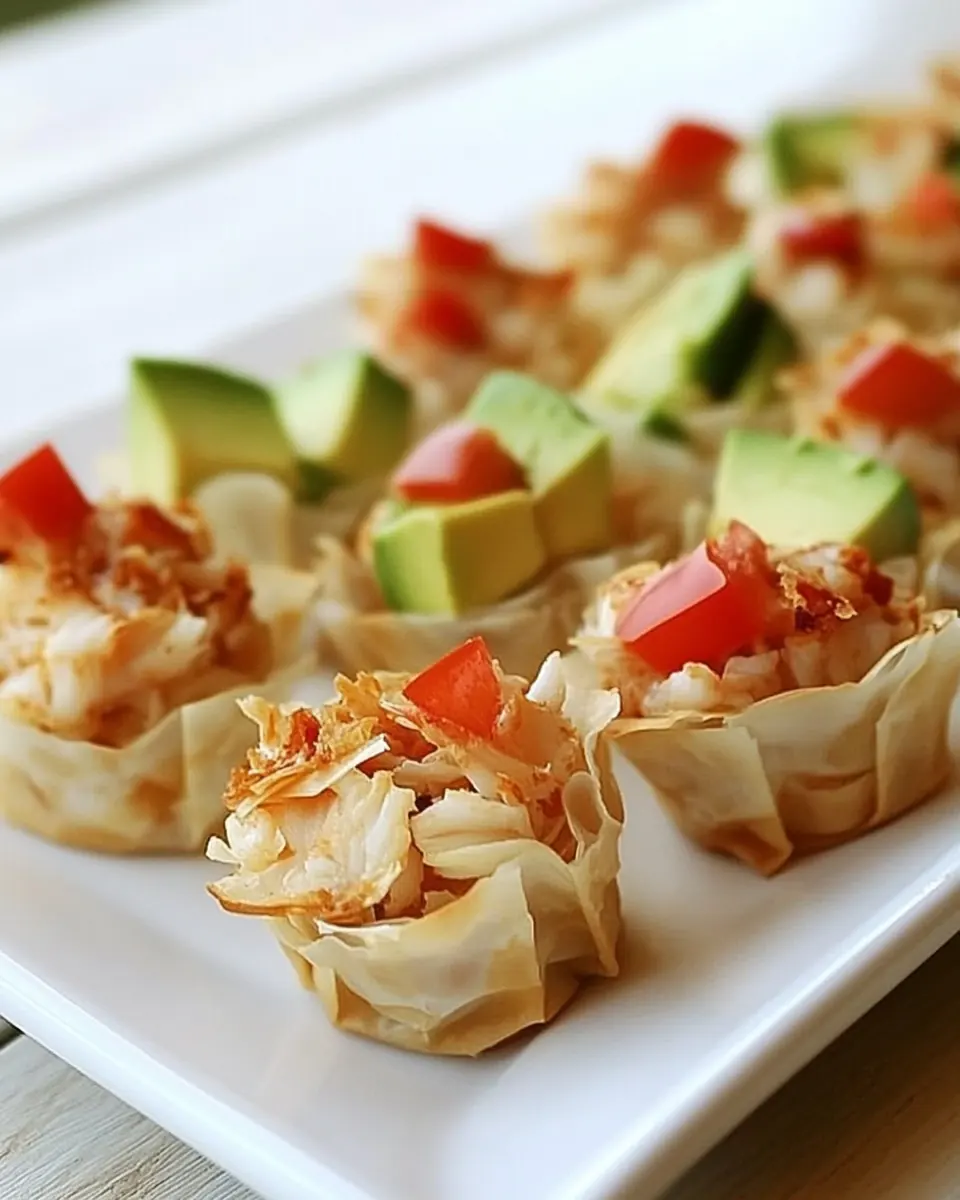
Add about 1 heaping tablespoon of the crab filling to each phyllo shell.: As you spoon the filling into the warm phyllo shells , you will see the glossy, slightly moist mixture nestle into the crispy cups. The contrast between warm filling and crisp shell is key, so fill generously but avoid overstuffing, which can cause spills while baking. If you add too much, the shells may tip and the filling may leak out.
Arrange the stuffed shells on a baking tray, and bake for 10 minutes.: During the short bake the shells will crackle into a golden texture and the filling will settle. The tray should sit centered in the oven for even heat exposure. You will notice a faint toasty aroma as the shells brown slightly; that is the cue to remove them. Baking longer can make the shells too crisp and prone to breaking when served.
Top each stuffed shell with avocado, and serve immediately.: The cool diced haas avocado will dress the warm bites with a creamy finish, creating a perfect temperature contrast. Add the avocado right before serving to keep it bright and avoid browning. If you add it too early, the avocado will soften and can make the shells soggy, which reduces the appealing crunch.