Cream softened butter, peanut butter and sugars together in a large mixing bowl.: Immediately you will notice a transformation as the butter softens and combines with the peanut butter and both sugars , producing a pale, fluffy mixture. The aroma becomes sweet and slightly nutty, and the texture should look satiny, not greasy. This step introduces air, which lightens the final cookie, so take your time to reach a smooth, uniform cream. If the mixture seems cold and lumpy, your butter may be too firm; let it rest a bit at room temperature and briefly beat again. Avoid overheating the butter, because that will make the batter too loose and affect baking spread. If the motor strains, pulse gently to avoid overworking.
Add eggs, one at a time, mixing until completely combined.: As you add the first egg , watch the mixture emulsify and become more cohesive, and the scent shifts slightly richer. Adding eggs separately encourages even incorporation and helps prevent curdling. After each addition, stop the mixer and scrape the bowl so no streaks remain. If the batter looks separated or watery after adding eggs, continue mixing briefly and it should come together; if not, check that your ingredients were at room temperature. A common error is rushing with cold eggs which can cause an uneven texture.
Beat in the vanilla extract.: When you add the vanilla , it will perfume the dough and round the flavors. Stir until the vanilla is fully dispersed and the mixture smells fragrant and balanced. This small addition enhances the other ingredients without overpowering them. Take care not to overdo the vanilla, because too much can make the flavor one dimensional. If you detect a concentrated pocket of vanilla, scrape and mix until even.
In a large bowl, combine oats, flours, wheat germ, cinnamon, baking soda, and salt. Whisk until completely combined. Stir into wet ingredients.: Combining the dry components separately lets you check for clumps and ensure an even distribution of baking soda and ground cinnamon . The dry mix should smell toasty from the wheat germ and cinnamon. When you fold these into the wet mixture, do so gently until no streaks remain, and you will notice the dough thicken and become less glossy. This step controls texture, so avoid over mixing which develops gluten and makes cookies tough. If you see patches of flour, continue folding carefully; if the dough becomes stringy, you have overmixed and should stop.
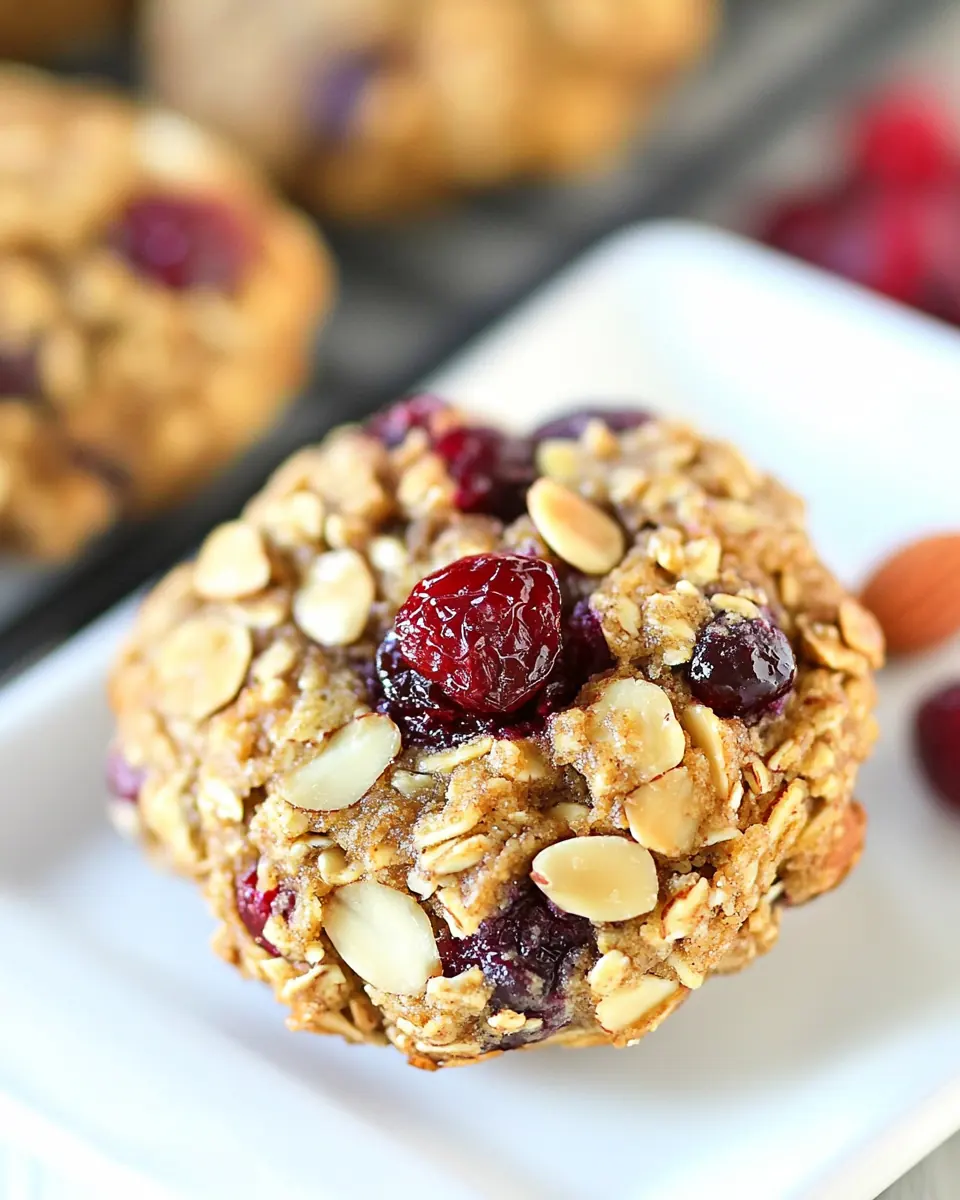
Stir in cranberries and almonds.: As you fold in the dried cranberries and slivered almonds , the dough gains color and texture. The cranberries stick and create tiny red pops throughout, while the almonds add visible, pale slivers. You should feel the dough become studded and slightly firmer. Even distribution ensures each cookie has both fruit and nut. Avoid aggressive stirring which can break the almonds into powder or overwork the oats. If the fruits clump, gently break them apart with a spatula rather than vigorous stirring.
Chill dough for one hour.: Chilling is where the dough firms and flavors meld, and you will notice the texture change from soft to pleasantly solid. The butter tightens and the dough is easier to scoop, which prevents excessive spreading during baking. Aromas calm and marry while the oats hydrate slightly. If you skip chilling, cookies may flatten and bake too thin, so resist the urge to go straight to the oven. If the dough becomes rock hard after chilling, let it sit five to ten minutes for easier scooping.
Preheat the oven to 350 F.: As the oven warms to 350 F , a warm, dry heat prepares for even baking. Preheating ensures the cookies begin baking immediately and achieve the intended texture. I set a timer and let the oven reach temperature fully before inserting trays, because an underheated oven changes bake time and spread. A frequent mistake is placing dough in a not fully preheated oven which results in underbaked centers or excessive spreading.
Line cookie sheets with parchment paper and scoop out cookie dough using a cookie scoop and place 1-inch apart on the cookie sheet.: Lining with parchment paper prevents sticking and helps the bottoms brown evenly. Scoop uniformly sized portions so cookies bake at the same rate. The dough will be firm from chilling, so the scoop should release cleanly, leaving rounded mounds. Space them one inch apart to allow a modest spread while keeping them close enough to fit multiple on a sheet. If scoops vary greatly, some cookies will overbake while others remain soft; aim for consistency.
Flatten cookies slightly or form into discs. (The cookies will not flatten on their own while baking.): The cookies will not flatten on their own while baking, so press them gently into discs to give them an even, tender center and a slightly crisp edge. When you press, you should feel a slightly tacky surface, and the discs will hold their shape. This manual shaping helps ensure uniform baking and achieves the intended chew. Press too thin and they can become crisp instead of chewy; press too little and they remain too tall and underbaked in the center.
Bake for 10 minutes. Let cool for several minutes on the cookie sheet before removing to a cooling rack.: During the ten minute bake the edges will take on a light golden hue and the centers will set but remain soft. You might hear a faint crackle as the surface firms. Letting them rest on the sheet allows carry over heat to finish the centers without overbrowning, and you will notice the cookies firm up as they cool. Removing them too soon can cause breakage, while leaving them too long on a hot sheet can over crisp the bottoms. Aim to transfer when edges feel set and centers yield slightly to the touch.
Store in an airtight container for up to 1 week.: Once cooled, the cookies keep well in an airtight container , and the texture stays pleasantly chewy. Store at room temperature, and if you plan to freeze, layer with parchment to prevent sticking. If you notice any loss of chew, briefly warming brings back softness. A common storage mistake is leaving them exposed, which leads to drying out and loss of texture.