Place a rack in the center of your oven and preheat the oven to 350 degrees F. Generously butter and flour a 10-cup bundt pan. Set aside.: Warmth from a properly preheated oven creates a steady environment so the batter rises evenly. You should smell a faint warm oven scent as it comes up to temperature, and the rack will be centered so the cake browns uniformly. Buttering and flouring the pan produces a faint greasy sheen on the surface with light dusting of flour, which prevents sticking. If you skip thorough coating, the cake may cling to the pan, tearing when turned out. A common mistake is not tapping out excess flour, which can create a dusty film on the crust. I like to test my oven thermometer too, because ovens can run hot or cool; predictable heat ensures a consistent crumb and even browning.
In a large mixing bowl, cream the butter and sugar until light and fluffy.: At this stage you will notice a change in texture, the butter becoming paler and the mixture taking on a lighter body as air is incorporated. The sound of mixing shifts from a heavy churn to a smoother whirl, and the aroma becomes subtly sweet and creamy. This step is crucial for lift, because those tiny air pockets expand during baking and give a tender crumb. Overcreaming, however, can incorporate too much air, causing the cake to collapse, so I stop when the mixture is noticeably lighter but still stable. If the butter is too cold, it won’t cream properly and you may see small lumps, which leads to uneven texture. Use a paddle attachment or a sturdy whisk, and scrape the sides to ensure even mixing.
Add the eggs one at a time, incorporating fully between each. Scrape down the sides of the bowl, then add the Greek yogurt, vanilla extract, and almond extract.: When each egg is added it blends in and the batter becomes silkier, with small glossy ribbons forming as you mix. The batter should smell gently sweet with a touch of aromatic vanilla and almond extract . Incorporating eggs slowly prevents curdling and promotes a cohesive emulsion that traps air. Scraping the bowl ensures nothing gets left behind, which helps the batter remain uniform. A common problem here is adding all the eggs at once, which can create a separated, watery mixture that hurts the final rise. The Greek yogurt also brings tang and moisture; if your batter looks slightly thicker after adding it, that is the right texture for folding with the dry ingredients.
In a separate medium bowl, whisk together the whole wheat flour, all-purpose flour, baking soda, baking powder, and salt.: You will see the dry mixture take on a uniform color and fine texture, and a light floury scent will rise when you whisk. This helps distribute the baking soda and baking powder evenly so the leavening acts consistently during baking. The salt integrates with the flours to enhance flavor. Failing to whisk these components together can leave pockets of rising agent that create odd lumps or uneven holes in the finished cake. I always sift or whisk well to avoid dense spots and ensure the batter blends smoothly.
Add to the butter/yogurt mixture and beat gently until evenly combined. Fold in the cranberries.: After combining, the batter should look homogenous and slightly thick, with no streaks of flour. The motion should be gentle to preserve the incorporated air, and the mixing sound softens as the dry ingredients blend. When you fold in the cranberries they should remain whole and glossy, adding specks of deep red against the pale batter. That visual contrast is a good cue you have folded correctly. Overmixing here will break the cranberries and tint the batter pink, and can create a tighter crumb. If you notice an overly wet batter, you may have overworked it, which causes a denser texture after baking. Use a rubber spatula and gentle strokes to keep the fruit intact.
Pour the batter into the prepared pan, smooth the top, then bake for 40 to 45 minutes, until a toothpick inserted in the center comes out clean.: As the cake bakes you will notice a lovely aroma developing, a mix of buttery sweetness and bright berry notes. The top will become lightly golden, and the sides may pull slightly away from the pan. The sound of the oven is steady, and you might see gentle rising in the middle. Using a toothpick ensures doneness; it should come out with a few moist crumbs but not wet batter. Pulling the cake out too early yields an underbaked center, while leaving it too long risks drying it. If it browns too fast, tent with foil to prevent an overly dark crust while the center finishes cooking.
Remove from the oven and let cool in the pan on a wire rack for 5 minutes. Turn out of the pan onto the rack and allow to cool a few more minutes.: Cooling in the pan for a short period lets the structure stabilize so the cake holds together when turned out. You will feel steam release gently as the cake cools, and the surface will lose some heat and firm slightly. Turning it out too soon can make it fall apart; waiting too long makes release harder and can cause sticking. If the cake resists, run a thin knife around the edge to loosen it. Once on the rack, the cake will continue to settle; waiting those extra minutes prevents a gummy center and gives a perfect sliceable texture.
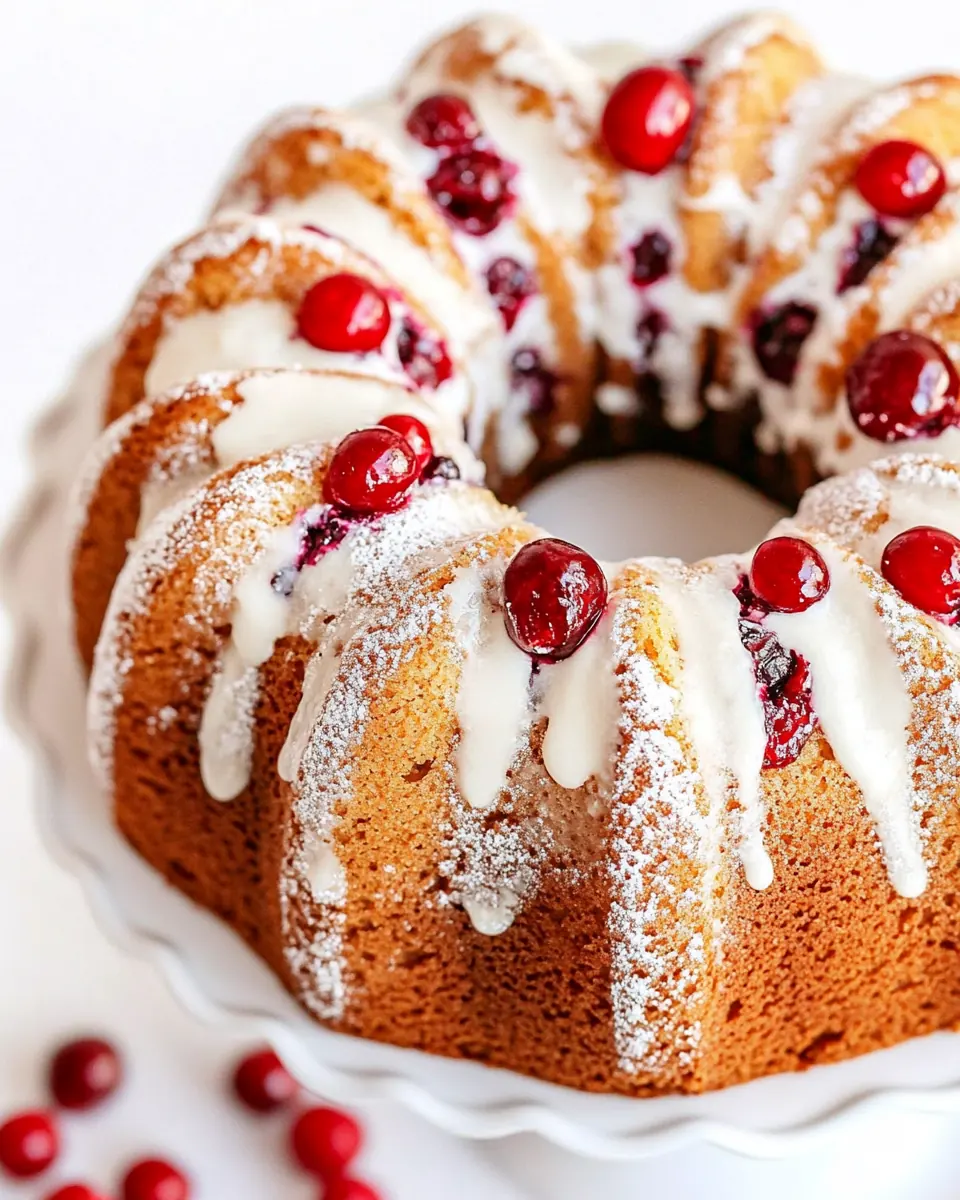
To make the glaze, whisk together powdered sugar, Greek yogurt, and almond extract until smooth. If you desire a thicker glaze, add additional powdered sugar a tablespoon at a time until you reach the desired consistency. Drizzle the glaze over the cake, then slice and serve.: The glaze should be smooth and glossy, with a sweet aroma and a hint of almond. Whisking creates a silky texture that clings to the top and drips slowly down the sides. If it is too thin it will run off the cake, and if too thick it will sit like a paste, so adjust with powdered sugar one tablespoon at a time to reach a ribbon-like pour. Drizzling creates pretty streaks and adds a touch of sweetness that harmonizes with the tart cranberries . A common slip is adding too much liquid at once, which forces you to overcorrect with more sugar and can make the glaze grainy. Serve when the glaze has set slightly so slices hold their shape.