Preheat oven to 325 degrees F. Grease a 9-inch springform pan.: As you preheat the oven you may notice a warm scent of your kitchen waking up, which is a cue that the environment is ready for the delicate bake ahead, and a properly greased springform pan prevents sticking so the sides release cleanly after chilling. Make sure the oven temperature is accurate with an oven thermometer because an oven running hot or cold can cause uneven setting or cracking. One common mistake is forgetting to grease the pan thoroughly, which can make removing the cheesecake messy.
Make the Cranberry Mixture: In a medium saucepan, whisk together the sugar and cornstarch. Whisk in the cranberry juice until smooth, then stir in the cranberries. Place the pan over medium heat and bring to a rolling boil. Cook and stir for 2 minutes, or until thickened. Remove from the heat.: In a medium saucepan, whisk together the sugar and cornstarch. Whisk in the cranberry juice until smooth, then stir in the cranberries. Place the pan over medium heat and bring to a rolling boil. Cook and stir for 2 minutes, or until thickened. Remove from the heat. : The cranberry sauce will first look thin and glossy, then bubble and thicken as the cornstarch activates, releasing a fragrant steam of bright, tart aroma that tells you the fruit is breaking down and concentrating, and this step builds the vivid topping that offsets the creamy filling. Stir constantly when it approaches a boil so the cornstarch doesn’t clump and the fruit cooks evenly. Avoid overheating for too long, because the berries can over soften and lose their texture.
Make the Crust: In a medium bowl, stir together the graham cracker crumbs and sugar. Drizzle over the melted butter and toss to combine, ensuring that all of the crumbs are moistened. Turn the crumbs into the prepared pan and press into an even layer in the bottom of the pan. Place the springform pan on a rimmed baking sheet. Bake for 10 minutes, then cool on a wire rack.: In a medium bowl, stir together the graham cracker crumbs and sugar. Drizzle over the melted butter and toss to combine, ensuring that all of the crumbs are moistened. Turn the crumbs into the prepared pan and press into an even layer in the bottom of the pan. Place the springform pan on a rimmed baking sheet. Bake for 10 minutes, then cool on a wire rack. : When you press the crumb mixture into the pan you will hear a slight compacting sound and feel the resistance under your palm, which indicates a dense base for clean slices, and the short bake rounds the flavors and helps the crust set so it does not become soggy under the filling. Press firmly for a solid base but not so hard that it becomes overly compacted and cracker hard. A frequent slip is not pre-baking the crust which can lead to a soft bottom once the filling is poured in.
Make the Cheesecake Filling: With an electric mixer on medium-high speed, beat the cream cheese and sugar until smooth and fluffy, about 3 minutes. Add the flour and beat until combined, about 1 minute. Reduce the mixer speed to low and add the eggs one at a time, mixing until each is completely combined and scraping the sides of the bowl between each addition. Add the eggnog and vanilla extract and beat until just combined.: With an electric mixer on medium-high speed, beat the cream cheese and sugar until smooth and fluffy, about 3 minutes. Add the flour and beat until combined, about 1 minute. Reduce the mixer speed to low and add the eggs one at a time, mixing until each is completely combined and scraping the sides of the bowl between each addition. Add the eggnog and vanilla extract and beat until just combined. : As you whip the cream cheese and sugar the mixture will turn silky and pale, and you can see when it has no lumps which is crucial for a smooth texture; the flour stabilizes the custard and the gradual addition of eggs prevents too much air from being incorporated, which reduces cracking while baking. Scraping the bowl ensures even mixing so no pockets of unmixed cheese remain. A common error here is overbeating at high speed after adding the eggs, which can trap air and cause the cheesecake to puff and then sink.
Pour two-thirds of the cheesecake batter into the prepared pan over the crust. Top with half of the cranberry mixture (cover and refrigerate the remaining cranberry mixture). Slowly pour the remaining cheesecake batter into the pan. Return the springform pan to the rimmed baking sheet and bake until the edges are set and the center jiggles slightly, about 75 minutes.: Pouring the batter in stages with the cranberry layer nested in the middle creates striking ribbons of flavor and color; you will see the batter level out and the cranberries nest without sinking immediately if the batter is the right consistency. Bake on a rimmed baking sheet to catch any drips and to help with even heat distribution. The jiggly center indicates the custard is set but not overbaked, which yields a creamy interior once chilled. Avoid opening the oven door repeatedly during the long bake, which can cause temperature fluctuations and lead to cracks.
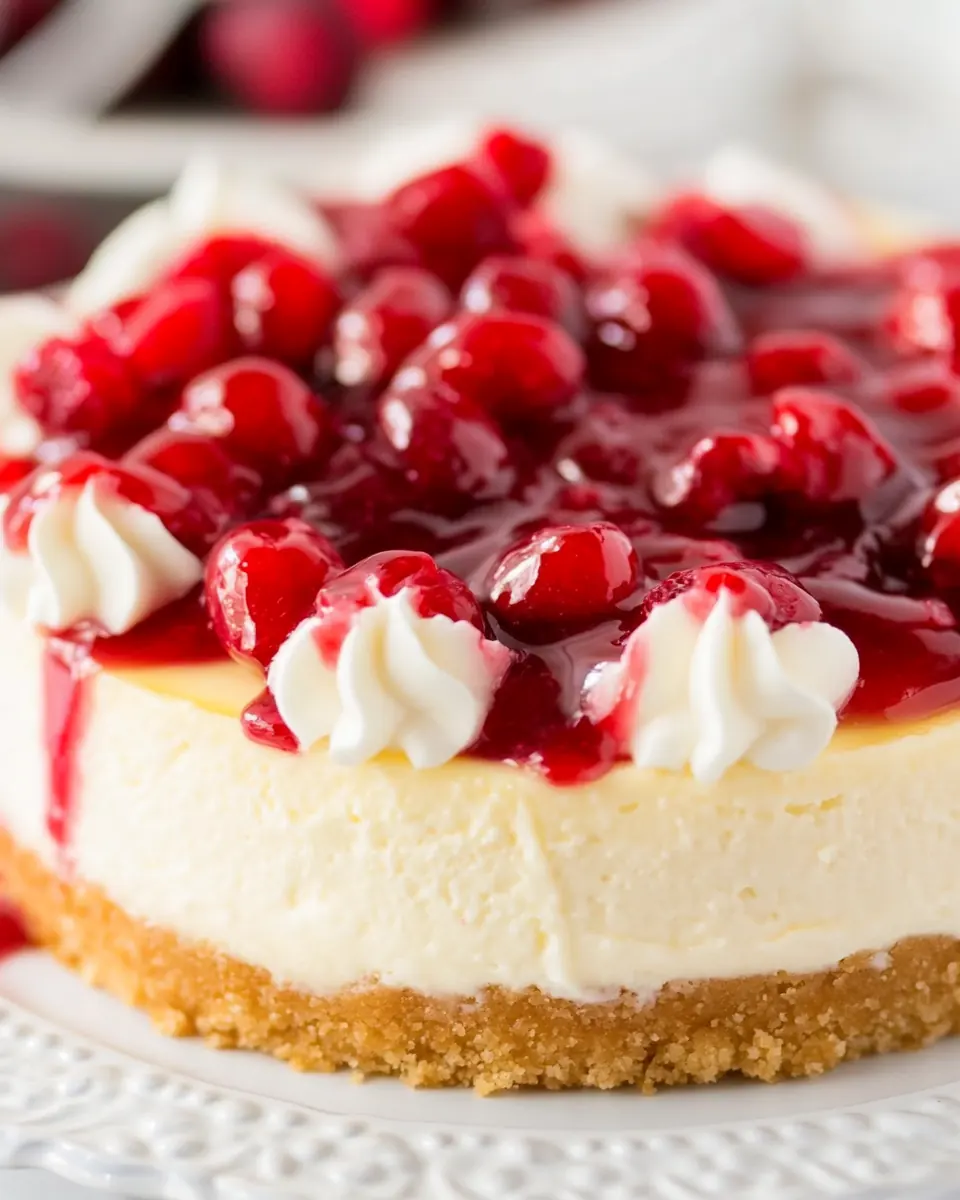
Place the springform pan on a wire rack and cool for 10 minutes. Run a knife around the edge of the pan and cool for an additional 1 hour. Place the cheesecake in the refrigerator and chill overnight, at least 8 hours. When ready to serve, remove the sides of the pan and top with the remaining cranberry mixture. Leftovers should be stored in the refrigerator for up to 5 days.: As the cheesecake cools you will notice a faint sigh of steam release and the edges pulling slightly from the pan, both normal signs; running a warm knife around the edge helps prevent the top from cracking as it cools and contracts. Chilling overnight is key because it allows the filling to firm up and the flavors to marry, producing clean slices and concentrated taste. A common misstep is slicing too soon, which yields messy pieces and a softer texture than intended.