Preheat oven to 350 degrees. Line a baking sheet with parchment or a silicone mat.: The warm, initial smell of a kitchen coming to life signals that the oven is ready. When an oven reaches 350 degrees it provides the right environment for the edges to set while the centers remain tender, producing that classic pillowy cookie. A common mistake is not preheating long enough, which causes uneven baking and can leave centers too soft. Use an oven thermometer if you suspect your oven runs cool, and make sure the rack sits in the middle so heat circulates evenly.
In a large bowl, cream together the butter, brown sugar and white sugar until light and fluffy, Add the egg, vanilla and orange zest and beat until smooth.: The sound of cookies sliding onto lined sheets is satisfying, and using parchment or a silicone mat prevents sticking and promotes even browning on the bottom. It also makes cleanup effortless, which I always appreciate. A frequent error is skipping the liner, which can cause cookies to spread and stick; if you must bake directly on the sheet, lightly grease it and watch the first tray closely for signs of overbrowning.
Add the flour, cornstarch, baking soda, and cinnamon and mix just until incorporated. Stir in the cranberries and white chocolate chips until evenly incorporated.: As you beat the butter and both sugars, you should see the mixture become pale and airy, with tiny ribbon like trails as the mixer lifts. This aeration is the unsung hero of texture, creating lift and tenderness. If the butter is too cold the mixture will be lumpy, and if it is too warm it will be glossy and thin; aim for soft but not greasy. Scrape the bowl periodically so everything mixes uniformly.
Use a #40 (2-tablespoon) cookie scoop to portion out the dough into balls. Place them on the prepared baking sheet. Bake 9-11 minutes. Remove from the oven when they're puffy and barely cooked through--do not let them brown. The cookies should be round and pillowy (and not browned at all) when they're ready to come out of the oven.: Once you incorporate the egg , the batter becomes smoother and slightly looser. The aroma of orange zest and vanilla extract brightens the mix immediately, and you will notice tiny flecks of zest distributed throughout. Overmixing at this stage can develop gluten later, so stop once no streaks remain. A mistake here is adding cold eggs which can cause the butter to seize; bring the egg to room temperature for best results.
Let them cool for 1 minute on the baking sheet, then transfer to a wire rack to finish cooling.: Dry ingredients will dull the batter’s sheen and thicken it to a scoopable dough, with faint swirls of cinnamon visible. This step builds the cookie structure, and mixing only until combined prevents toughness. If you overwork the dough you will stir in too much air and develop gluten, leading to a denser cookie. Use gentle folding motions and stop as soon as you no longer see streaks of dry flour .
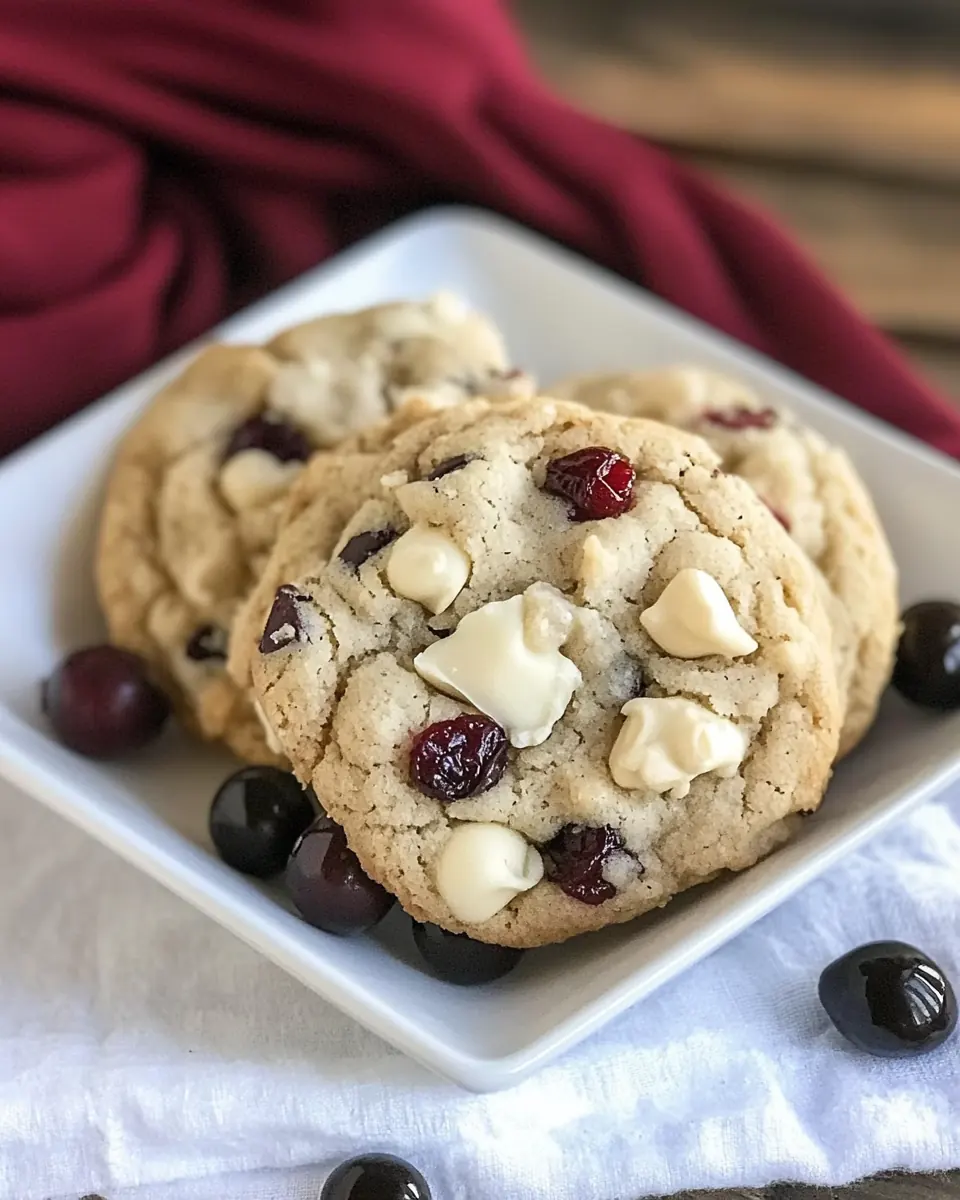
Store completely cooled cookies in an airtight container.: As you fold in the cranberries and white chocolate chips , the dough becomes dotted with red and ivory, promising contrast in every bite. The chips should be distributed so each scoop has a balance of tartness and sweetness. A common misstep is adding too many inclusions which can interfere with proper spreading, so keep to the specified amounts for ideal texture.
Use a #40 (2 tablespoon) cookie scoop to portion out the dough into balls: Scooping ensures uniform cookies that bake evenly and look professional. The dough should hold its shape and feel slightly tacky, not runny. If the dough is too soft to hold a scoop, chill it briefly; if it is too hard, let it sit for a few minutes at room temperature. Uneven scoops result in mixed bake times, so consistency here saves you from under or overbaked edges.
Place them on the prepared baking sheet: Arrange the dough balls with even spacing so hot air circulates and the cookies bake into round, pillowy shapes. You might lightly press a couple of extra white chocolate chips on top for appearance and added melty pockets. Crowding the sheet leads to merged cookies, while spacing them too far apart wastes sheet space and can change how the heat distributes.
Bake 9 to 11 minutes: During baking you will see the edges set first while the centers remain slightly soft and pale; that pale look means the interior is tender and not overbaked. The aroma will shift to warm cinnamon and citrus, and the tops will appear pillowy rather than glossy. If left too long the cookies will brown and lose that soft, tender center, so remove them when they look barely cooked.
Remove from the oven when they're puffy and barely cooked through: The correct visual cue is a rounded, non browned top that still yields slightly to a gentle touch. The residual heat finishes the cook while the cookies rest, preserving that cushioned texture. A common error is waiting for browning as a doneness sign, which will result in a firmer cookie than intended.
Let them cool for 1 minute on the baking sheet, then transfer to a wire rack to finish cooling: The brief rest on the baking sheet allows the cookies to settle so they retain shape when moved, while the wire rack prevents the bottoms from steaming and becoming soft. The cooled cookie will hold its structure but stay tender. Picking them up too soon can deform their edges, while leaving them too long may cause them to stick to the sheet.
Store completely cooled cookies in an airtight container: Once cooled, an airtight container preserves texture and flavor for days, keeping them soft while protecting them from drying out. Layer with parchment if stacking to avoid sticking. A mistake is storing warm cookies, which traps steam and makes them soggy; always cool completely before sealing.