Beat the cream cheese and butter together for several minutes. Mix in the confectioners' sugar and vanilla, and beat until smooth and creamy. Cover and place in the fridge.: The bowl should feel cool to the touch and the texture becomes noticeably lighter and silkier, with small air pockets forming; this aeration helps the filling hold its shape. You will hear a soft whir from the mixer and see the mixture transform from dense to whipped, glossy ribbons forming when the beaters lift. This step matters because a well whipped base prevents graininess when you add the confectioner’s sugar . A common mistake is working with cold cream cheese , which makes the mixture lumpy, so always bring it to room temperature before starting.
Preheat the oven to 350°F (176°C). In a large bowl, beat the sugar, oil, pumpkin, and eggs until well blended. In a small bowl, combine the flour, baking soda, salt, baking powder, and cinnamon. Gradually beat the dry ingredients into the pumpkin mixture until well blended.: When you add the confectioner’s sugar in batches the filling becomes silky and thick; the sugar dissolves into the fat producing a stable frosting. You will see the texture go from wet to satiny, and the aroma of the vanilla will bloom. This step controls sweetness and firmness, important for piping the filling into the cupcakes later. Avoid adding all the sugar at once because that can create dust and make the mixer work harder, which sometimes leads to an overworked grainy texture.
Line a cupcake pan with paper liners and fill each liner three-quarters full. Bake for 18 to 20 minutes, or until a toothpick inserted in the center comes out clean. Cool for 10 minutes before transferring to wire racks.: Cooling firms the filling and makes it easier to pipe into the cupcakes without collapsing the cake. You will notice the filling thicken as it chills, becoming more moundable and less sticky. This controlled chilling prevents the filling from oozing out after assembly. A frequent error is skipping chilling, which results in a filling that is too soft to pipe and will sink into the cupcake, so allow adequate chill time.
Cut a 1-inch by 1-inch (2.5 cm by 2.5 cm) square in the center using a small, sharp knife. Set the cake pieces aside.: The oven should reach an even temperature so the cupcakes rise uniformly and set correctly. You may hear the oven click as it cycles, and you should see an even heat glow if your oven has an interior light. Preheating matters because starting with a hot oven gives an initial lift and prevents dense texture. An overlooked problem is placing the pan in before the oven reaches temperature, causing uneven rise and longer cook times.
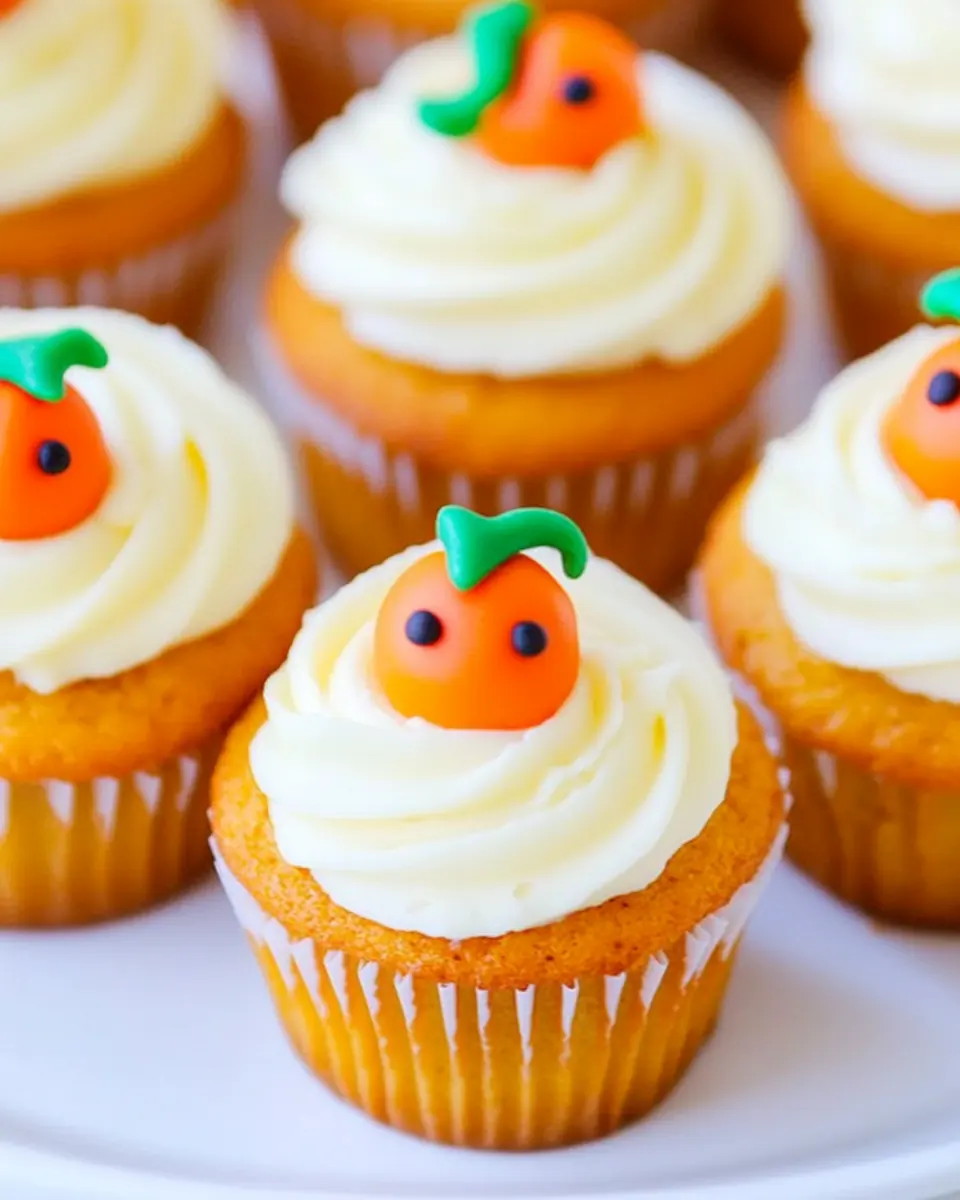
Take the frosting and fill the hole with it, adding a little extra on top. Place a candy pumpkin on top of the frosting. Repeat this process for the remaining cupcakes.: The mixture will look glossy and slightly thickened, with a cohesive orange batter that smells faintly sweet and vegetal from the pumpkin . This emulsification is important for even crumb and moistness. You may notice tiny streams of oil dispersing into the batter, which is normal. If the mixture looks curdled it usually means the ingredients were too cold, so bring them closer to room temperature to avoid separation.
In a small bowl combine the flour baking soda salt baking powder and cinnamon: Whisking these dry ingredients together distributes the leaveners and cinnamon evenly so you avoid pockets of baking powder or soda in the final cupcake. The aroma will be subtly spicy and the flour will take on a uniform color. Properly mixed dry ingredients ensure a consistent rise and flavor in every cupcake. A common slip is not measuring flour correctly, which can make the cupcakes dense, so spoon and level your all-purpose flour when measuring.
Gradually beat the dry ingredients into the pumpkin mixture until well blended: Adding the dry mix slowly prevents overmixing and gives a tender crumb. You will see the batter thicken and the color deepen slightly as the flour integrates. The sound of the mixer will soften as the mixture becomes cohesive. Mixing just until combined preserves the air you incorporated earlier and keeps the texture light. Overmixing here is a frequent issue, causing a tougher cupcake, so stop as soon as no streaks of flour remain.
Line a cupcake pan with paper liners and fill each liner three quarters full: Filling to three quarters allows room for a gentle dome without spilling. Visually the batter should come up most of the way in the liner but leave a little space. This fill level is what produces a bakery like dome while still leaving room for the filling insertion later. If you overfill the liners the cupcakes can overflow and bake unevenly, so use a scoop for consistent portions.
Bake for 18 to 20 minutes or until a toothpick inserted in the center comes out clean: As they bake you will smell warm pumpkin and spice and see the tops turn a warm golden brown. The sound is a soft steady hush from the oven, and the cupcakes will spring back slightly when gently pressed. This timing ensures the cupcakes are fully set while remaining moist. Removing them too soon results in a gummy center, while overbaking dries them out, so check at the earlier time and adjust by a couple of minutes if needed.
Cool for 10 minutes before transferring to wire racks: This short rest lets the structure settle so the cupcakes do not compress or tear when removed from the pan. You will notice steam escaping and the surface becoming slightly firmer, which signals readiness to transfer. Cooling on a rack allows air to circulate and prevents soggy bottoms. A mistake is trying to fill warm cupcakes; they should be sufficiently cooled or the filling will melt into the crumb.
Cut a 1 inch by 1 inch square in the center using a small sharp knife: Removing a neat core creates a perfect pocket for the filling. The visual cue is a tidy square of cake that lifts out cleanly, leaving defined edges. Using a sharp knife and making a steady motion prevents tearing around the cavity. If you cut too deep you may weaken the cupcake walls, so aim for a shallow but sufficient pocket to hold the filling.
Set the cake pieces aside: Reserve these lids to either replace on top or eat as trims. They will feel slightly moist and springy, good to taste for doneness. Keeping them allows you to cover the filling for a finished look, and they also serve as a small snack while assembling. Avoid discarding them, as they are perfect for topping or nibbling.
Take the frosting and fill the hole with it adding a little extra on top: The chilled filling should be firm enough to pipe but soft enough to spread; it will shine and hold shape. You will feel a pleasant resistance as the filling enters the cavity and see a neat mound form on top when you add a bit extra. This layering creates contrast in texture and a balanced bite between cake and cream. A common error is using filling that is too soft, which will sink, so ensure it is properly chilled.
Place a candy pumpkin on top of the frosting: A small decorative candy or garnish gives a festive finishing touch and a pop of color against the off white filling. The placement should be centered and gentle to avoid squashing the frosting. This final accent turns a simple cupcake into a seasonal treat that invites curiosity. Be careful with heavy toppers that can tip the cupcake, and choose something light and decorative instead.
Repeat this process for the remaining cupcakes: Work methodically so each cupcake gets the same attention, and you will end up with a uniform platter. The rhythm of coring and filling becomes quicker as you go, and you will notice consistent results if you follow the same motions. This repetition ensures even portions and attractive presentation. Rushing at the end often causes uneven filling, so maintain a steady pace.