Preheat your oven to 350°F. Line a 9×13-inch baking pan with aluminum foil, leaving extra overhang on the sides for easy lifting.: Warmth in the kitchen is the first cue that baking is starting, and the air will smell faintly of warmth and butter as you move around. The specified oven temperature ensures the crust begins to set quickly without over browning. If your oven runs hot, an incorrect temperature can burn the edges before the filling is cooked. A common mistake is skipping the preheat, which leads to uneven bake; always wait until the oven reaches temperature.
In a food processor or large bowl, mix together the flour, granulated sugar, and salt. Incorporate the cold butter cubes, then pulse or use a pastry cutter to blend until the mixture resembles fine crumbs.: The cool metallic smell of foil is a tiny comfort, and leaving an overhang makes lifting the finished slab effortless. This step matters because it prevents sticking and protects the pan for clean removal. If the foil is wrinkled and not pressed into the corners, the crust may bake unevenly; smooth it as best you can for an even base.
Press the crumb mixture firmly into the bottom of the prepared pan to create an even layer. Bake for 10 minutes.: As you combine these dry ingredients, you will notice the flour dust swirling into the sugar, and the aroma will be neutral and comforting. This dry blend sets the flavor foundation for the crust. A common trap is forgetting the salt; without it the crust tastes flat, so be precise.
In a large bowl, beat softened cream cheese with sugar until smooth. Add the flour, powdered sugar, lemon juice, eggs, and vanilla. Mix just until everything is incorporated.: When you work in the cold butter , the mixture should feel sandy and cool to the touch, with tiny visible butter flecks. Those bits melt in the oven to create flakiness. Overworking the mix will warm the butter and activate gluten, resulting in a tough crust, so stop when the texture looks like coarse crumbs.
Pour the filling evenly over the warm crust. Return the pan to the oven and bake for 30 minutes, or until the filling is set.: Pressing yields a compact base that shatters as you slice the finished bars, with a satisfying faint crunch when you tap it. Even pressure prevents thin spots that can burn during baking. If you press unevenly, the crust will bake irregularly, so use a measuring cup bottom or spatula to get a uniform thickness.
Take the pan out of the oven and let it cool at room temp for about 20 minutes. Then cover and refrigerate for at least 4 hours or overnight.: The oven fills with a warm, buttery scent and the crust will take on a very light golden tint. This brief bake stabilizes the base so the filling will not soak in. Avoid overbaking here, because an overly brown crust can taste bitter after chilling; keep a close eye and remove at the right cue.
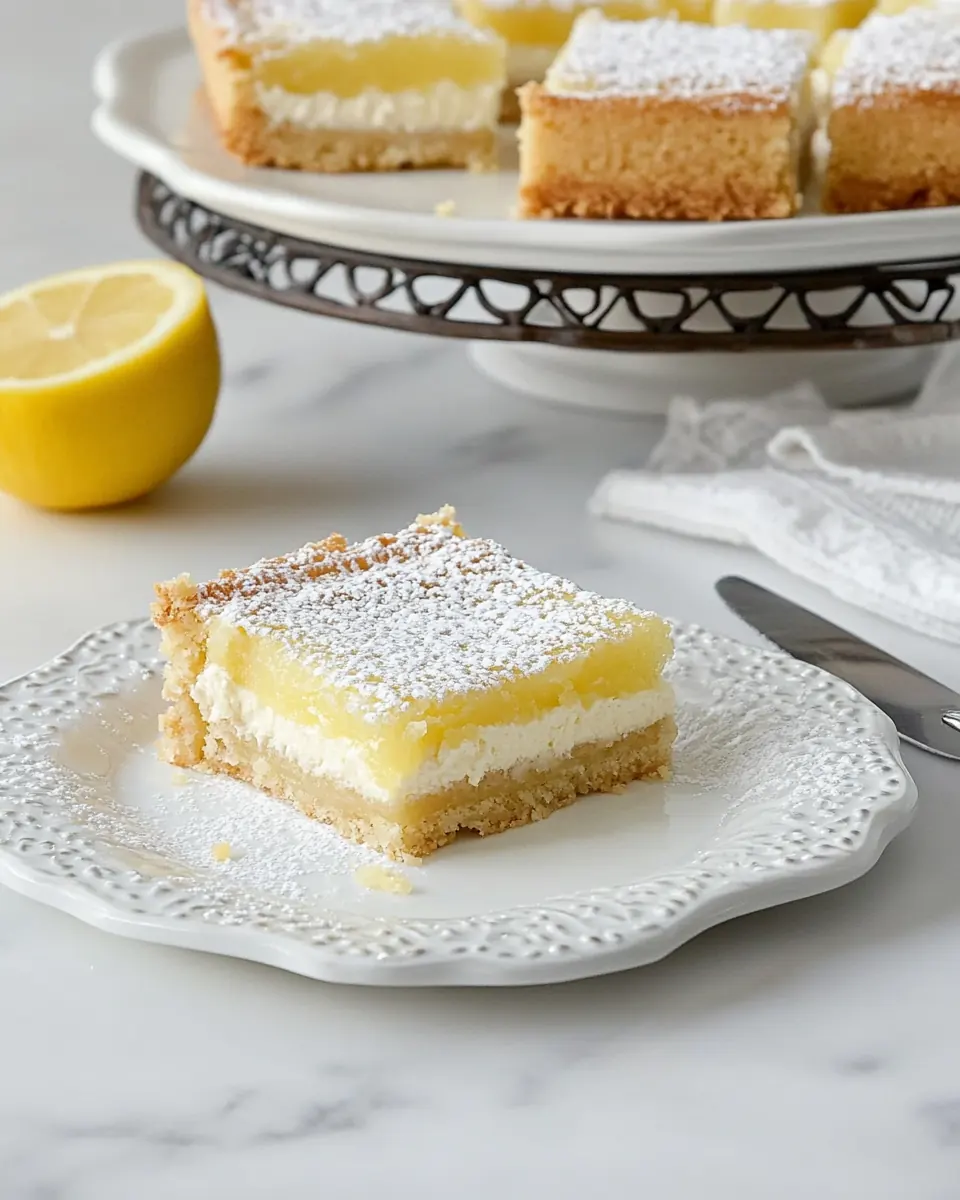
After chilling, carefully lift the cheesecake out of the baking pan using the foil overhang. Slice the cake into squares and sprinkle with additional powdered sugar, if desired. Serve cold.: Mixing these yields a glossy, pale mixture that smells rich and slightly tangy; the cream cheese should be lump free. Smoothness ensures the filling bakes evenly. A common problem is cold cream cheese creating lumps; if needed, microwave in short bursts to soften gently before beating.
Add the flour, powdered sugar, lemon juice, eggs, and vanilla: As you fold these in, the batter will become pourable and vibrantly aromatic from the lemon juice and vanilla extract . The eggs add body and the tiny bit of flour stabilizes the custard. Overmixing can incorporate too much air, which may lead to small cracks; stir until just combined for a silky finish.
Mix just until everything is incorporated: The batter should be homogeneous, with no streaks of cream cheese or dry flour , and it will have a smooth, slightly thick pourable consistency. This step is crucial because it creates the desired custard texture without trapping air. A frequent error is prolonged whipping, which causes puffing and possible cracking as it cools.
Pour the filling evenly over the warm crust: The filling will sizzle ever so slightly as it meets the hot crust, and the contrast of the warm base and cool batter helps set the layers distinctively. Pouring evenly prevents thin or thick spots that bake differently. If you pour too hastily and create air pockets, tap the pan gently to level the mixture.
Return the pan to the oven and bake for 30 minutes, or until the filling is set: During this time you will notice a gentle rising that settles as it cools, and the top might take on a faint cream color without browning. The center should feel slightly firm to a gentle touch. Underbaking yields a jiggly center that will not slice cleanly; overbaking can dry the filling and make it crumbly, so test gently.
Take the pan out of the oven and let it cool at room temp for about 20 minutes: Cooling allows residual heat to finish the set and reduces steam that could make the crust soggy. The aroma will shift to a mellow lemon and dairy perfume. If you try to chill immediately while it is very hot, condensation can form and make the top wet, so let it rest first.
Then cover and refrigerate for at least 4 hours or overnight: Chilling firms the filling into a sliceable texture and deepens the flavors. An overnight chill produces the cleanest slices and the most cohesive mouthfeel. A common mistake is cutting too soon; patience yields neat squares that hold their shape.
After chilling, carefully lift the cheesecake out of the baking pan using the foil overhang: The cool metal of the foil will feel solid in your hands, and lifting the whole slab keeps edges intact while you transfer to a cutting board. Using the foil prevents tearing the crust. Be gentle when peeling the foil away, as rough handling can mar the bars.
Slice the cake into squares and sprinkle with additional powdered sugar, if desired: A light dusting of powdered sugar adds a snowy finish and a small contrast of texture on the surface. Slicing with a sharp knife warmed under hot water and wiped between cuts gives the cleanest lines. Using a dull knife can drag and tear slices, so sharpen your blade or clean it between cuts for best results.
Serve cold: Cold serving highlights the creamy texture and reinforces the refreshing lemon note, creating a tidy bite that is both rich and bright. Plate the squares with care so the edges remain intact. Serving at the wrong temperature, like room temp after long exposure, can make them too soft; keep them chilled until the moment of serving.