Preheat oven to 325°.: When you slide the tray into the oven you should already be greeted with a warm, stable oven environment so the cookies bake evenly. The sound at this stage is mostly quiet, but the air should feel dry and consistent when you open the door briefly. Preheating ensures the cookies set properly at the edges while remaining tender inside. A common mistake is not waiting for full preheat, which can cause spread and uneven browning.
In a food processor, pulse pecans and 2 T powdered sugar until broken down into very small pieces. (This will sweeten the pecans slightly).: You will notice a fragrant, toasty scent as the pecans shred, and the added powdered sugar helps them break down without turning to paste. The texture should be grainy rather than oily. This step matters because it distributes nut flavor without creating thin slippery pockets of oil in the cookie. Watch the processor closely, pulsing in short bursts to avoid creating a nut butter, which is a common error.
In a medium bowl, using a standing or hand mixer, cream together cream cheese, powdered sugar (1/2 cup), and butter until smooth and creamy. Add in vanilla and mix until incorporated.: As you beat these together you will see the mixture go from lumpy to glossy and smooth, and it should look homogenous with a pale color. This emulsion traps air and gives lift, which influences the cookie's tender texture. Overbeating can warm the mix too much, while under mixing leaves lumps, so aim for a silky consistency. If your cream cheese is too cold, it will resist smoothing, leading to uneven texture.
Slowly add in flour and salt and beat until fully incorporated. Add in pecans and mix together on low speed or stir them in.: The moment you add vanilla the aroma lifts and brightens the batter, signaling flavor balance. Mix just until the vanilla is evenly distributed to avoid breaking down the emulsion. A pitfall here is adding strong flavored extracts improperly measured which can dominate; use the exact amount for subtle lift.
Roll into balls (approx. 1 inch) or use a 1 Tablespoon cookie scoop and place on a parchment lined cookie sheet with slight space in between (you can use a 1 1/2 T cookie scoop–this will make approx. 21 cookies).: When the flour goes in, fold or mix on low so the dough remains tender and does not toughen from overworked gluten. The dough should come together without appearing dry, and you may notice a slightly stiffer pull compared to the creamed stage. This technique preserves the delicate crumb. Overmixing at this point will yield dense, tough cookies, so stop as soon as the streaks of flour disappear.
Bake for 14-17 minutes or until the edges/bottom just start to become lightly golden. Cool for several minutes and before fully cool, roll into powdered sugar. Once fully cooled, roll again (or maybe two more times!) in powdered sugar.: As you fold in the pecan pieces the batter gains texture and visual interest. The nuts should be evenly dispersed so each cookie has bites of crunch. Mixing on low prevents the nuts from pulverizing, which would change the intended texture. A common mistake is overworking and breaking the nuts too finely, losing the delightful contrast.
Store in an airtight container!: You will feel the dough as slightly tacky but firm enough to shape, and the surface should be smooth with visible flecks of pecan pieces . Leaving space between the balls allows gentle expansion without merging. Using a scoop creates uniform cookies which helps bake them evenly. If you pack them too tightly the centers may remain underbaked, while too much handling can warm the dough and make it greasy.
Bake for 14 to 17 minutes or until the edges bottom just start to become lightly golden: During baking you may notice a faint nutty aroma as the pecans toast further, and the edges will transition to a very light golden hue. The tops should still look set but not browned. This timing is critical because these cookies do not have eggs to set them, so watch for the subtle color change. Overbaking leads to a dry texture, while underbaking can make them collapse when handled, so remove when edges show the first hint of gold.
Cool for several minutes and before fully cool, roll into powdered sugar: Rolling warm cookies in powdered sugar helps the sugar cling and form an initial coating. The contrast between the warm, slightly soft surface and the cool sugar creates a pretty, crackled finish. If you wait until they are stone cold the sugar may not adhere as well. A frequent mistake is rolling only once; a second roll after cooling enhances appearance and sweetness balance.
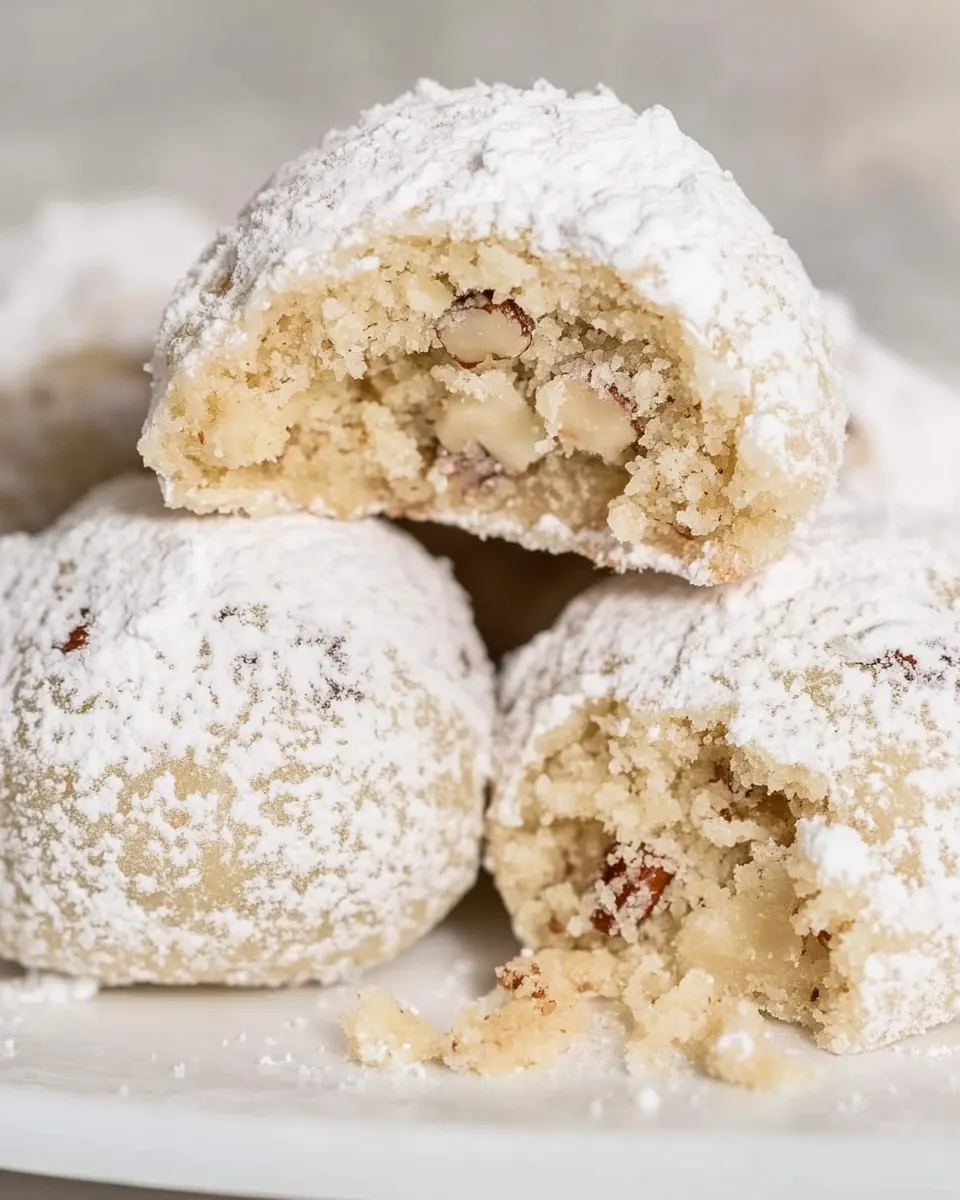
Once fully cooled, roll again in powdered sugar: After the cookies are cool the second coating creates the classic snowball look and seals in a soft outer shell. You should see a bright white exterior that contrasts with the tiny brown specks of pecan pieces . This step makes them visually festive and adds a pleasant melt in your mouth sugar kiss. Avoid soggy sugar by ensuring cookies are fully cool before the final roll.
Store in an airtight container: Proper storage preserves tenderness and prevents staling. As you layer cookies, place parchment between layers to keep the powdered sugar intact. Stored at room temperature in a sealed container they remain soft for several days. A common error is leaving them exposed which leads to limp, stale cookies, so airtight is essential.