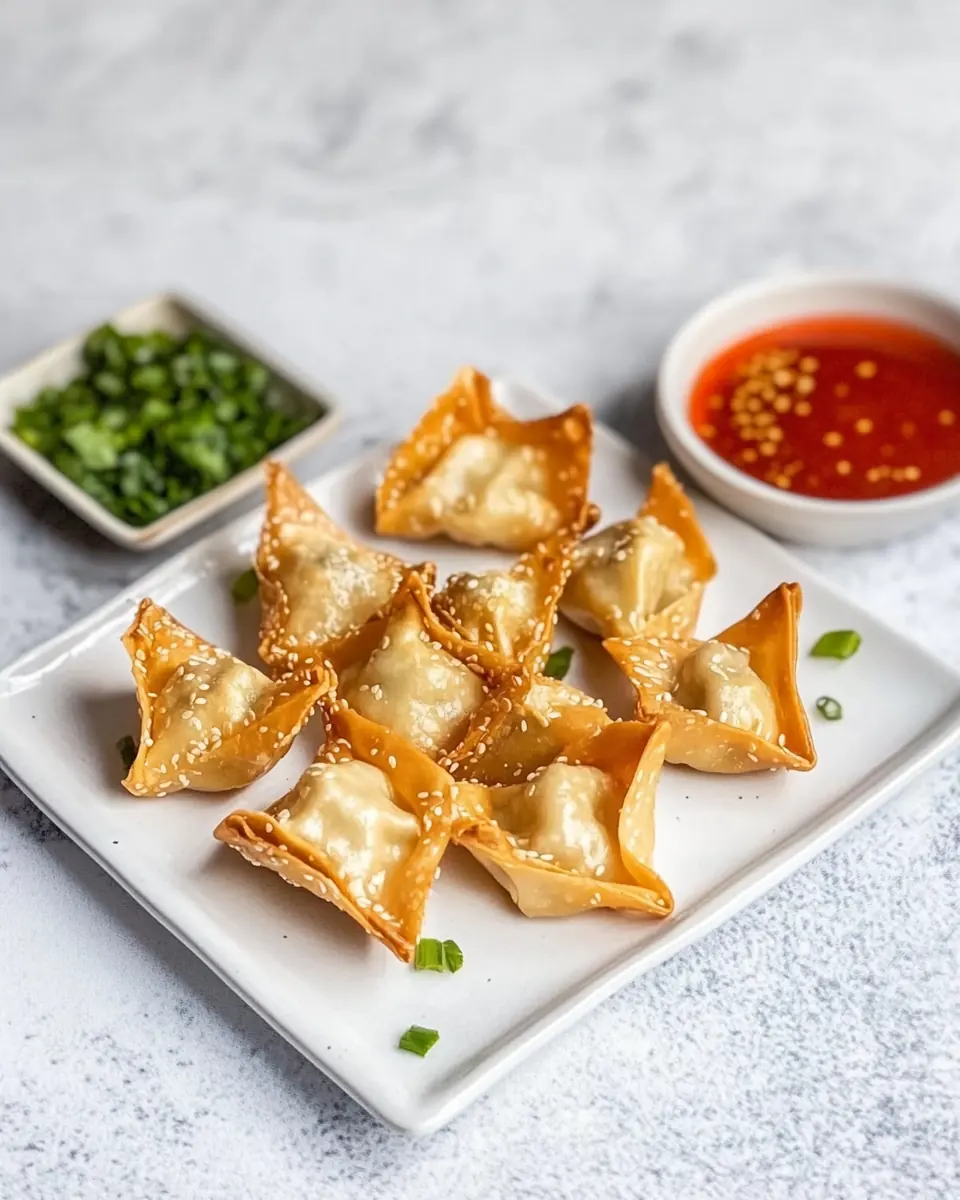
In a medium bowl, combine cream cheese, mayonnaise, and green onions. To make egg wash, in a small bowl whisk together egg and water.: The bowl will smell faintly of fresh scallions and dairy as you stir, and the texture should become glossy and even. Use a spatula to scrape the sides so no pockets of cream cheese remain, folding until the mixture feels uniformly smooth. This step matters because a well blended filling cooks evenly and prevents cold lumps in the center of your wontons, which can make them underheated inside. A common mistake is under mixing, which leaves uneven texture and pockets that can burst when heated. If the mixture feels too stiff to mix easily, let the cream cheese sit at room temperature for a few minutes then continue, and always taste for balance, adjusting only with minute additions of scallions if desired.
Working in batches, arrange 5 – 10 wonton wrappers on a clean, dry surface. Brush all 4 edges of each wrapper with the egg wash using a pastry brush or your finger.: As you whisk, watch the egg change from glossy yellow to a slightly frothy, homogenous liquid, the water making it brushable and light. The wash ensures the wrapper edges form a secure seal by acting as an edible glue, which prevents filling from leaking during frying or baking. Poorly prepared egg wash can be too thin, which will not seal well, or too thick, which may clump; both lead to bowing or opening seams. If your wash seems watery, add a tiny bit more beaten egg ; if too thick, add a drop more water , whisking until it coats the back of a spoon evenly.
Place 1 rounded teaspoon of cream cheese filling in the center of each wonton wrapper. To wrap, first lift and press the seams of 2 opposing corners together over the filling. Then, lift the remaining 2 opposing corners and bring them also to the middle to form a small parcel.: The surface should be free of moisture so the wrappers stay pliable but not soggy, and arranging a handful at a time keeps you from drying out the unused wrappers. You will notice the wrappers are slightly tacky to the touch and whisper thin, which is ideal. This staged approach prevents wrappers from sticking together and gives you time to keep each parcel neat, which improves final appearance and reduces waste. A frequent error is exposing many wrappers at once, causing the outer ones to dry and crack; cover the pile with a lightly damp towel if you need a pause.
Press all seams together and fold over the top where all 4 corners meet. If the wrapper does not seem to stick, apply additional egg wash. Repeat with all remaining wonton wrappers and filling.: The brush deposits a shiny, tacky layer that glints when light hits it, and it is the key to a reliable seam. Use gentle, even strokes so the wash does not puddle in the center, which could make the wrapper soggy. Precision here prevents leaks and yields a cleaner fold, which is important for consistent frying or baking. One mistake to avoid is overloading the edge with wash, it may cause the dough to get limp and tear when folded; if that happens, blot excess with a corner of clean paper towel and reapply sparingly.
In a deep fryer or deep pot, heat oil to 375 degrees (do not let the temperature greatly exceed 375 degrees or the oil may smoke and burst into flame). Fry wontons in small batches until golden brown, about 15 to 20 seconds. Drain on paper towels. Serve with pepper jelly if desired.: The scent of tangy cream cheese will become noticeable as you portion, and the small mound should sit like a soft pebble in the center, not spread to the edges. Accurate portioning ensures uniform cooking so that each wonton finishes at the same moment. Overfilling is a common problem that leads to bursting and hot filling leaks, so keep to the recommended amount; if you are practicing, try one test wonton to check how much filling you prefer before doing the whole batch.
Preheat oven to 350 degrees. Spray 24 regular-sized muffin cups with nonstick cooking spray. Arrange 1 filled wonton in each cup. Bake until edges are golden brown and filling is heated through, about 18 to 20 minutes. Cool 5 minutes before serving and serve with pepper jelly if desired.: As you lift those first two corners you will feel the wrapper stretch slightly and the edges adhere where the egg wash touched, forming the initial bond. That gentle pressure shapes the parcel and helps direct air pockets out so the wonton stays compact. This technique creates a foundation to bring the remaining corners together neatly, and the tactile feedback lets you know when seams are secure. A typical mistake is pressing too hard which can squeeze filling out, or too lightly which may allow seams to separate during cooking; aim for a balanced, firm press that secures without rupturing the wrapper.
Then, lift the remaining 2 opposing corners and bring them also to the middle to form a small parcel: When the last corners come together the parcel will take on a compact, almost floral shape that sits slightly puffed but held. Visually you will see a neat center where all corners meet, and the sealed edges will have a faint sheen from the egg wash. This shape helps the wonton crisp evenly around the edges while keeping a soft pocket in the middle. If the corners refuse to stick, add a dab of the egg wash to the contact points and press again; do not overwork the wrapper, or it will weaken and tear.
Press all seams together and fold over the top where all 4 corners meet: The final pressing smooths the joins and reduces stray air, giving a stable parcel that fries or bakes without opening. When you fold over the top you are ensuring the heat will circulate around the filling rather than forcing it out through seams. The audible soft press and slight tack are your cues that the seal is good. Many cooks err by leaving seams loose, which leads to leakage and uneven cooking; take that extra moment to confirm the seams are secure, and if needed, reapply a tiny bit of egg wash to sticky areas.
If the wrapper does not seem to stick, apply additional egg wash: You may notice some wrappers need a touch more adhesive, especially if they have dried slightly, and a careful, tiny amount of egg wash will fix that without oversaturating the pastry. The right amount creates a bond that feels tacky rather than wet, and it prevents separation during the high heat of frying. Avoid heavy application which can make the surrounding dough gummy and interfere with browning; blot any excess immediately and reapply a thin layer if necessary.
Repeat with all remaining wonton wrappers and filling: As you move through the batch the rhythm sets in, and you will get faster and neater with practice, producing a lineup of identical parcels that promise consistent cooking. Keep finished wontons on a sheet pan with slight spacing so they do not stick together, and cover loosely if you need to pause. The main pitfall here is rushing and misportioning, which can lead to variable cooking; keep focus on even filling sizes and secure seams for the best results.
In a deep fryer or deep pot, heat oil to 375 degrees: The oil should shimmer and give a faint scent of hot fat, and reaching the correct temperature is crucial so the wrappers crisp immediately rather than absorbing excess oil. A thermometer is your best friend, and you should avoid letting the temperature climb much above 375 degrees as that can cause smoking and dangerous splatter. The why is simple: hot oil creates an instant crust that seals moisture inside, yielding a crunchy exterior and a hot, creamy interior. A common mistake is frying at too low a temperature which produces greasy, undercooked parcels; test by dropping a small corner of wrapper into the oil to see if it sizzles and becomes golden quickly.
Fry wontons in small batches until golden brown, about 15 to 20 seconds: The oil will sing with a quick, lively sizzle and the wrappers will transition from pale to a deep, appetizing golden tone in mere seconds, so watch closely. Drain each batch on paper towels so the surface remains crisp, and try to keep batches uniform in size so cooking times remain consistent. This rapid frying produces an exterior that snaps when bitten while keeping the filling luxuriously warm and unbroken. One common mistake is overcrowding the fryer which causes the oil temperature to drop and yields soggy wontons; fry in small batches and return the oil to temperature between additions.
Drain on paper towels: The gentle hiss will subside as excess oil leaves the wontons, and draining helps preserve that crisp texture rather than letting steam make the wrappers limp. Resting briefly also gives the filling a moment to set so it is not dangerously runny when served. Do not stack the wontons directly on top of each other while hot, or condensation can form and soften the crust; arrange in a single layer or on a cooling rack.
Serve with pepper jelly if desired: A small spoonful of pepper jelly on the side introduces contrast, the sweet and spicy notes cutting through the richness of the cream cheese . Taste combinations of sticky jelly and crunchy wrapper produce a satisfying interplay of textures and flavors. If serving to a group, present the jelly in a shallow bowl so everyone can dip, and refresh the jelly between batches to keep each bite bright.
Preheat oven to 350 degrees: Warming the oven creates a predictable environment for baking, where heat circulates gently to crisp the wrappers while heating the filling through. An oven method offers a more forgiving approach for feeding a crowd without managing hot oil, and you will notice an evenly browned edge forming after the recommended time. A common error is baking at too high a temperature which will burn edges before the filling heats, so maintain the stated temperature.
Spray 24 regular-sized muffin cups with nonstick cooking spray: The muffin cups act as small nests that keep each wonton upright and allow the heat to focus on edges for even browning. The spritz prevents sticking and ensures an easy release, which preserves presentation. If you skip this, baked wontons can cling to the pan and tear when removed, so be generous but not heavy handed with the spray.
Arrange 1 filled wonton in each cup: Placing each parcel in its nest helps them keep shape and prevents slumping during the bake, so the edges can become crisp while the center gently warms. You'll notice a subtle promising aroma as the heat begins to coax flavors together, and the visual uniformity makes them appealing on a platter. Avoid crowding or overlapping, which can produce uneven doneness.
Bake until edges are golden brown and filling is heated through, about 18 to 20 minutes: During the bake you will see the edges deepen to a warm brown while the filling becomes steaming hot, and a slight firmness at the edges signals readiness. Baking is more forgiving than frying, but you still want to check a single wonton for warmth in the center before serving to ensure consistent heat. Overbaking will dry the filling and harden the wrapper too much, so remove when edges are nicely golden and the aroma is inviting.
Cool 5 minutes before serving and serve with pepper jelly if desired: Letting the wontons rest for a few minutes allows residual heat to distribute through the filling, making them safer to eat and better textured. The short cooling time keeps them warm yet stable, and serving with pepper jelly provides the same sweet and spicy contrast as with fried versions. Resist the urge to serve immediately off the heat, as very hot filling can be scalding; a brief pause improves enjoyment.