In a large heavy pot, melt butter over medium-low heat.: The kitchen should smell warm and inviting as the butter softens, sending out a subtle nutty aroma. Keep the heat modest so it does not brown quickly, because gentle melting preserves a clean dairy sweetness that helps the leeks soften evenly. If you hear a sharp sizzle immediately, your pan is too hot; lower the flame to avoid browning which would change the intended flavor profile.
Add leeks and cook, stirring occasionally, until the leeks are soft, about 8 to 10 minutes.: As the leeks cook, they release moist steam and become translucent, giving off a mild onion aroma. The texture should shift from crisp to tender, and the pan may show faint glossy bits where sugars begin to release. Stir occasionally to ensure even softening and to prevent sticking. A common mistake is rushing with higher heat, which can lead to uneven cooking and a slightly bitter edge.
Add garlic and cook 1 minute, or until fragrant.: A minute of gentle cooking will transform raw garlic into a fragrant, warm note without harshness. You will notice the aroma lift almost immediately, but watch closely because garlic can brown and turn bitter within seconds if the heat is too high. Keep the heat low and stir to distribute the scent evenly.
Chop the asparagus into 2-inch pieces.: The moment you chop the asparagus , a fresh green scent will become more pronounced. Cutting into uniform pieces helps them cook at the same rate, and two inch lengths are easy to ladle and blend. Avoid cutting into uneven sizes, which can result in some bits overcooking while others remain firm.
Add to the pot with the leeks.: Dropping the cut asparagus into the warm pan releases a bright vegetal scent as it meets the softened leeks . The contrast in textures will be obvious, with the asparagus initially firm and then gradually relaxing. Stir to coat the pieces in the buttery, aromatic base so flavors marry; neglecting to stir can create uneven seasoning pockets.
Add the broth and bring to a boil.: Pouring in the broth deglazes the pot, lifting those caramelized bits and integrating them into the liquid. When the mixture reaches a boil, it will steam and smell savory and layered. Bring it to a boil gently to avoid violent bubbling, which can splash and cause uneven cooking. If the boil is too vigorous, reduce to a simmer to maintain control.
Cover and cook about 20-25 minutes or until asparagus is very tender.: With the pot covered, the vegetables will steam and become tender through gentle convection. You should be able to pierce an asparagus piece easily with a fork when it is ready. This stage is crucial for softening so that the puree becomes smooth. A mistake is undercooking, which leaves fibrous bits; check a few pieces in different parts of the pot for consistent tenderness.
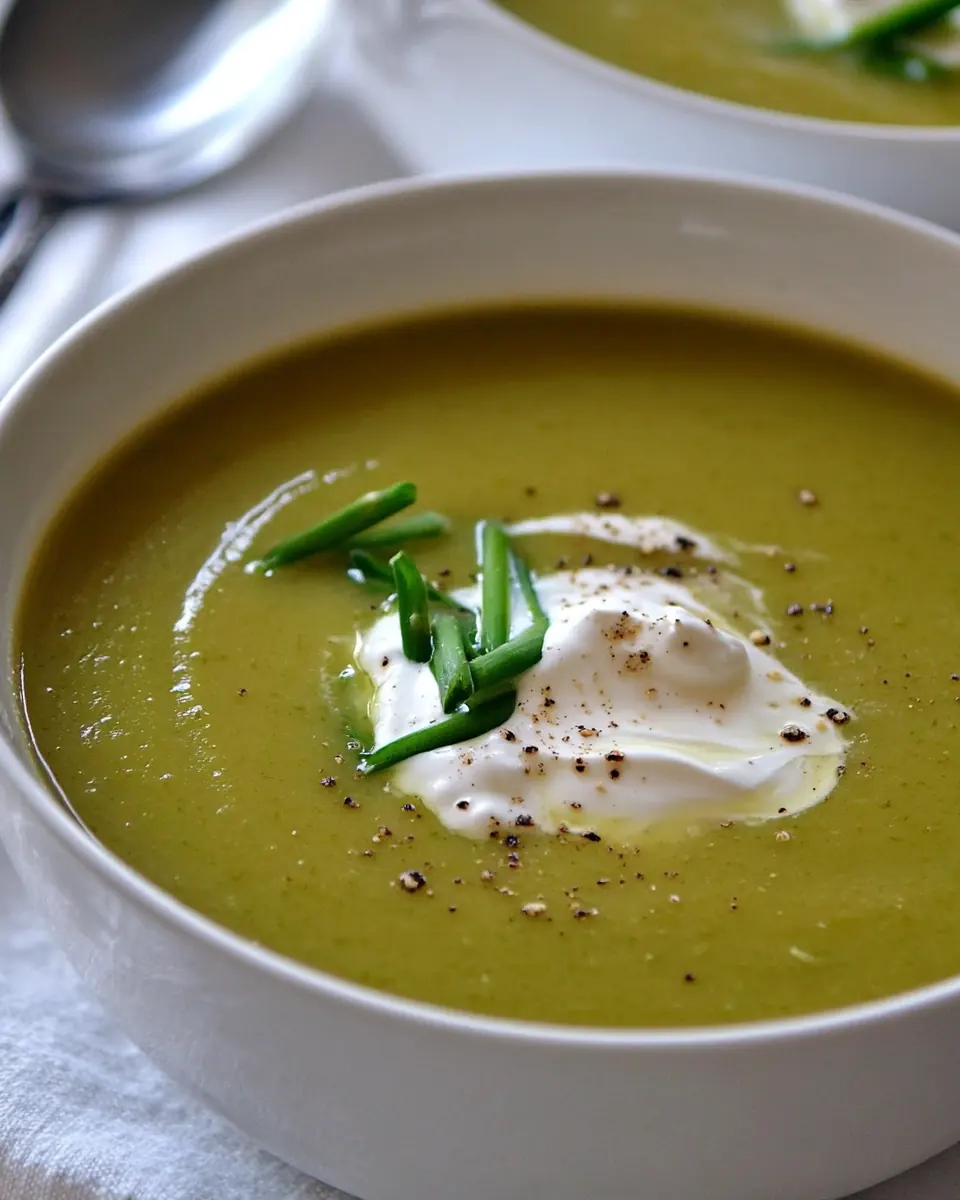
Remove from heat and puree until smooth with a blender.: Working carefully, blend the hot soup until it is uniformly smooth, watching as the color deepens to a glossy green and the texture becomes velvety. The sound changes from bubbling to a steady whirr, and steaming will ease as it homogenizes. Use a blender in batches if necessary, and avoid overfilling. If you do not blend completely, the texture will be uneven and may feel coarse.
Adjust salt and pepper, to taste.: After pureeing, taste the soup and add kosher salt and fresh pepper gradually. The aroma should lift and the flavors should harmonize, with salt enhancing the vegetal sweetness and pepper adding a mild bite. Remember that the broth already contains salt, so season cautiously to avoid over salting which can be hard to correct.
To serve, divide in 5 bowls and spoon in 1 teaspoon Creme Fraiche and chives for garnish.: When the soup is ladled, it should flow smoothly into bowls with a glossy sheen. The cold dollop of Creme Fraiche will sink slowly, creating an appealing contrast in temperature and a creamy note on the palate. Finish with chopped chives for a fresh snap. A common serving error is adding the garnish too early, which can wilt the chives and reduce the visual impact.