In a medium saucepan, melt the butter over medium heat. Once melted, sprinkle over the flour and whisk to combine.: The moment you melt the butter , inhale a soft, creamy scent that fills the kitchen and signals the start of building texture. You should hear only a faint sizzle and see the butter become a clear, shimmering pool, not brown or foamy. This gentle warmth is crucial because overheating will brown the milk solids and change the flavor profile from clean and creamy to toasty. If you notice brown bits forming, lower the heat immediately and wipe the pan clean to restart if necessary, because a browned base will throw off the intended taste.
Slowly whisk in the half-and-half until combined. Whisk in the salt, pepper, and sugar.: As you add the flour , it will form a pale paste with the butter , and a faint nutty aroma will emerge once the raw edge cooks off. Use a whisk to work out any lumps until the mixture is silky, and keep the pan on medium low so the paste warms but does not color. This step matters because an undercooked roux can taste grainy, while an overcooked roux loses thickening power. A common error is adding liquid too soon, which traps lumps; if lumps appear, lift the pan off heat and whisk briskly until smooth.
Bring the mixture to a low simmer and cook until the mixture can coat the back of a spoon, about 2-3 minutes.: When you introduce the half and half gradually, the sauce transforms into a glossy emulsion and releases a comforting dairy aroma. Pour a small stream while whisking constantly so the liquid integrates without forming clumps. The surface should shimmer and thicken gently as you continue. Stirring patiently here prevents a lumpy sauce and ensures even cooking. If the sauce seems too thin after you have added all the liquid, let it simmer and reduce, but do so on low to avoid curdling.
Stir in the peas and continue to cook until they are warmed through.: Adding the seasonings now helps them dissolve and distribute evenly. The salt will enhance the vegetable sweetness, the pepper adds a faint heat, and the sugar brightens the overall profile. After stirring, taste a small spoonful to check balance, because dairy can mute salt and sweet. Over seasoning is easy to do; if it happens, rescue the sauce by adding a splash of half and half or a small peeled potato simmered and removed, though the latter changes the texture.
Serve immediately.: As the sauce reaches a low simmer, gentle bubbles will appear at the edges and the aroma will deepen into a warm creaminess. When it thickens enough to coat the back of a spoon, run your finger through it and watch the line remain clear, which is the classic visual cue. Cook only the short time needed because extended simmering can thicken the sauce too much or cause separation. If you overshoot and it becomes overly thick, thin it with a tablespoon at a time of warm water or milk until you reach the right consistency.
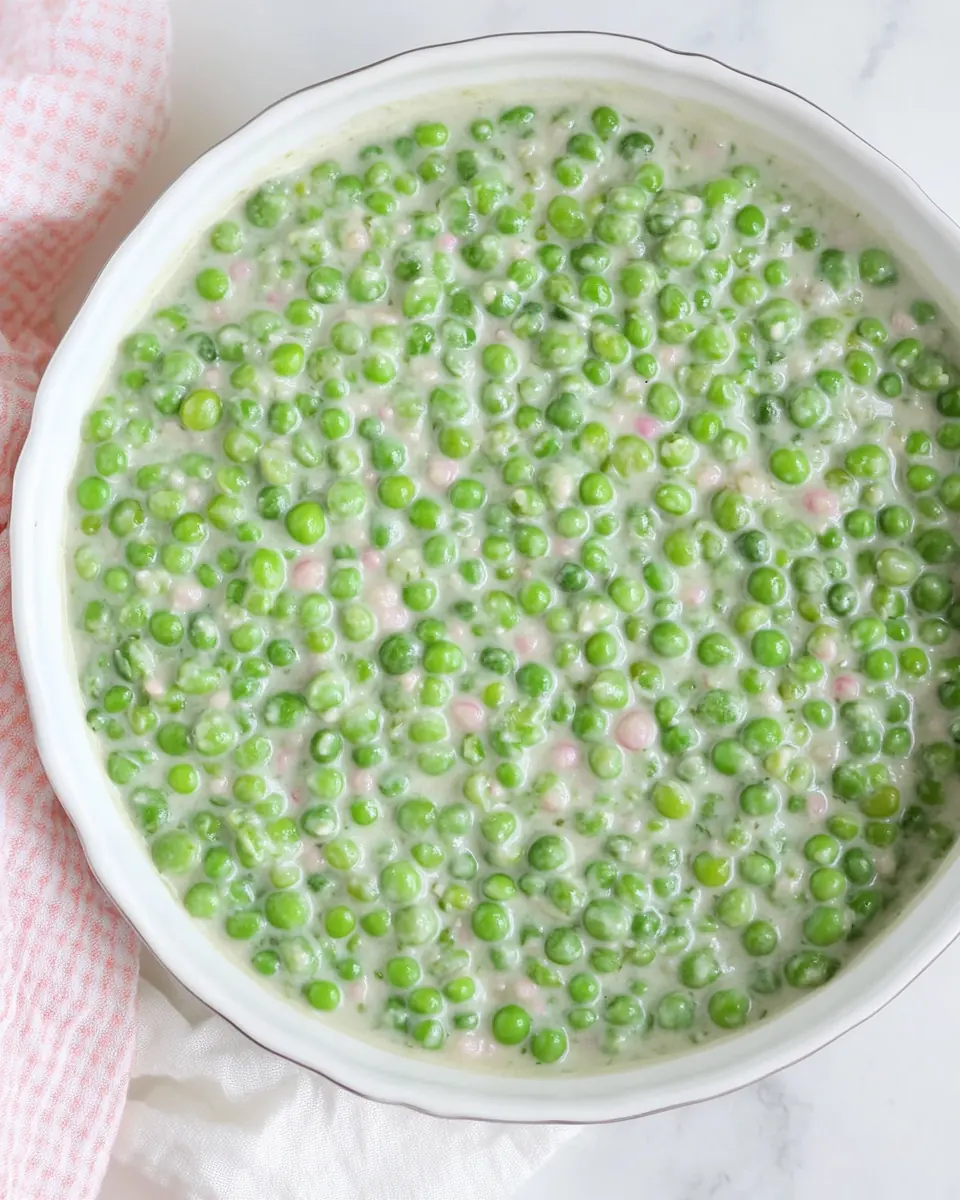
Stir in the peas and continue to cook until they are warmed through: Adding the frozen peas produces a quick hiss as the cold meets warm, and within moments the kitchen fills with their fresh, sweet aroma. Stir gently so each pea is coated in the sauce, and watch the color intensify to a vivid green that signals tenderness. This final warming step is short; overcooking will make the peas lose their snap and turn mushy. A typical mistake is leaving them in the heat too long while attending to other tasks, so time this step carefully and remove from heat as soon as they are tender.
Serve immediately: When you spoon the finished Creamed Peas into bowls, you should notice a glossy sauce clinging to each pea and a warm, inviting aroma. The contrast of bright green and pale cream looks appealing on the plate. Serving right away preserves texture and temperature, making each bite both warm and fresh. If you let it sit too long, the sauce can thicken and the peas can lose vibrancy, so avoid holding it on low heat for extended periods; quick reheating with a splash of milk will bring it back if needed.