Go Back
Creamy Carrot Soup

Creamy Carrot Soup

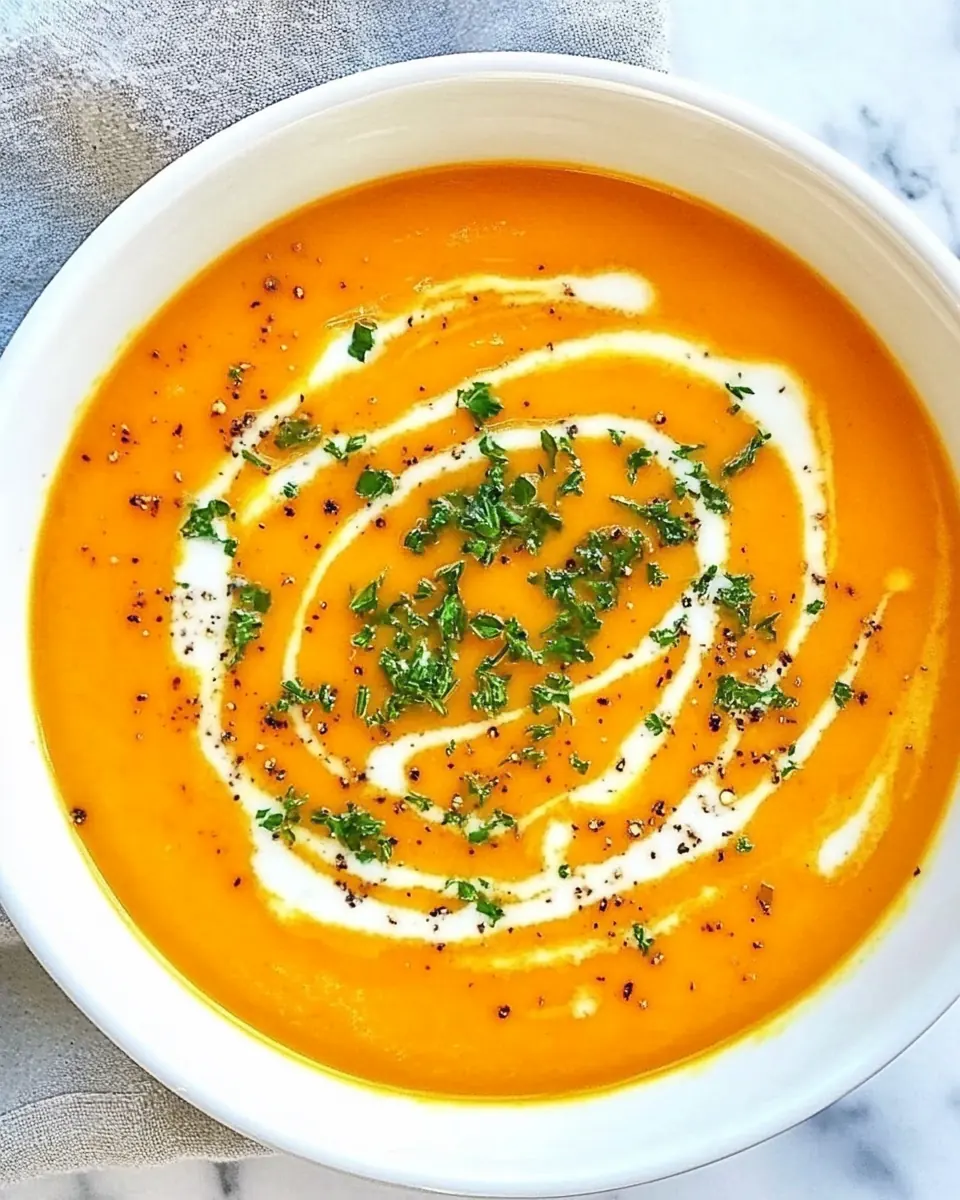
Creamy Carrot Soup is a silky, comforting bowl that highlights natural sweetness and warming spices. Bright orange, velvety texture and subtle savory depth make it an easy weeknight dinner or elegant starter. This recipe is creamy, nourishing and simple to prepare, perfect when you want something cozy without fuss.
Prep Time 10 minutes
Cook Time 25 minutes
Total Time 35 minutes
Servings: 4 servings
Course: Soups
Cuisine: American
Calories: 180

Ingredients
  

  • 2 shallots Finely chop to provide a mild, sweet onion base that deepens the soup's flavor; sweat until translucent to release natural sugars and meld with other aromatics. Use gently to avoid browning so the soup remains delicate and balanced in taste.
  • 2 teaspoons minced garlic Minced and added early to build aromatic depth and a subtle garlicky warmth; cook briefly to soften sharpness and integrate with shallots and fat. Use sparingly to complement vegetables without overpowering the soup.
  • 2 lb carrots Peel and slice or chop to supply the primary sweet, earthy body and vibrant color of the soup; simmer until tender so carrots puree smoothly for a creamy texture. Adjust quantity for desired thickness and natural sweetness.
  • 2 tablespoons butter divided Divide between sweating aromatics and finishing for richness; use some to sauté shallots and garlic, and reserve the rest to enrich the final puree for silkiness. Control heat to prevent browning when sautéing and add at end for glossy mouthfeel.
  • 1 tablespoon olive oil Use at the start to sauté shallots and garlic for a light, fruity base that helps extract flavors; combine with butter to balance richness. Maintain medium heat so oil imparts flavor without burning aromatics.
  • 1/4 teaspoon dried oregano Add dried for subtle herbal warmth that complements sweetness; sprinkle in during sautéing to bloom its flavor and integrate into the soup. Measure carefully so oregano supports rather than dominates the carotene-forward profile.
  • 1/4 teaspoon coriander Toast briefly or add with spices to introduce a citrusy, slightly floral note that brightens the soup; stir in early to allow its aroma to infuse. Use sparingly to enhance complexity without becoming the focal point.
  • 1/8 teaspoons smoked paprika Sprinkle in to lend a mild smoky undertone and depth; incorporate with other spices so it complements roasted carrot flavors without overwhelming them. Choose smoked paprika carefully to maintain a subtle background smokiness.
  • 1/2 teaspoons salt Season during cooking to enhance and balance natural flavors; dissolve in the stock and taste as the soup reduces to avoid over-salting. Adjust incrementally since concentrated reductions can intensify saltiness.
  • 1/4 teaspoon black pepper Crack freshly over the soup to provide a bright, slightly sharp counterpoint that lifts flavors; add gradually and taste to maintain balance. Use fine grinding for even distribution and to complement the sweetness of carrots.
  • 5 cups vegetable stock Pour as the cooking liquid to cook and infuse carrots while contributing savory depth and body; use quality vegetable stock to enhance overall flavor. Simmer gently to extract carrot essence without excessive evaporation.
  • 1/4 cup heavy cream Stir in at the end to enrich texture and give a luxurious, creamy finish; heat gently after adding to prevent curdling while maintaining smoothness. Adjust amount for desired richness and to balance the soup's sweetness and seasoning.

Equipment

  • Soup pot
  • immersion blender
  • Knife
  • Cutting Board
  • Measuring Spoons

Method
 

  1. Peel and chop carrots. Finely chop shallots.: Warm, earthy scents emerge as you work with fresh produce, and the visual of bright orange carrots set against translucent shallots is satisfying. Use a sharp knife for clean cuts to ensure even cooking, which translates to consistent tenderness in the pot. If pieces are wildly different in size, you risk some bits overcooking while others remain firm. A common slip is leaving skins on larger carrots which can add a slightly bitter note, so peel and aim for uniform dice.
  2. Heat up oil in soup pot. Add one tablespoon of butter and melt.: When the oil shimmers and the butter foams, you get a fragrant base that coats the pan and prevents sticking. This step smells subtly nutty, and it primes the pan to coax out sugars from the shallots . Keep the heat moderate so the butter does not brown too quickly and burn, which would create a bitter undertone. If the pan smokes immediately, reduce heat; you want a gentle shimmer and a faint sizzle.
  3. Add shallots and saute for 2 minutes. Add carrots and garlic and stir in.: As the shallots soften, they release a sweet, mellow aroma and their edges turn translucent. Adding the carrots and minced garlic after gives the garlic time to mellow without burning, while the carrots begin to pick up the pan flavors. Listen for a soft, steady sizzle and watch for the shallots to become glossy. A common error is crowding the pan, which causes steaming instead of sautéing; give the ingredients a bit of room to develop color.
  4. Add seasoning, stir well, and saute for 5 minutes.: The tiny flecks of oregano , coriander , and smoked paprika bloom in the warm fat releasing fragrant notes. Stirring helps distribute the spices evenly so every spoonful tastes balanced. In this window, you will notice the carrots beginning to soften at the edges and the aroma becoming deeper. Avoid overtoasting the spices which can turn them bitter; five minutes of gentle sautéing is enough to marry the flavors.
  5. Add vegetable stock and bring to boil.: When the vegetable stock hits the pot, it lifts the browned bits from the bottom and adds savory depth. The initial steam carries a concentrated, warming scent. Raise heat until you see a lively boil, then reduce to a gentle simmer. Boiling too aggressively can evaporate liquid unevenly, concentrating salt, so monitor and adjust the flame to keep a steady simmer.
  6. Cook until carrots are soft.: Simmering until the carrots are fork tender is crucial because it determines texture after blending. You should be able to pierce a piece easily and see it yield. The pot will give off a sweet, vegetal perfume as natural sugars develop. A common mistake is undercooking, which leaves fibrous bits in the finished soup; test multiple pieces for uniform tenderness before proceeding.
  7. Using an immersion blender, blend soup until creamy. Add salt, pepper and stir in.: Blending transforms the mixture from chunky to velvety, creating a cohesive body. The sound shifts from gentle bubbling to a steady whir as solids emulsify, and the color becomes uniformly luminous. Add the measured salt and black pepper after blending to better gauge seasoning on the finished texture. Overblending at high heat can entrain air and change mouthfeel, so pulse mindfully and tilt the pot to reach all pockets.
  8. Add heavy cream and stir in. Add the remaining tablespoon of butter and let it melt. Stir in.: The heavy cream brings silk and rounds edges, creating a luxurious finish. As the cream warms, it softens the soup's profile, and the remaining butter imparts a glossy sheen and extra richness. This is the time to keep heat low to prevent scalding or separation, and stir gently until everything is homogenous. A common pitfall is boiling after adding cream, which risks curdling; warm cautiously and integrate slowly.
  9. Serve soup with chopped parsley, croutons, etc.: The final presentation offers a contrast of textures and bright visual appeal. Breadcrumb crunch or fresh herbs add a lively counterpoint to the creamy base. As you ladle the soup, notice the smooth ribbon the spoon leaves behind and the steam that carries inviting aromatics. Avoid adding garnishes that clash with the soup's subtle spice profile, and keep portion temperatures moderate so flavors are perceptible without numbing the palate.
Notes

  • Choose fresh carrots: Fresher roots have more vibrant sweetness and less fibrous texture, which yields a silkier soup after blending.
  • Cut evenly: Uniform chopping ensures that every piece reaches tenderness at the same moment, preventing undercooked bits in the purée.
  • Sweat the shallots: Gently cooking shallots until translucent develops sweetness and builds a mellow base for the soup.
  • Bloom your spices: Briefly sauté the dried spices in the fat to release their essential oils and deepen flavor without increasing heat.
  • Use a good stock: A flavorful vegetable stock is foundational; choose one with body to avoid needing excessive seasoning.
  • Blend carefully: Pulse or use an immersion blender in short bursts to avoid overaerating and to achieve a stable, silky texture.
  • Finish off heat: Add the heavy cream and remaining butter with the pot off the heat to keep the emulsion smooth and prevent separation.
  • Adjust seasoning last: Salt and pepper taste different in hot liquid and after blending, so fine tune at the end for balance.
  • Keep garnishes simple: A sprinkle of fresh herbs or toasted croutons adds contrast without competing with the soup's delicate flavors.
  • Store smartly: Cool quickly, refrigerate in shallow containers, and reheat gently to preserve texture and flavor integrity.