Go Back
Creamy Chicken Pesto Pasta

Creamy Chicken Pesto Pasta

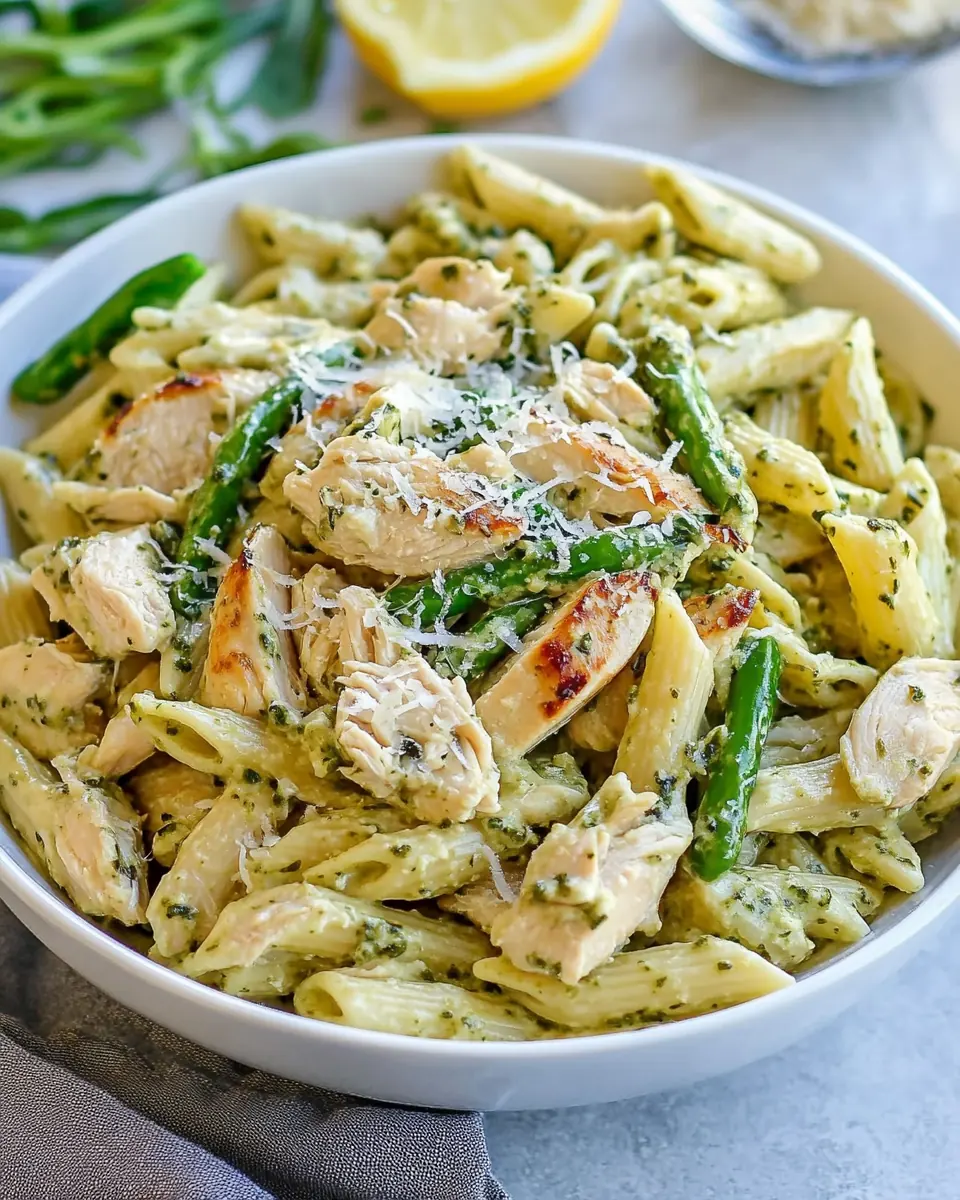
Creamy Chicken Pesto Pasta is a rich and herbaceous weeknight favorite, combining tender chicken, bright pesto, and a silky cream sauce that clings to fettuccini. With crisp asparagus folded in, it balances luxuriant texture with fresh green notes, making it an easy weeknight dinner that still feels special. Serve it when you want comfort and flavor without hours in the kitchen.
Prep Time 10 minutes
Cook Time 20 minutes
Total Time 30 minutes
Servings: 8 people
Course: Dinner
Cuisine: Italian
Calories: 600

Ingredients
  

  • 1 lb chicken breasts, trimmed Trimmed and cooked to tender, provide lean protein that forms the hearty base of the dish and soaks up the creamy pesto sauce. Slice or cube after cooking to distribute evenly through the pasta and asparagus. Seasoned during cooking to enhance flavor and create a satisfying main component.
  • 1 tsp salt, (divided) Seasoned sparingly to enhance the chicken and pasta without overpowering delicate flavors, contributing essential savory balance. Divide between steps to season during cooking and finish the sauce for consistent taste. Dissolves easily into liquids, helping to round out the overall seasoning profile.
  • 1/4 tsp black pepper Ground to provide a subtle, warm heat and aromatic depth that complements the pesto and cream without dominating. Use during cooking to build layers of flavor in the chicken and sauce. Adds a fresh finish when freshly cracked before serving.
  • 1 lb asparagus, ends trimmed and cut into 2" pieces Trimmed and cut into 2-inch pieces to add bright, crisp vegetal texture and color contrast to the creamy pasta. Blanched or sautéed briefly to retain a slight crunch while allowing the sauce to cling to each piece. Provides a fresh, slightly grassy flavor that balances the richness.
  • 2 cups heavy whipping cream Rich and silky, creates the luscious, creamy base that binds pesto, chicken, and pasta into a cohesive sauce. Simmer gently to thicken and develop a velvety mouthfeel without breaking. Contributes richness and a mellow dairy sweetness that mellows the herbs and spices.
  • 4 tbsp pesto sauce Bold and herbaceous, supplies concentrated basil, garlic, and nutty notes that define the sauce’s character. Stir into warm cream to release aromatics and create a vibrant green pesto cream that coats the pasta. Balances richness with herbal brightness and umami from cheese and nuts.
  • 4 tbsp olive oil Versatile and fruity, used for sautéing the chicken and asparagus and for deglazing the pan to capture browned flavor. Adds light richness and helps distribute heat evenly while carrying the pesto and cream flavors. Use extra-virgin for best taste and aroma.
  • 12 oz fettuccini pasta, (or linguine) Long, flat pasta that soaks up the creamy pesto sauce and provides substantial, satisfying bite throughout the dish. Cook to al dente so it holds shape when tossed with chicken, asparagus, and sauce. Serves as the starchy backbone that ties all components together.

Equipment

  • Large Pot
  • Large deep skillet
  • Tongs
  • Knife
  • Cutting Board

Method
 

  1. Cook pasta in a large pot of salted boiling water according to package instructions to your desired doneness. While pasta is cooking, proceed with the recipe then add drained cooked pasta to the sauce in step 5.: The boiling water should be rolling and well salted so the pasta seasons from the inside out, which makes a big flavor difference. As the noodles float and begin to ribbon, smell the wheaty aroma that tells you they are nearing al dente, and taste a strand a minute or two before the package time finishes. Draining too early leaves the center chalky, while overcooking makes the noodles collapse and soak up too much sauce. A common mistake is not salting the water enough, which results in bland pasta, so be generous but measured.
  2. Cook Chicken – Cut chicken breasts in half lengthwise and season all sides with 1/2 tsp salt and 1/4 tsp black pepper. Heat a large, deep skillet over medium heat with 2 Tbsp olive oil. When oil is hot, add chicken in a single layer and saute until fully cooked through (3 min per side). Remove from pan and rest 5 minutes, then slice into bite-sized strips.: When you place the seasoned chicken into a hot skillet with 2 tablespoons of olive oil , you should hear an immediate sizzle that creates a golden surface and locks in juices. As the chicken browns, a nutty aroma develops and the edges take on color, which signals readiness. Resting the cooked pieces for five minutes allows the juices to redistribute so the slices stay moist. Avoid crowding the pan, which causes steaming instead of searing, leading to pale, rubbery meat.
  3. Saute Asparagus – Add 2 Tbsp olive oil to the same pan with asparagus pieces. Sautee stirring occasionally for 2-3 minutes or until crisp tender.: The asparagus should hit the hot oil and sizzle briefly, releasing a bright, green scent. Stirring occasionally encourages even browning on the tips and sides, and you want it crisp tender, with a slight give when pierced. The color should turn vivid green and the edges may gain light char marks for flavor. Overcooking will make the stalks limp and dull the fresh flavor, so watch for that quick tender moment.
  4. Make the Sauce – Add 2 cups heavy whipping cream, bring to a simmer and cook 3 minutes, stirring occasionally. Stir in 4 Tbsp pesto then add chicken breasts and cook 2 minutes. Season sauce with 1/2 tsp salt or to taste.: As the cream warms, it will become glossy and begin to thicken, filling the pan with a rich, slightly sweet aroma. A gentle simmer concentrates the flavors without risking separation, and stirring prevents scorching on the pan bottom. When you stir in 4 tablespoons of pesto , it releases a bright herbal perfume that cuts through the cream and lifts the sauce. Adding the sliced chicken back in for two minutes warms it through and allows the meat to absorb some of the sauce. Watch the heat, because boiling too vigorously can cause the cream to split, which ruins the texture.
  5. Combine and Serve – Add cooked pasta, stirring to coat noodles in sauce. Remove from heat and serve right away. Garnish with basil or parsley if desired.: Tossing the drained pasta into the warm sauce lets the noodles capture that glossy coating, and you should see the sauce cling to each strand. Use a gentle folding motion so the asparagus and sliced chicken distribute evenly, and if the sauce seems thick, a splash of reserved pasta water will smooth it to the right consistency. Serve immediately while the dish is warm and aromatic. Leaving the pasta to sit too long will allow the sauce to thicken and cling too tightly, so plate promptly for the best texture.
Notes

  • Salt the pasta water well, I aim for water that tastes like the sea so the pasta itself is seasoned throughout, which makes the final dish more flavorful without over salting the sauce.
  • Use room temperature cream, cold cream can lower pan temperature and lengthen cooking time, which affects how the sauce reduces and binds to the pasta.
  • Don’t overcrowd the pan when searing the chicken, giving each piece space ensures a golden crust rather than steaming, which improves texture and flavor.
  • Cut asparagus evenly, consistent pieces cook at the same rate so you avoid some pieces being underdone while others are mushy.
  • Finish with reserved pasta water if needed, a tablespoon at a time will help adjust sauce silkiness without diluting flavor.