Preheat oven to 400 degrees Fahrenheit.: As the oven warms you'll start to smell a dry heat that hints at browning, a cue that the roasting stage will crisp the reserved chickpeas and develop nutty aromas. Ensuring the oven reaches the full temperature prevents long, slow roasting which can dry the beans without producing that desirable golden color. A common mistake is placing the tray too low in the oven where steam can accumulate, so position the rack in the middle for even airflow.
Add 1/2 cup of the chickpeas to the pitcher of a blender.: When these chickpeas hit the blender they begin to anchor the texture, helping the tomatoes and tahini emulsify into a creamy base. The beans should be soft and rinsed so the blender can work smoothly; if you hear straining sounds from the motor, stop and scrape down the sides to prevent overheating. Avoid overcrowding the pitcher to ensure an even puree.
Rinse remaining chickpeas. Spread a couple of paper towels on a rimmed baking sheet and spread chickpeas on top. Gently blot tops of chickpeas with additional paper towels until they're relatively dry. Place the dried chickpeas in a bowl and drizzle with 2 teaspoons olive oil. Sprinkle with a couple of pinches of kosher salt and toss gently until coated with oil and salt. Discard paper towels and pour chickpeas onto baking sheet. Bake until golden and slightly crispy, 25-30 minutes.: As you pat and dry the cans of chickpeas the sound changes from wet to slightly dry, and that dryness is essential so they crisp instead of steaming. The little rattle of chickpeas on the sheet as they brown is an encouraging sound, and the aroma becomes toasty and nutty toward the end of roasting. Resist the urge to check incessantly, but glance at the 20 minute mark to rotate the pan if some pieces are browning faster. A frequent misstep is failing to dry them enough, resulting in soft rather than crunchy bites.
While the chickpeas are roasting, make and chill the soup. To the 1/2 cup chickpeas already in the pitcher of the blender, add the remaining ingredients (aside from toppings). Puree until smooth. Taste and add additional salt and pepper if desired.: As you blend, notice the transition from chunky tomato bits to a glossy, cohesive liquid; the sound changes from chopping to a sustained whir, and the aroma shifts to a bright, lemony tomato scent with warm cumin notes. The tahini and olive oil should emulsify to create a silky mouthfeel, and a spoon test helps you judge thickness. If it seems grainy, pulse then blend longer, scraping the sides to ensure even texture. Avoid overblending to the point of heating the soup, as warmth will mute the fresh flavors intended for a chilled dish.
Place in an airtight container and refrigerate until very cold.: Chilling is where the flavors settle and meld together, and the soup becomes refreshingly cool. The first hour brings a tightening of acidity, and after several hours the garlic and shallot integrate into a rounder profile. Use a shallow container for faster chill time, and avoid storing next to strongly scented foods that can impart unwanted aromas. A common error is serving the soup lukewarm; very cold soup preserves the crisp contrast with the warm roasted chickpeas.
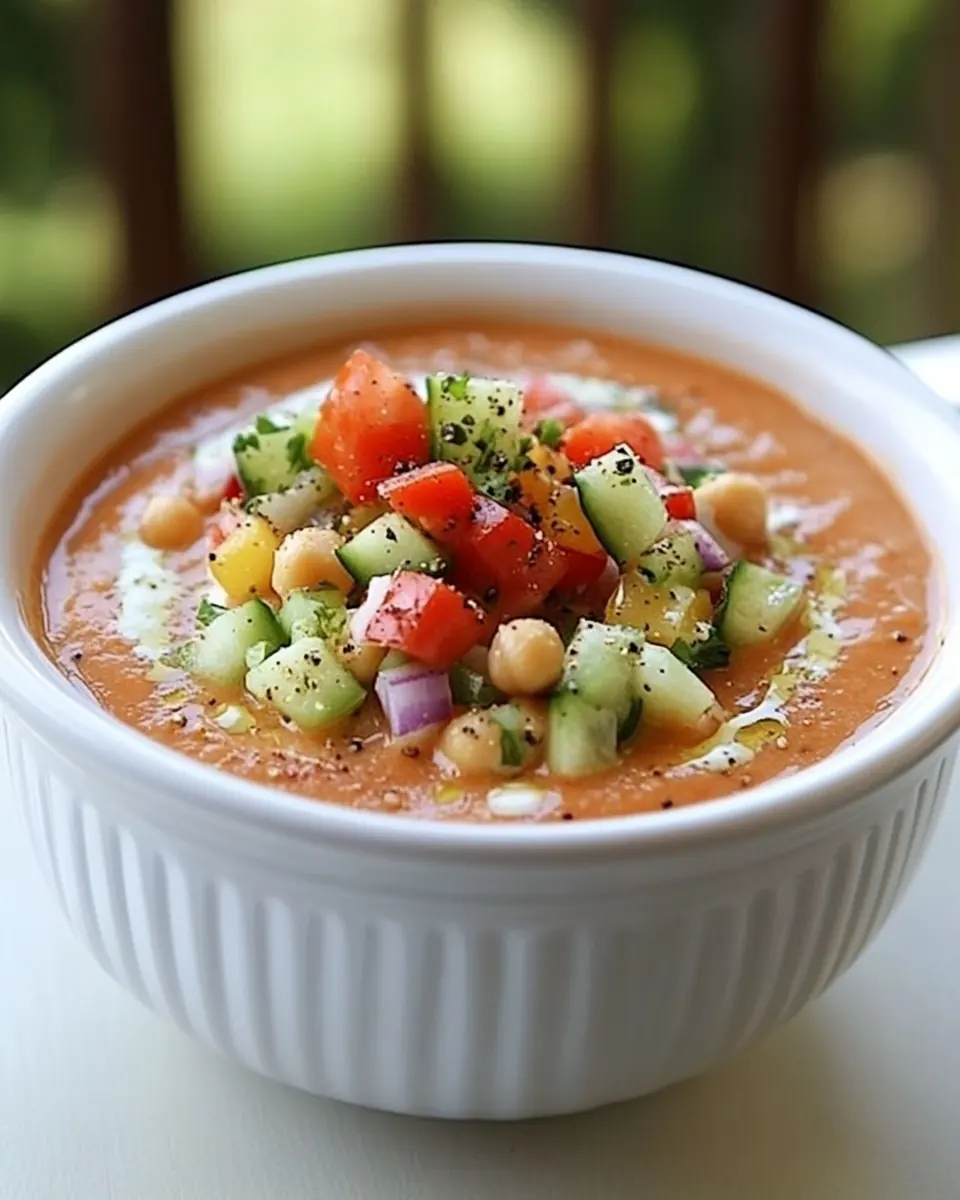
Ladle into bowls and top with cucumber, tomato, roasted chickpeas, and a light sprinkle of smoked paprika. Serve.: The final assembly is sensory theatre, the cold creamy base meeting bright, crunchy toppings and a dusty smoked paprika finish that perfumes each spoonful. Arrange toppings thoughtfully so every bowl has a balance of textures and colors, and listen for the gentle clink as you set the bowls on the table. A simple mistake is adding too many toppings which can overwhelm the silky base; keep the ratio balanced for the best mouthfeel.