To the slow cooker, add the chicken breasts, and season with paprika, cumin, coriander, oregano, chili powder, cayenne, pepper, and salt.: The air will fill with a warm, spiced aroma as the dry spices hit the surface of the chicken . You will notice the paprika and cumin releasing their scent immediately, which is a good cue that the base flavors are taking hold. The why here is that direct contact of spices with the meat encourages even seasoning as the heat builds, so the entire piece absorbs flavor while it cooks. One common mistake is under-seasoning at this stage which can lead to a flat final dish, so be deliberate with the measured spices. If a spice mound sits in one area, gently rub it over the meat to distribute it evenly, ensuring every bite will carry the intended profile.
Add the diced onion, garlic, diced chiles, corn, and cannellini beans.: As these aromatics and components sink into the broth, the kitchen changes, the garlic scent deepens and the onion begins to soften and sweeten as it steams. The beans and corn provide texture contrasts that will hold up through long cooking, so they are added now to integrate without turning to mush. This layering matters because the onion and garlic convert to mellow, savory notes that underpin the chili, while the chiles and corn add pockets of brightness. Avoid overcrowding the slow cooker in a single pile; distribute evenly so heat circulates. A typical slip is tossing everything in without stirring which can leave clumps of seasoning or raw garlic in spots.
Pour in the chicken broth, and give everything a quick stir.: When the broth hits the pot it loosens flavors and starts the gentle simmer that will cook the meat and soften the aromatics. You will hear a soft liquid settling sound and see the ingredients float into a cohesive mixture, which is the visual cue that the slow cooking phase is beginning. This quick stir helps suspend the spices and prevents them from settling in one place, ensuring even cooking. The trick is to stir just enough to combine, too aggressive stirring can break down fragile ingredients early. A common error here is using full sodium broth, which can make the final dish overly salty, so low sodium is recommended.
Cover with the lid, and cook on high for 2.5-3 hours or on low for 6 hours. The chicken is ready when the internal temperature reaches 165°F/74°C.: During this long, slow cook you will notice the aroma deepen into a homey, slow simmer scent, and the chicken will gradually become opaque and tender. The internal temperature cue is a precise safety and doneness indicator, and it also tells you when the meat will shred cleanly. The why behind this timing is that gentle heat breaks down connective tissues, giving tender results without dryness. A frequent mistake is overcooking on high which can dry the meat; if you need to be away, choose the low setting to keep the texture moist and forgiving.
Remove the chicken and on a cutting board, shred it with 2 forks.: When you lift the chicken out, you will feel its tenderness as the meat pulls apart easily. Shredding on a cutting board gives you control over the size of the pieces, which affects the mouthfeel in the bowl. The rationale is that shredded chicken disperses through the chili so each spoonful has a balance of meat and beans, rather than large unseasoned chunks. The sound of the forks scraping and the soft fibers separating are cues that you have achieved the right texture. Avoid shredding while the meat is too hot and falling apart into mush; let it rest a few minutes so you can control the shred size.
To the slow cooker, add the cream cheese and stir until it melts in the chili. Return the chicken to the slow cooker, and stir. Cover and cook on high for 15 more minutes, the chili will thicken and become creamy.: As the softened cream cheese melts, you will see the broth transform, going from thin to silken, with a glossy sheen. That thickening happens as the dairy binds with the starches in the beans, creating a velvety texture that coats the spoon. The why is that low, brief heat allows the cream cheese to incorporate without breaking or separating, preserving a smooth mouthfeel. One common mistake is adding cold cream cheese which causes lumps, so ensure it is softened. Stir gently to create an even emulsion, and watch for small bubbles at the edge, a cue that it is warmed through and ready to rest.
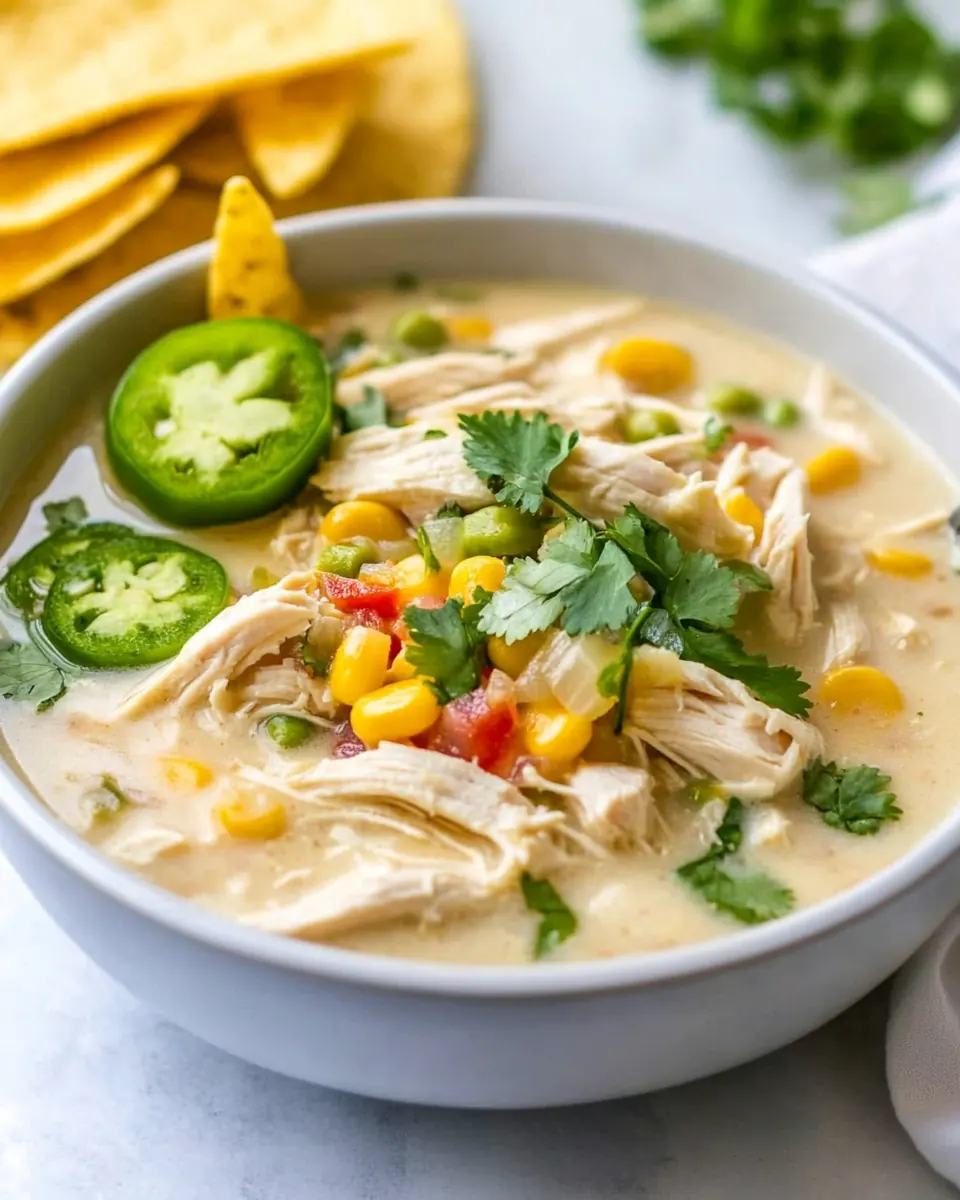
Serve with your favorite toppings (I used tortilla strips, sliced avocado, fresh sliced jalapeno mainly for presentation, sour cream, fresh cilantro, and lime wedges).: The finishing ritual is sensory rich, from the crunch of tortilla strips to the cool creaminess of sliced avocado . Fresh lime squeezed over the top brightens each spoonful and cilantro adds herbal contrast. This step matters because contrast in texture and temperature elevates the dish from comforting to memorable. A typical mistake is piling on too many heavy toppings that mask the chili, so choose one or two to enhance rather than overwhelm. Serve hot and watch how the variety of textures invites people to customize their bowl.