Go Back
Creamy Lemon Squares

Creamy Lemon Squares

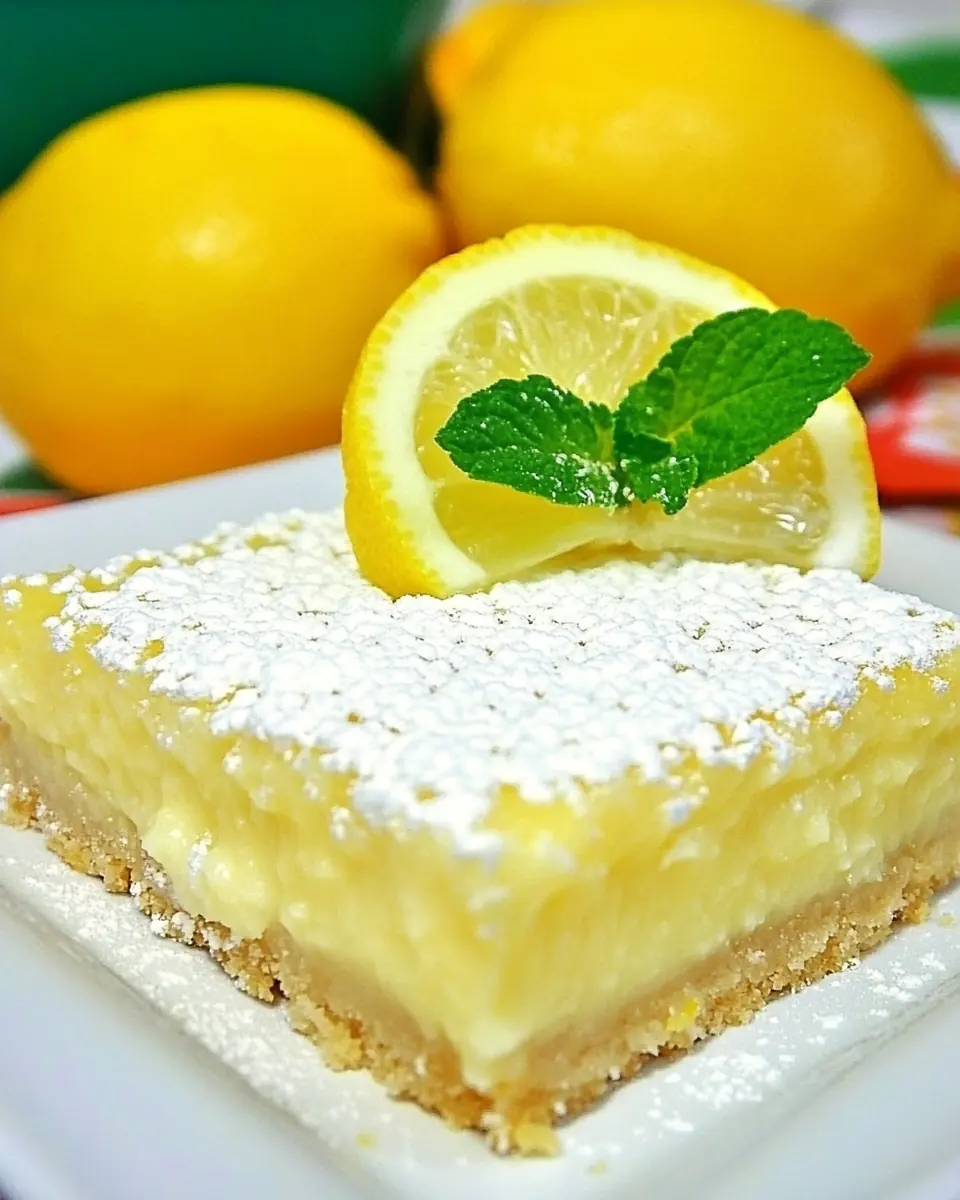
Creamy Lemon Squares are a bright, silky dessert with a buttery cookie crust and a tangy cream cheese lemon filling. These easy to slice bars deliver creamy texture, fresh citrus zest, and powdered sugar sparkle, perfect for spring brunches or easy weeknight gatherings. Make ahead friendly and crowd pleasing, they are a must try when you want a simple yet impressive sweet.
Prep Time 10 minutes
Cook Time 28 minutes
Total Time 38 minutes
Servings: 12 servings
Course: Desserts
Cuisine: American
Calories: 200

Ingredients
  

  • 20 NILLA Wafers finely crushed Finely crushed to create a buttery, crunchy base that binds with butter when pressed into the pan; provides texture and a sweet, vanilla-nilla flavor backbone for the squares. Finely crushing ensures an even crust that bakes evenly and complements the creamy filling without overpowering it.
  • 1/2 cup flour Used as a dry binder in the crust mixture to add structure and a tender crumb; helps absorb moisture from the butter and wafers so the crust holds together. Measuring accurately prevents a soggy or overly dense base and supports uniform slicing.
  • 1/4 cup brown sugar packed Packed brown sugar contributes moist, caramel-like sweetness and depth of flavor to the crust, enhancing the overall richness. Browning in small amounts helps balance the tart lemon filling and keeps the texture slightly chewy.
  • 1/4 cup cold butter Cold butter cut into the crushed wafers and flour melts during baking to create a cohesive, slightly flaky crust; using cold butter controls flakiness and prevents greasiness. Cutting it into small pieces and mixing briefly ensures even distribution and a stable base for the lemon topping.
  • 8 oz PHILADELPHIA cream cheese 1 package, softened Softened cream cheese provides a silky, tangy, and rich creamy layer that balances the lemon's acidity and sweetens the filling while adding body. Beating it smooth removes lumps, promotes a uniform texture, and helps produce a lush, spreadable consistency in the bars.
  • 1 cup granulated sugar Granulated sugar sweetens the cream cheese filling and dissolves into a smooth matrix that caramelizes slightly while baking for added structure and tenderness. Properly creamed with the cheese and eggs helps incorporate air for a lighter, custard-like texture.
  • 2 eggs Eggs act as the primary binding and setting agents in the filling, coagulating during baking to create a firm yet creamy custard. Whisking them thoroughly ensures even texture and helps prevent curdling while contributing richness and lift.
  • 2 tbsp flour Added flour stabilizes and slightly thickens the lemon-cream filling, helping it hold together when sliced and preventing weeping. Folding it in gently distributes structure without toughening the custard, resulting in clean-cut bars.
  • 3 tbsp lemon zest divided Divided lemon zest delivers concentrated citrus oils for bright aroma and intense lemon flavor; using it in parts layers the citrus brightness throughout crust and filling. Zesting carefully avoids bitter pith and maximizes fragrant essential oils to complement the sweet cream layer.
  • 1/4 cup fresh lemon juice Fresh lemon juice supplies the tart, acidic component that brightens the filling, balances sweetness, and helps set the custard through acid-protein interaction. Using fresh juice preserves vibrant flavor and natural acidity that bottled juice cannot fully replicate.
  • 1/4 tsp baking powder Baking powder provides a modest lift to the crust or filling (depending on incorporation), contributing lightness and slight oven rise for a tender texture. Measuring precisely prevents over-expansion and maintains the intended dense-creamy consistency of the bars.
  • 2 tsp powdered sugar Powdered sugar is used as a delicate finishing dusting to add a touch of sweetness and an attractive presentation while softening the tartness on the first bite. Sifting it over cooled squares prevents clumping and creates an even, elegant appearance.

Equipment

  • 8 x 8 pan
  • Mixer
  • Mixing Bowls
  • Foil

Method
 

  1. Preheat oven to 350ºF.: When you set the oven to 350ºF , you should notice a gentle warmth spreading through the kitchen, and a faint dry scent from the heating element. Preheating is essential so the crust begins to bake immediately, creating that slightly toasted texture; without a preheated oven the base can absorb moisture and become soggy. A common mistake is not waiting until the oven reaches temperature, which changes baking time and texture. Listen for the oven click or check with an oven thermometer to be sure it is accurate.
  2. Line an 8 x 8 pan with foil.: Lining an 8 x 8 pan with foil gives you a smooth release and makes lifting the bars simple after chilling. The foil will shine and crinkle under your fingers as you press it into corners, and it helps protect edges from overbrowning. Not lining the pan can make removal difficult and risk breaking the squares. Make sure the foil is pressed into corners without gaps for neat slices.
  3. Mix first 3 ingredients in medium bowl.: As you combine the crushed NILLA Wafers , flour , and packed brown sugar , the bowl will fill with a toasty, sweet aroma. The visual cue is a uniformly colored crumb, and the feel should be slightly sandy. This blending ensures even flavor distribution so every bite of crust tastes the same. Skipping thorough mixing can leave pockets of dry flour or sugar, causing inconsistent texture.
  4. Cut in butter until mixture resembles coarse crumbs. Press the crumbs onto the bottom of the prepared pan and bake for 15 minutes.: You will notice the cold butter turning into small pea sized pieces as you work it in, making the mixture look like coarse meal. Pressing these crumbs firmly into the lined pan creates a compact base that holds together once baked. As it bakes for 15 minutes the kitchen will be filled with a warm, slightly caramelized scent, and the edges may deepen to a light golden color. Be careful not to press too thinly, or the crust can burn at the edges, and avoid leaving large butter chunks that prevent even baking.
  5. While the crust is baking, beat cream cheese and granulated sugar with mixer until well blended. Add eggs one at a time and 2 Tbsp. flour; mix well.: The sound of the mixer changes as the cream cheese and granulated sugar transform into a smooth, glossy mixture. Initially it will look thick and slightly grainy, then become silky as you beat. Adding the eggs one at a time helps the mixture emulsify, creating a stable filling, while the extra flour stabilizes the custard. If you add eggs too quickly you risk curdling, and over beating after eggs can incorporate excess air that leads to cracking during baking.
  6. Blend in 1 Tbsp. zest, juice and baking powder; pour over crust.: When you fold in the reserved lemon zest , fresh lemon juice , and baking powder , a bright citrus perfume will rise. The batter will loosen slightly and shine, ready to pour over the warm crust. The acid from the juice interacts with the batter to create a silky, tangy profile. If the crust is too hot it can cause the filling to start setting unevenly, so let the crust cool briefly after the first bake to avoid curdling the filling when poured.
  7. Bake for 25 to 28 min. or until center is set. Let cool completely then refrigerate for 2 hours. Sprinkle with powdered sugar and remaining zest before serving.: As the bars bake, the edges will puff and take on a pale golden hue while the center firms. The visual cue is a gentle jiggle at the center that dissipates when lightly shaken, and the aroma becomes a balanced tart and sweet note. This timing is critical because under baking yields a runny center and over baking makes the filling rubbery. To avoid this, check at the earliest time and rely on that faint jiggle rather than strictly on a timer.
  8. Let cool completely then refrigerate for 2 hours.: Cooling allows residual heat to finish setting without over baking, and refrigeration for 2 hours firms the filling so the squares slice cleanly. You will notice the texture tighten and the lemon scent mellow slightly during chilling. A typical error is trying to cut them warm, which leads to messy, collapsing pieces. Patience here guarantees tidy, pretty servings.
  9. Sprinkle with powdered sugar and remaining zest before serving.: Dusting the chilled bars with powdered sugar creates a delicate, snowy finish and the reserved zest gives a fresh visual pop and tiny reawakened aroma. This final touch balances appearance and flavor. If you sugar too early or while bars are warm, the sugar will dissolve into moisture and lose the crisp look, so wait until fully chilled.
Notes

  • Swap cookie base: Try different plain cookies in place of NILLA Wafers to vary flavor and color while keeping the same texture. Choose a cookie with mild flavor so it does not overpower the filling.
  • Adjust citrus intensity: Increase or decrease the lemon zest and juice to make the bars tarter or milder, tasting the batter as you go for balance.
  • Finish with flair: Instead of powdered sugar, lightly brush the top with a thin glaze made from reserved lemon juice and sifted powdered sugar for a glossy finish.
  • Make ahead: Bake a day in advance and refrigerate, as chilling overnight improves slicing and deepens flavor, making these ideal for gatherings.
  • Texture play: Fold a small amount of finely chopped cookie crumbs into the filling for a subtle crunch contrast without changing the overall profile.
  • Presentation tip: Use the foil sling to lift the whole slab from the pan, then slice with a hot knife wiped between cuts for perfect squares.