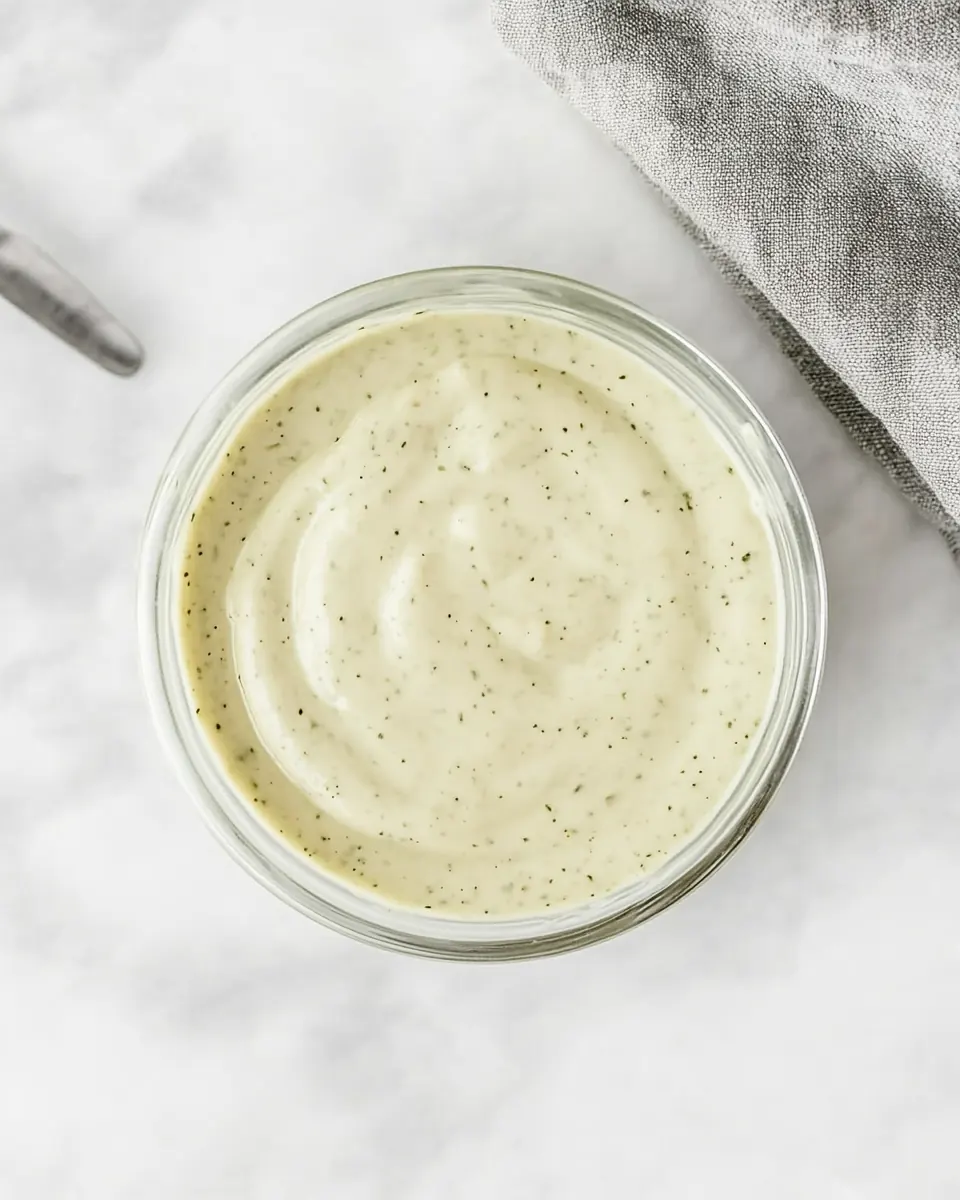
Combine all ingredients in a bowl and stir or whisk together until smooth. Taste & adjust ingredients, and thin it out if needed with some water based on how you want to use it. For example, keep it thick if you want it as a spread for sandwiches/wraps or as a dip, or thin it out to use in a salad if you prefer a less thick dressing. I recommend letting it sit in the fridge for an hour or so to let the sugar dissolve and the flavors meld more prior to using.: The first sensory cue is the texture, you will see a uniform, glossy emulsion form as the mayo and pesto marry, and you may hear the soft whisking sound as air is incorporated. This texture matters because it determines how the dressing will adhere to leaves and sandwiches. If the mixture looks separated or curdled, keep whisking gently, adding a teaspoon of water to help it come together, since too rapid mixing or overly cold ingredients can resist emulsification. Avoid overbeating, which can thin the dressing excessively.
Taste & adjust ingredients: When you taste the dressing you should notice herbaceous basil from the pesto , creamy fat from the mayo , and a hint of sharpness from the garlic . Adjust by adding more pesto for herbal intensity, a splash more white vinegar for brightness, or a pinch more white sugar to tame acidity. This step is about balance, because small changes dramatically shift the profile. A mistake people make is adjusting too much at once; add small increments and re-taste between adjustments to avoid overshooting the desired flavor.
Thin it out if needed with some water based on how you want to use it: For salad use you may want a looser texture, and a teaspoon or two of cold water will create a pourable consistency while preserving the flavor. Look for a sheen and a slight ribbon when you drizzle the dressing, that indicates a good pourable body. If you add water, mix slowly and stop once you reach the desired viscosity, because too much liquid will dilute the flavor. A common problem is adding oil or too much water at once, which can make the dressing watery or reduce its emulsified quality.
Keep it thick if you want it as a spread for sandwiches/wraps or as a dip: For spreading, the dressing should be dense enough to stay put, so avoid thinning. The tactile cue is body when you scoop it on a spoon, it should mound rather than stream. Texture matters here because a thicker dressing creates concentrated pockets of flavor in sandwiches rather than seeping into bread. If yours is too thin, chill it to firm up or whisk in a bit more mayo . Watch out for overthickening by adding too much mayo which can mask the pesto brightness.
Thin it out to use in a salad if you prefer a less thick dressing: When dressing delicate greens you want even coverage without weighted clumps, so aim for a light coating when you drizzle and toss. The visual sign of success is leaves glistening but not saturated. Add water incrementally and toss a small portion of salad to test coverage, because over-dressing will weigh down greens and make them soggy. One misstep is adding liquid directly to the salad bowl instead of the dressing, which makes controlling distribution harder.
I recommend letting it sit in the fridge for an hour or so to let the sugar dissolve and the flavors meld more prior to using: After chilling you will notice that the raw tang of the garlic softens, the white sugar disappears into the liquid, and the herb notes of the pesto become more integrated with the creamy base. Aroma becomes rounded and less sharp, signaling that flavors have married. This resting matters because it delivers a more polished final taste, especially if you are serving it to guests. The common pitfall is skipping rest and serving immediately, which can reveal harsh edges rather than the smooth, blended flavor this dressing can achieve.