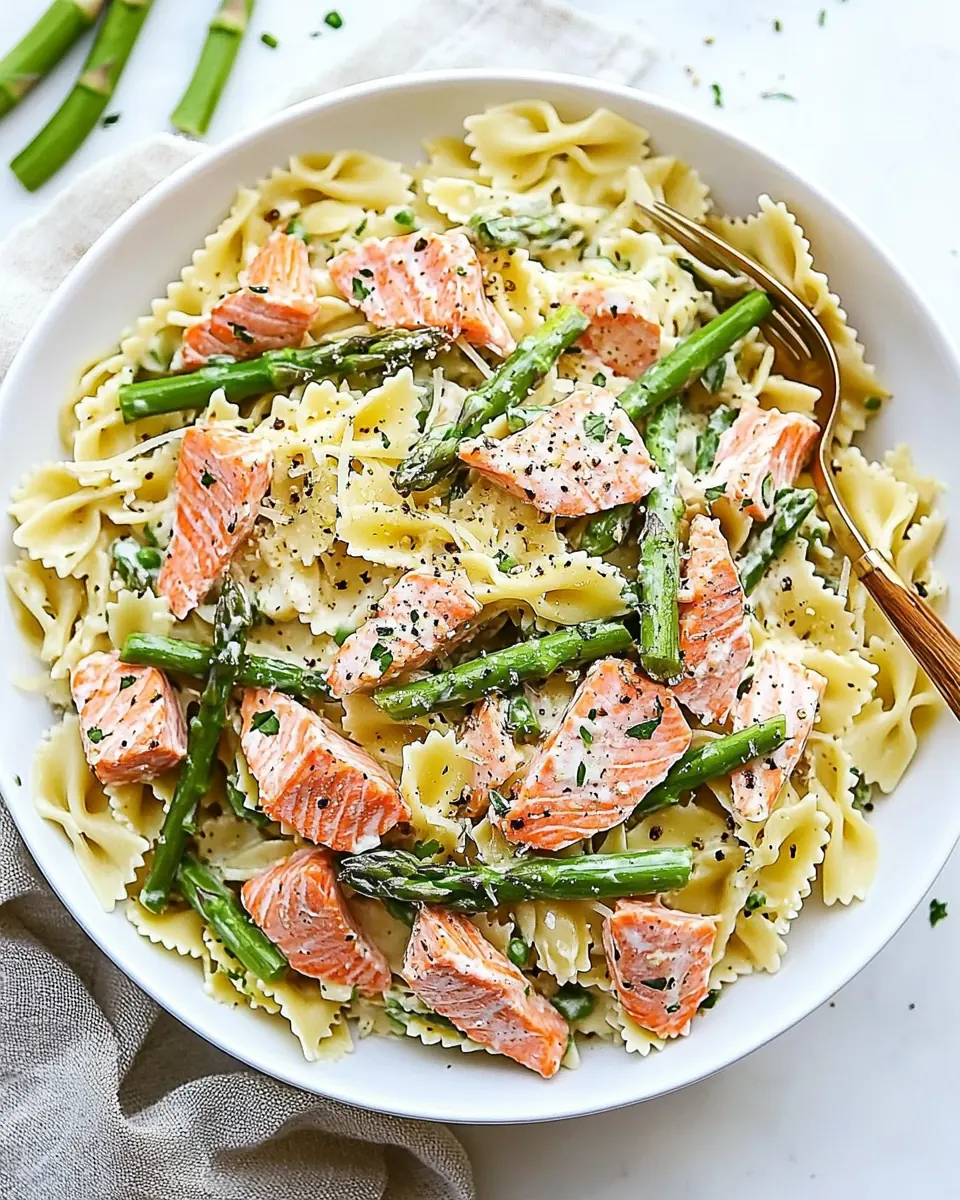
Bring a large pot of water to boil and cook the bow tie pasta according to package directions until al denté.: The moment you smell the starchy steam and see tiny bubbles rising steadily, the water is ready, and adding a generous pinch of kosher salt will season the pasta from the inside out. Listen for a gentle rolling boil before adding the pasta , and stir briefly to prevent sticking. Cook until the pasta is firm to the bite, since it will finish with the sauce. A common mistake is overcooking the pasta, which results in a mushy mouthfeel and a sauce that cannot cling properly.
When noodles are done cooking, use a slotted spoon to transfer the pasta to a colander, reserving the pasta cooking water in the pot. Reheat the pot of water over medium heat and add the chopped asparagus spears, cooking until they turn bright green, about 1-2 minutes, then transfer to the same colander as the pasta. You want the asparagus to still have a snap to but not taste raw.: You will notice the steam full of starch as you drain, and that starchy water is gold for adjusting sauce texture later. Reheating the reserved water lets you quickly blanch the asparagus in the same pot, which saves time and infuses the vegetable with a touch of seasoning. Avoid rinsing the pasta , because the surface starch helps the sauce adhere.
While the pasta and asparagus are cooking, pour the cream into a 12-inch skillet and bring to a boil, then reduce to simmer and cook until reduced by half and the cream easily coats the back of a spoon.: As the asparagus hits the warm water you will hear a gentle hiss and see the color intensify quickly, the visual cue that they are nearly perfect. The goal is a crisp tender texture with a slight snap, so work fast and taste one piece. Overcooking here makes the vegetable limp and dull in flavor, so transfer promptly to the colander.
Add the lemon zest, Parmesan cheese, fresh dill and cooked salmon to the cream and stir until the Parmesan is melted into the cream and the salmon is warmed through. Season with kosher salt and freshly ground pepper.: You will smell the cream becoming more concentrated as it reduces, a warm dairy perfume that signals the sauce is thickening. Keeping the heat moderate prevents scorching, and watching the cream cling to a spoon lets you know it is ready. If the heat is too high the cream can separate or catch on the pan, so gentle simmering is key. Stir periodically to prevent a skin from forming and to encourage even reduction.
Add the cooked bow tie pasta to the skillet and toss to coat. Add more salt and pepper if desired, and top with more Parmesan cheese and dill if desired. Serve immediately.: Immediately you will notice the bright citrus aroma from the lemon zest lifting the rich cream , and the melted Parmesan cheese adds savory complexity. Gently fold in the flaked salmon so it warms without falling apart; the gentle heat ensures the fish stays moist. A frequent error is overheating the fish which causes it to dry and flake excessively rather than remain tender.
Season with kosher salt and freshly ground pepper: After adding the cheese and salmon you should taste the sauce and adjust seasoning. The Parmesan cheese contributes salt, so add small increments of kosher salt and grind fresh pepper to brighten the flavors. Over salting is easy, so season gradually and taste at each step to reach the best balance.
Add the cooked bow tie pasta to the skillet and toss to coat: When you toss, you'll feel the warm sauce clinging to the pasta , coating each piece in a glossy sheen. Use tongs or a spatula to fold the pasta through the sauce, adding a splash of the reserved pasta water if the sauce needs loosening; that starchy water will help bind the sauce and create a silky finish. A typical mistake is adding too much water at once, which dilutes flavor, so add gradually until the texture is ideal.
Add more salt and pepper if desired, and top with more Parmesan cheese and dill if desired: The visual pop of fresh chopped dill and a final sprinkle of grated Parmesan cheese make the dish sing on the plate. Taste a final bite for balance, and finish with more cracked pepper if you want a peppery lift. Resist the urge to overload with salt at this point; layers of flavor should remain harmonious.
Serve immediately: Bring the skillet straight to the table or portion onto warmed plates so the sauce remains luxuriously warm and the textures stay fresh. The steam will carry the citrus and dairy aromas, inviting everyone to dig in. Letting it sit too long causes the sauce to thicken and the pasta to absorb more liquid, which can dry the dish out, so serve promptly.