In a slow cooker, combine 10.5 oz cream of chicken soup, 1 cup chicken broth, 1 tablespoon dry Italian dressing mix, and 1 tablespoon dry ranch dressing mix. Stir until all ingredients are mixed well together.: The aroma will be a concentrated, savory perfume that hints at the finished sauce, with herb notes from the seasoning mixes blooming into the broth. As the mixture warms it will hiss softly, and you may notice small bubbling at the edges first, a sign the pot is reaching a gentle simmer. This blend creates the flavor foundation, so mixing thoroughly matters, otherwise you risk pockets of dry seasoning that overpower bites. A common mistake is adding cold ingredients without stirring, which can cause the condensed soup to stick and heat unevenly; whisk briefly until the mixture looks uniform and glossy.
Add 1.5 lbs raw chicken breast chunks/strips to the slow cooker. Stir until chicken is coated with the soup mixture.: As the raw chicken hits the warm liquid, you may hear a quiet settling sound and see the pieces sink and nestle into the sauce. The meat will slowly release juices, which blend with the broth and seasoning to enrich the sauce. Ensuring pieces are similar in size helps them cook at the same rate, avoiding some pieces drying while others are underdone. A frequent misstep is overcrowding the pot with unevenly sized pieces, which leads to uneven tenderness; arrange the pieces in a single layer as much as possible for consistent results.
Cover the slow cooker with a lid. Cook on Low heat setting for 6-8 hours, or on High heat setting for 3-4 hours.: When you stir, watch for the sauce to cling to the meat, turning it from pale to lightly glossy. The act of coating helps the seasoning penetrate the surface, so the chicken is flavored through and not just on top. You should feel slight resistance when moving the spoon through the chunks, and the mixture should look cohesive. Avoid vigorous stirring that can break down the meat prematurely; a gentle fold is enough to ensure coverage and prevent shredding before the right moment.
Approximately 30 minutes before the dish is ready, use two forks to shred the chicken. See notes below about not shredding chicken.: Once covered, the pot will go quiet except for a gentle simmer and occasional soft bubbling. The enclosed heat allows connective tissue in the chicken to relax and become tender without intense evaporation, preserving a saucy consistency. Leaving the lid off too often causes heat loss and lengthens cooking time, so resist peeking; each lift drops the internal temperature and extends cook time. A typical error is frequently checking, which leads to prolonged cook time and inconsistent texture.
Add 8 oz cream cheese, cut into cubes, into the slow cooker. Stir well to combine all ingredients together, ensuring the cream cheese is melted into the sauce.: Over time you will detect deeper savory aromas as the sauce concentrates and melds with the chicken . On Low the texture becomes more uniformly tender and the sauce reduces gently, while High speeds the process but yields a slightly different mouthfeel. If you need more precise timing, check at the lower end of the range to prevent the meat from becoming stringy. A common pitfall is assuming High is always better; rapid high heat can sometimes dry edges of the meat while the interior finishes.
Using a spatula, gently fold in 8 oz cooked egg noodles coating in the creamy sauce. (see notes for other suggestions): At this point the chicken should pull apart with little resistance and the pot will release the comforting scent of concentrated savory depth. Shredding increases surface area so the sauce clings more readily and the flavors distribute evenly. If you prefer whole pieces, remove them with tongs before shredding to preserve shape. People often shred too early, which can result in pieces that turn mushy after extended cooking; wait until the meat is tender but still holds slight texture.
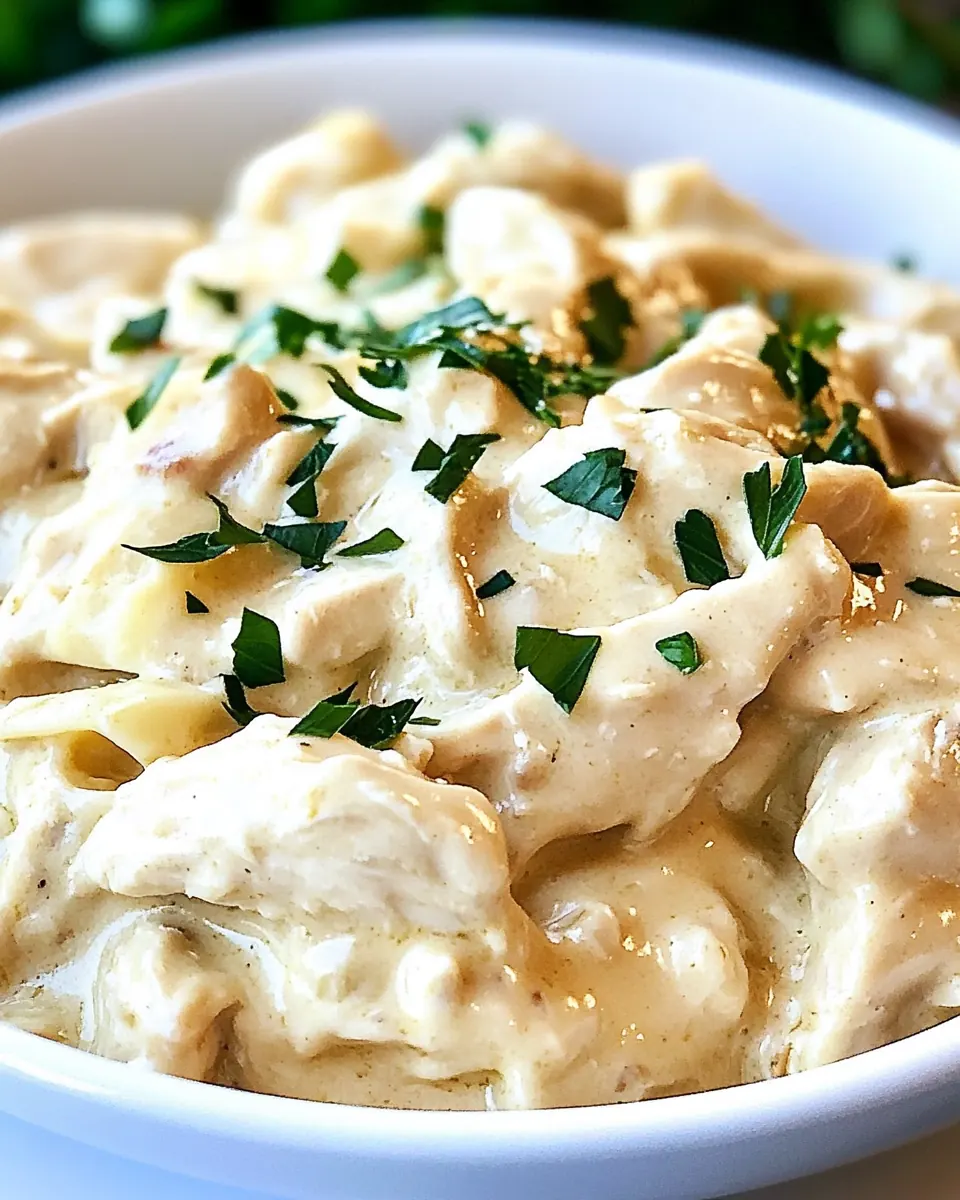
Serve creamy chicken and noodles immediately while hot.: Once the cubes hit the hot liquid you will see them soften almost immediately, then melt into silky ribbons as you stir. The smell becomes richer and silkier, and the sauce will take on a glossy, cohesive look. Cut the cream cheese into small, even cubes so it melts uniformly; large lumps can leave pockets of unincorporated dairy. The typical mistake here is adding cold, large chunks which can take much longer to melt and create uneven texture.
Stir well to combine all ingredients together, ensuring the cream cheese is melted into the sauce: Focus on texture, not just homogeneity; the sauce should look smooth, with no visible lumps of cream cheese, and it should coat the back of a spoon. This is the stage where the mouthfeel is perfected, and stirring helps emulsify the fats with the liquid for a stable, creamy finish. Overstirring is not the issue here, but insufficient mixing can leave isolated pockets of dairy that alter the bite; stir until glossy and uniform.
Using a spatula, gently fold in 8 oz cooked egg noodles coating in the creamy sauce: The noodles should glisten as the sauce clings to their curves, and you will likely hear a soft swish as they are folded in. Folding preserves their texture while ensuring every strand or piece is coated. If the noodles are too warm and sitting too long they may break down, so fold them in right before serving for the best texture. A common error is adding cold or overcooked noodles which result in a mushier final dish.
Serve creamy chicken and noodles immediately while hot: When plated, steam will rise and the sauce will shimmer invitingly, signaling readiness. Serving hot ensures the sauce is at its silkiest and the noodles maintain their integrity. Allowing it to sit too long can thicken the sauce and change the texture. A typical mistake is letting the dish rest uncovered for too long, which causes the sauce to skin over and the noodles to continue absorbing liquid.