Go Back
Creamy Tomato Basil Soup

Creamy Tomato Basil Soup

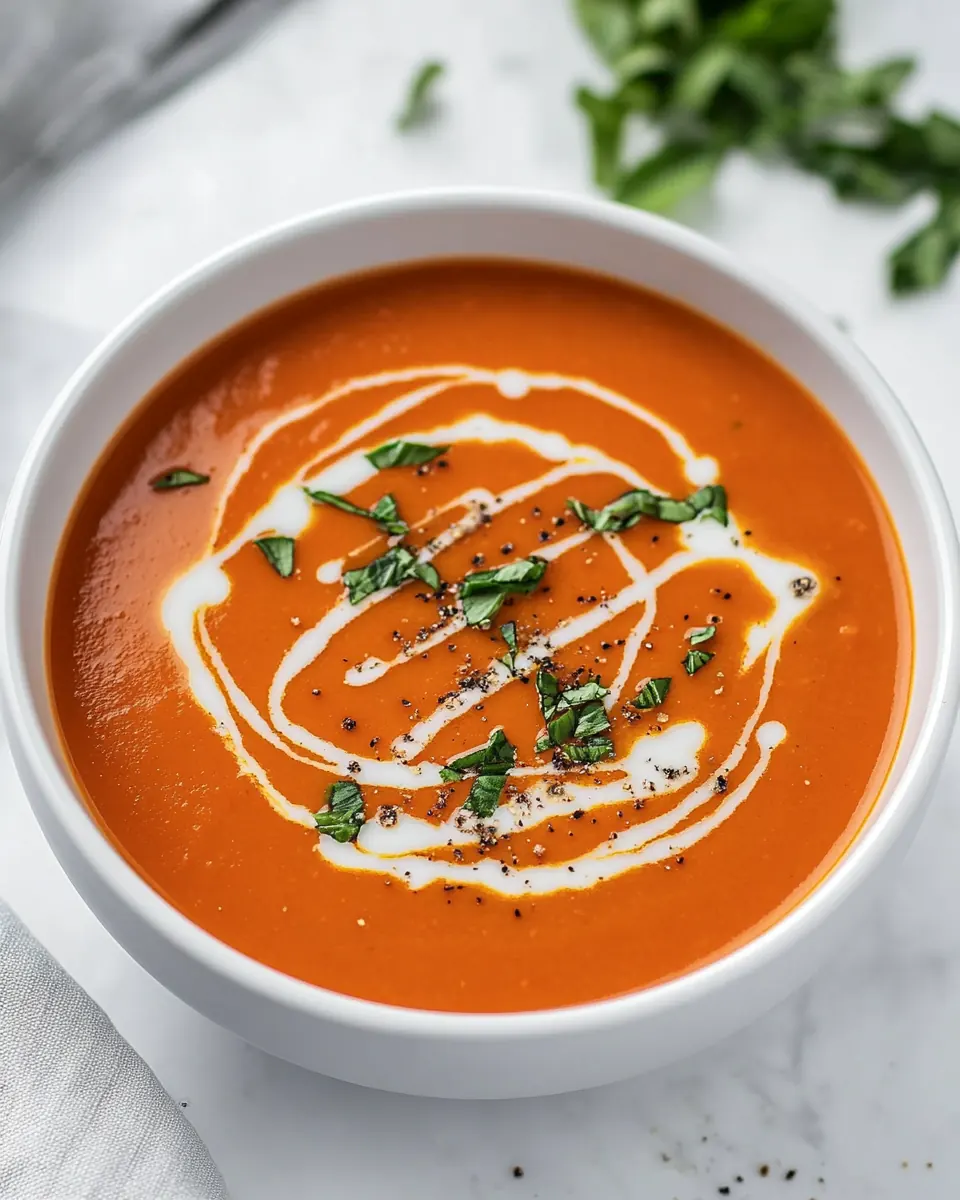
Creamy Tomato Basil Soup is a silky, comforting bowl that balances bright fire roasted tomato notes with rich dairy and savory Parmesan cheese. This easy weeknight dinner recipe is creamy, fragrant, and simple to scale for a crowd. Make it for chilly evenings when you want something both nourishing and quick to pull together.
Prep Time 8 minutes
Cook Time 40 minutes
Total Time 48 minutes
Servings: 6 servings
Course: Soups
Cuisine: Italian
Calories: 250

Ingredients
  

  • 4 stalks celery chopped into thirds to fit processor Chopped to uniform thirds to ensure even processing and a consistent texture when pureeing the soup; adds aromatic sweetness and celery’s refreshing, slightly bitter backbone to balance richer flavors.
  • 4 medium carrots, peeled chopped into thirds to fit processor Peeled and chopped into thirds for smooth processing and an even puree; contributes natural sweetness, body, and a carrot-forward depth that complements the tomato base.
  • 1/2 large onion, peeled and quartered Peeled and quartered to release savory aromatics when sauteed; provides a sweet and savory foundation that builds flavor when sweated with garlic and herbs.
  • 3 cloves garlic, peeled Peeled and used to impart pungent, aromatic depth when sauteed or blended; elevates savory notes and adds complexity to the overall soup profile.
  • 3 tablespoons butter Melted with oil to saute vegetables and create a rich flavor base; provides a creamy mouthfeel and helps carry fat-soluble flavors through the soup.
  • 2 tablespoons olive oil Used alongside butter to sauté aromatics and prevent burning; adds fruity, peppery notes and contributes to a balanced fat profile for cooking.
  • 1/4 cup flour Whisked into the fat to form a roux that thickens the soup; creates a smooth, velvety texture and stabilizes the final consistency.
  • 4 cups low sodium chicken broth Added as the primary liquid base to build soup volume and savory depth; low sodium is used to control overall saltiness while contributing broth flavor.
  • 214 oz . cans fire roasted diced tomatoes with juice Included with its juice to deliver robust tomato flavor, smoky fire-roasted nuances, and body; provides the acidic backbone and rich tomato texture for the soup.
  • 1 tablespoon dried basil or 1/4 cup fresh basil, chopped Added dried for concentrated herbal flavor or substituted with fresh for bright, leafy notes; infuses a sweet, peppery basil aroma central to tomato-basil soup.
  • 1 teaspoon dried oregano or 1 tablespoon fresh oregano Used dried for warm, savory undertones or fresh for bright, slightly minty oregano flavor; supports the herbal seasoning profile and enhances tomato character.
  • 1 teaspoon salt Measured to control seasoning and balance acidity; ensures the soup is properly seasoned without overpowering the other flavors.
  • 1/2 tsp EACH dried parsley, black pepper Combined dried parsley and black pepper in equal measures to add mild herbaceousness and gentle heat; parsley lightens the profile while pepper adds subtle bite.
  • pinch red pepper flakes optional Sprinkled sparingly to introduce optional heat and a touch of smokiness; helps to brighten flavors and provide contrast to the creaminess.
  • 1 bay leaf Added whole to simmer with the soup to impart subtle, savory, bay-like aromatics; removed before serving to leave behind depth without bitterness.
  • 1 -2 cups milk, half and half OR heavy cream Poured in at the end to enrich and smooth the soup; choice of milk, half-and-half, or heavy cream determines creaminess and mouthfeel while balancing acidity.
  • 1 cup freshly grated Parmesan cheese Folded in to contribute nutty, salty, umami richness and help thicken the finished soup; freshly grated cheese also enhances savory depth and creaminess.
  • freshly grated Parmesan cheese (optional) Offered as an extra garnish to finish bowls with additional salty, umami complexity and a pleasing texture contrast when freshly grated over the soup.

Equipment

  • Dutch Oven
  • Food Processor
  • immersion blender
  • Whisk

Method
 

  1. Add celery, carrots, onion and garlic to a food processor and pulse until finely minced (or mince by hand).: The first sensory cue is a crisp fresh aroma as you prepare the vegetables, with each chop releasing a bright vegetal scent. Pulsing until very fine ensures the pieces will almost dissolve into the soup, thickening it naturally while distributing flavor evenly. As you process, listen for the steady, faint rhythm of the blades which signals even chopping. If mincing by hand, aim for uniformity so nothing overcooks or remains crunchy. Common mistakes include leaving large chunks that fail to soften, which creates inconsistent texture in the final bowl.
  2. Melt butter in oil in a large Dutch oven/soup pot over medium heat. Turn heat to medium high, add minced vegetables and sauté for 4 minutes. Sprinkle in flour and continue to cook 1 minute, stirring constantly.: As the butter and olive oil warm, they release a soft, nutty fragrance, and when the minced vegetables hit the pan you will hear a gentle sizzle. Sautéing for about four minutes softens the aromatics and coax out natural sugars, producing a sweeter, more complex base for the soup. When you add the flour it should fizz softly as it cooks, and you will notice the raw flour smell fade, replaced by a toasted, biscuity note. Stirring constantly prevents lumps and browning; if the mixture browns too quickly, reduce heat because burned fond will impart bitterness.
  3. Gradually whisk in chicken broth followed by tomatoes and all seasonings. Add bay leaf. Bring to a boil then reduce heat and simmer for 15 minutes or until carrots are tender.: When you whisk in the chicken broth you should see a silky emulsion form, and the aroma becomes more savory and full. Adding the fire roasted tomatoes introduces a vibrant, slightly smoky scent that lifts the pot. The mixture will bubble to a lively boil, then settle into a comforting simmer; watch for gentle rolling bubbles that signal proper simmering. After roughly 15 minutes the carrots should be tender when pierced with a fork, indicating the base is ready for enrichment. A common trap is boiling too hard, which breaks down flavors and can cause separation, so lower the heat once it reaches a boil.
  4. Add Parmesan cheese and whisk to blend. Stir in milk/half and half/cream and gently simmer an additional 15-20 minutes on low, stirring occasionally. Stir in additional chicken broth or cream to reach desired consistency. Remove bay leaf. Season with salt and pepper to taste.: As you whisk in the Parmesan cheese , a savory, nutty aroma will bloom and the liquid should feel creamier on the spoon. Incorporating milk or cream tempers acidity and yields a velvety texture that coats the palate. During the gentle simmer you will notice a soft steam rising and a faint, rich perfume. Stir occasionally to prevent a skin from forming and to keep the texture uniform. If the soup is thicker than you like, add extra chicken broth or a splash more cream ; if it is too thin, simmer uncovered a little longer to concentrate flavors. A mistake to avoid is overheating after dairy is added, which can make the mixture separate, so keep heat low.
  5. You can serve the soup as is if you like the texture or proceed to puree with an immersion blender or working in batches, transfer soup to blender and puree until smooth, being careful to let smoke escape or it will explode. Garnish with freshly grated Parmesan cheese (optional).: At this stage you choose texture. If you leave it as is, you will have a rustic bowl with visible vegetable bits offering textural contrast. Pureeing yields a satiny finish that feels luxurious and uniform on the tongue. If using an immersion blender you will hear a steady hum and see the soup transform from chunky to silky; be mindful of splatter. If transferring to a countertop blender, steam and pressure can build so leave the lid vented and cover with a towel to let steam escape safely. A frequent error is blending hot liquid without venting, which can push the lid off; always release steam carefully to avoid burns. Finish with a garnish of freshly grated Parmesan cheese if desired to add a final fragrant, savory flourish.
Notes

  • Choose your dairy Depending on your desired richness, use milk for a lighter finish, half and half for balanced creaminess, or heavy cream for a decadent, silky texture that coats the spoon and lingers pleasantly on the palate.
  • Control thickness If the soup becomes too thick, thin with additional chicken broth a little at a time until you reach a consistency that pours easily but still feels substantial on the tongue.
  • Blend carefully When pureeing hot soup in batches, vent the blender lid slightly and cover with a clean towel to avoid steam eruptions, which are a common and painful mishap if ignored.
  • Fresh versus dried herbs Fresh basil offers a vibrant, fragrant finish if added at the end, while dried basil and oregano are great during simmering to infuse the broth with steady, grounded herbal notes.
  • Freeze like a pro Cool the soup completely, portion into freezer safe containers or bags, squeeze out excess air, and freeze flat so portions thaw quickly and evenly when you need them.