Preheat oven to 350 degrees F: The kitchen will begin to warm and you should feel the air shift as the oven comes up to temperature, creating a steady environment for gentle roasting. This moderate heat encourages even caramelization on the tomato skins while softening the onion without rapidly charring, which preserves sweet flavors. A common mistake is setting the oven too hot, which can blacken the garlic and introduce bitterness, so wait until the oven reaches the correct temperature and use the center rack for even heat.
Spread tomatoes, garlic, onion, and basil over a lined baking tray: As the vegetables lie on the tray you will notice the colors and the raw aromas of tomatoes and onion . Lining the tray helps prevent sticking and simplifies cleanup, and arranging everything in a single layer promotes uniform roasting rather than steaming. Press the vegetables gently so they make contact with the tray, and avoid overlapping, which can trap moisture and prevent browning.
Drizzle with olive oil and balsamic: The glint of olive oil on the vegetables signals that they will brown nicely, and the scent of balsamic vinegar adds an immediate fruity tang. Tossing them so the oil and vinegar coat each piece encourages Maillard reactions that deepen flavor. Don’t overdress them, because too much liquid can pool on the tray and slow the roasting process.
Bake for 20 minutes: During roasting you should see the tomato skins wrinkle and the edges of onion begin to caramelize, releasing a sweet, toasty aroma into the kitchen. The sound is subtle, more the hiss of juices than a sizzle, and the visual cue of golden brown is important. A typical pitfall is under roasting; if the vegetables look pale, give them another 5 to 10 minutes, watching carefully so the garlic does not burn.
Once roasted, remove from oven and place into a food processor: The moment you transfer the warm vegetables the oven aroma intensifies, and handling them while hot helps them break down more easily. Using a food processor creates a smoother base quickly, but be careful when loading hot ingredients to avoid steam pressure; pulse gently at first. If you skip this and try to mash cold vegetables, the texture will be chunkier and the flavors less integrated.
Process until smooth: As the blades whirl you will hear a steady hum and see the mixture turn glossy and uniform, releasing that concentrated tomato perfume. Stopping to scrape the sides ensures an even texture, and processing longer will produce a silkier result. Over processing is rarely a problem, but be cautious of splattering hot liquid when you open the processor; let steam escape slowly.
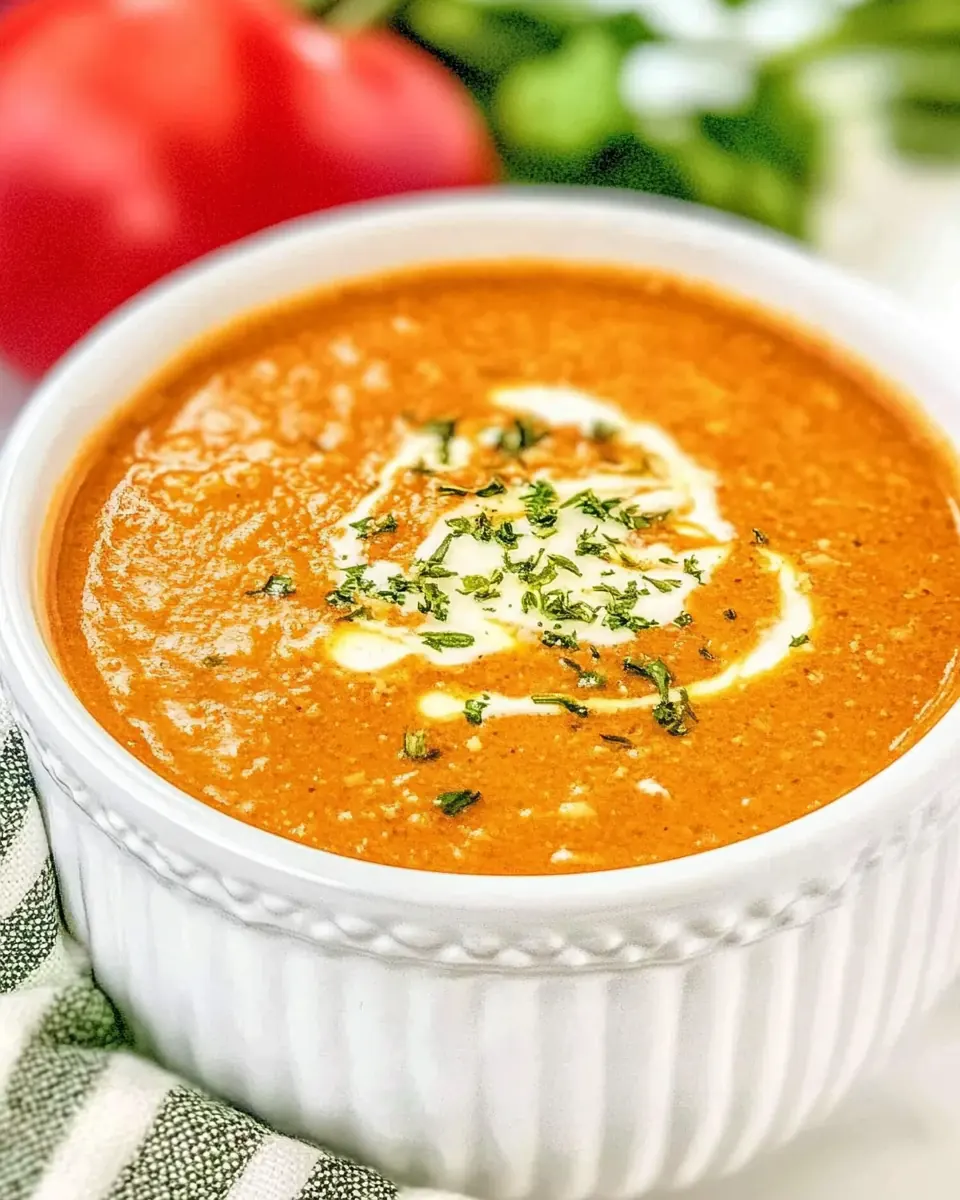
Pour into a saucepan over medium low heat and stir in light cream: The soup should glisten as it hits the saucepan, and adding light cream creates a visible ribbon as you pour, then blends into a softer color. Heating gently preserves the cream’s stability and prevents curdling, while stirring helps everything harmonize. Avoid high heat here which can shock the dairy and create graininess, and always stir from the center outward for even melding.
Let simmer for 5 minutes: A brief simmer will meld flavors and reduce any excess liquid, deepening the aroma and slightly thickening the body. You will see tiny bubbles at the edges and smell the union of roasted vegetables and cream. Stir occasionally to prevent sticking, and watch that the simmer remains low; a vigorous boil can separate the cream and change the mouthfeel.
Top with parmesan and remaining basil: The final flourish of grated parmesan will melt into the hot soup, creating little tender flecks, while the fresh basil releases an herbal perfume at first contact. This finishing touch brightens and balances the savory base, and the visual contrast of green against red is inviting. A common oversight is adding the basil too early, which makes it lose color and aroma, so add just before serving for maximum effect.