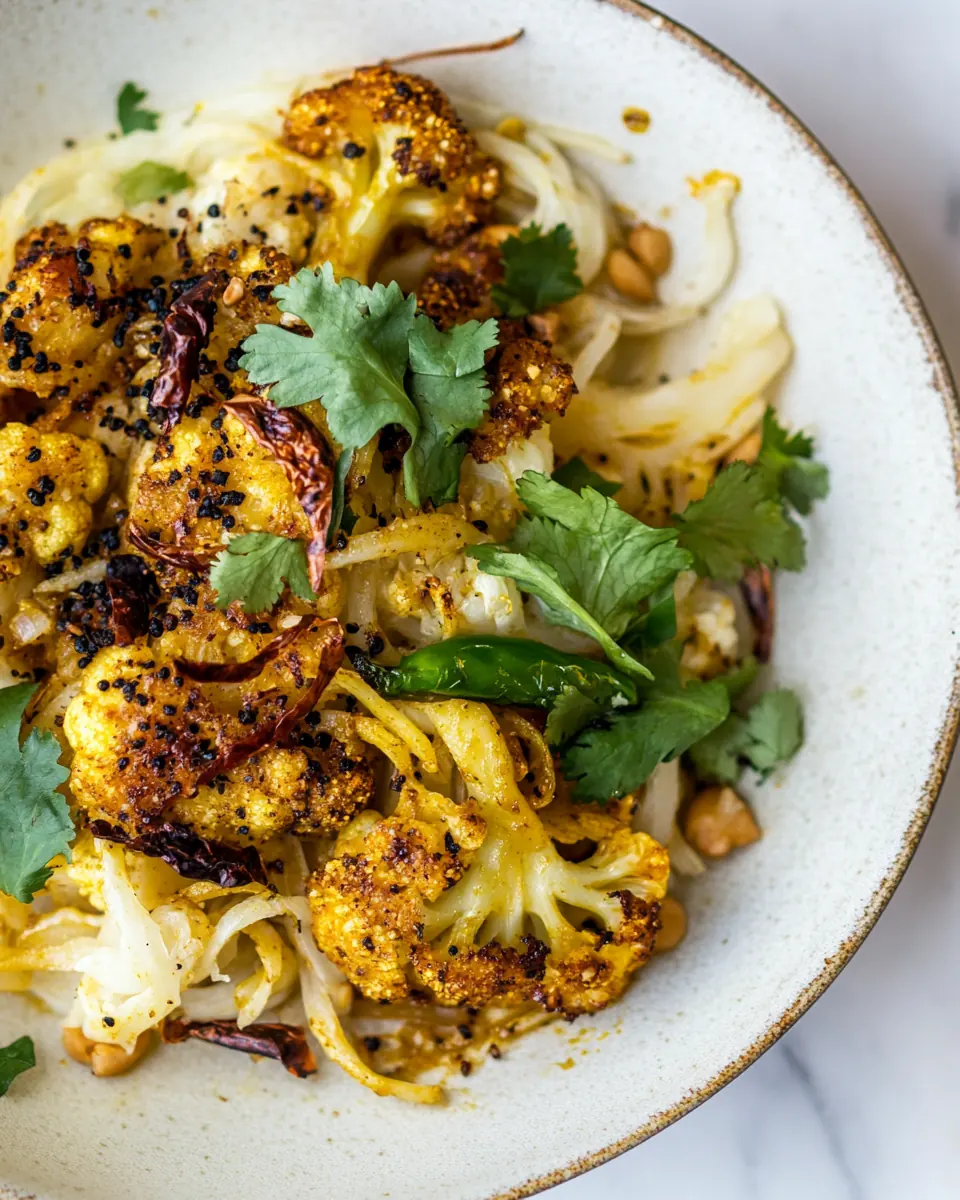
Preheat oven to 425° F. On a baking sheet, combine the cauliflower, the olive oil, turmeric, ginger, black pepper, paprika, and a pinch of chili flakes and salt. Toss well to evenly coat. Transfer to the oven and roast for 20 minutes, or until tender. Remove the cauliflower from oven, add the shallots and cashews. Drizzle over the soy sauce and honey, toss to combine and evenly coat everything. Roast another 10 minutes, until charred. Meanwhile, cook rice noodles according to packaged directions. Heat a medium skillet over medium heat. Add the butter, garlic, and a pinch of red pepper flakes, if desired. Cook until the garlic begins to caramelize and turn light golden brown, 1 to 2 minutes. Stir in the coconut milk, cooking 3-5 minutes, until warmed through. Remove from the heat and toss the noodles with the sauce. To serve, divide the noodles among bowls and top with roasted cauliflower. Finish with a squeeze of lime juice and top with basil or cilantro. Enjoy!: The room quickly warms and the oven elements begin to glow, promising the caramelization we want on the cauliflower . A fully preheated oven ensures even browning and a crisp exterior. If you skip preheating you risk uneven roast and limp texture.
On a baking sheet, combine the cauliflower, the olive oil, turmeric, ginger, black pepper, paprika, and a pinch of chili flakes and salt: As you toss the florets, you should see the spices cling and the oil lightly sheen the surfaces. This step flavors every edge so they char beautifully. A common mistake is undercoating the cauliflower , which leads to pale spots rather than golden browning.
Toss well to evenly coat: When the florets glisten with seasoning the aromatics will bloom in the heat, and the visual cue of an even coating predicts consistent roast. If some pieces remain dry, they will cook faster and may burn, so be attentive to even distribution.
Transfer to the oven and roast for 20 minutes, or until tender: The oven fills the kitchen with toasty, nutty aroma as edges darken and internal flesh yields to a fork. You want tender centers and golden tips. Overroasting can dry them out, so check for a tender but not mushy texture.
Remove the cauliflower from oven, add the shallots and cashews: Returning the pan to the oven with these additions lets the shallots soften and the cashews toast, creating layers of sweetness and crunch. The contrast between preroasted florets and fresh shallot ribbons is important for complexity. Avoid adding too many extras which can steam instead of roast.
Drizzle over the soy sauce and honey, toss to combine and evenly coat everything: You will see a glossy sheen as the sauce melds with oil and spice, and the pan aroma shifts toward sweet umami. This glaze helps the shallots and cashews caramelize further. Using too much soy can make the mix overly salty, so go light and taste.
Roast another 10 minutes, until charred: This short second roast deepens color and introduces small charred bits that carry smoky notes. Look for darker edges and sniff for toasted cashew fragrance. Watch carefully because char can turn to bitter ashes very fast.
Meanwhile, cook rice noodles according to packaged directions: As soon as hot water hits the noodles they soften and release a faint rice aroma, becoming tender and supple. Drain and rinse briefly if needed to prevent sticking. Overcooking will create gummy noodles that will not separate under sauce.
Heat a medium skillet over medium heat: A properly heated pan will make the butter sizzle upon contact and encourage quick aromatics. You want steady bubbling rather than violent smoking. If the pan is too hot the garlic will burn and taste bitter.
Add the butter, garlic, and a pinch of red pepper flakes, if desired: The garlic should release a fragrant, toasty scent as it turns pale gold, and you will hear gentle sizzling as the butter foams. This is the aromatic backbone of the sauce. Be ready to move quickly because garlic goes from golden to burnt in seconds.
Cook until the garlic begins to caramelize and turn light golden brown, 1 to 2 minutes: The kitchen will smell warm and nutty, and you will see tiny brown flecks in the butter. This brief caramelization mellows raw garlic sharpness and creates complexity. Avoid leaving it unattended to prevent bitterness.
Stir in the coconut milk, cooking 3 to 5 minutes, until warmed through: The sauce will shimmer and thicken slightly as it heats, releasing a coconut sweetness that balances the spices. Gentle simmering integrates flavors and slightly reduces water content for better coating of the noodles. Boiling vigorously can separate the fats and create a broken sauce.
Remove from the heat and toss the noodles with the sauce: Off the heat the sauce clings to the rice noodles , their silky texture absorbing the coconut perfume. Tossing ensures even coverage and lets residual heat finish melding flavors. If the sauce seems thin, let it rest a minute to thicken; if too thick, add a splash of warm water.
To serve, divide the noodles among bowls and top with roasted cauliflower: Layering the crunchy, charred cauliflower over sauced noodles creates pleasing contrast and visual appeal. The bowl should feel balanced with sauce, vegetables, and crunch. Serving everything mixed too early may cause the crunchy bits to soften.
Finish with a squeeze of lime juice and top with basil or cilantro: The citrus brightens and the herb releases a fresh aroma as you fold it in, elevating the final bite. This pop of acidity cleanses the palate and lifts the dish. Skipping this finishing acid will leave the plate tasting heavier and flatter.
Enjoy: Savor the interplay of textures and flavors immediately while the contrast between warm sauce and crisp roasted edges is at its peak. Leftovers will be tasty but textures shift, so consume within a day for best experience.