Heat oven to 450°F and set a large, rimmed sheet pan on the middle rack in the oven (while the oven heats).: You will notice a gentle wave of dry heat as the oven climbs, and placing the pan inside warms the metal so it sears the broccoli immediately on contact. The preheated pan helps create rapid browning and blistering on the underside of the florets, contributing to crisp edges. If you skip heating the sheet pan, the florets will warm more slowly and may release moisture, leading to steaming instead of roasting. One common mistake at this stage is not using a rimmed pan, which can allow juices to drip and cause uneven heat distribution.
While the oven preheats, bring a large pot of water and 1 teaspoon salt to boil. In the meantime, rinse and cut the broccoli into florets (they should all be about the same size). 1 head broccoli: As the kettle sings to a boil you will smell faint metallic steam and the salted water will season the interior of each broccoli piece as it cooks. Cutting even florets ensures uniform tenderness; differing sizes produce uneven doneness where smaller pieces may overcook while larger ones remain underdone. A typical misstep here is skipping the rinse and not trimming fibrous stem ends, which can make some bites tough. Aim for pieces roughly 1 inch so they blanch and roast evenly.
Fill a large mixing bowl with ice water, and set it next to the stove.: The ice bath will create an immediate contrast in temperature when you transfer the boiled broccoli , which stops cooking and preserves a vibrant green color. You will hear a faint clink of ice as you drop the florets into the cold water, and the sudden chill locks in the texture. Without this step the florets will continue to carry heat and can turn mushy during the next stages. One thing to avoid is using lukewarm water for the bath, which won’t halt the cooking effectively.
When the water is boiling, add the broccoli florets, and set the heat to medium-low. Boil the broccoli for 2 minutes.: In the pot the broccoli will bob and steam slightly, and after two minutes the centers will soften but remain bright and resilient. This brief blanch extracts any raw vegetal bitterness while keeping moisture content low, which is critical for getting a good roast. Overcooking in this step will leave you with limp florets that cannot crisp up, so time it carefully. A common error here is letting the boil run too long; use a timer and keep the count precise.
After 2 minutes, use a slotted spoon to submerge the broccoli in the ice water to cool for 2 minutes.: You will feel the immediate coolness as the florets go from hot to icy, and the surface will firm slightly as the heat leaves. This thermal shock preserves that lively green and sets the texture so the final roast yields tender inside with a firmer exterior. If you skip submerging long enough, residual heat will continue cooking the pieces and can push them past the ideal texture. Avoid leaving the florets in the bath too long, or they can become waterlogged.
Transfer the broccoli to a paper towel-lined plate to dry and pat dry with another paper towel.: As you blot the florets you should see beads of water lift from the surface and the paper towel darken, signaling moisture removal. Drying is essential; moisture on the surface will steam during roasting and prevent browning. Press gently to avoid breaking the florets, and rotate pieces to expose any trapped moisture. A typical mistake is rushing this step; insufficient drying results in soggy florets and a lackluster crust.
In a large bowl, mix together broccoli, olive oil, 1 teaspoon salt and black pepper. 2 tablespoons extra virgin olive oil, 2 teaspoons kosher salt, 1/2 teaspoon freshly ground black pepper: Tossing the florets in the oil distributes fat evenly, which promotes caramelization and helps the topping adhere later. You should hear a faint rub of oil as the pieces slide and smell the pepper bloom slightly against the warm metal of the bowl. Mixing at this stage seasons every floret through and through. Avoid overcoating with oil, which can make the topping sludgy, and do not skip the salt, which enhances the natural sweetness of the broccoli .
Remove the hot baking sheet from the oven and spread the broccoli mixture evenly over the pan.: When the bowl meets the preheated sheet you may hear a whisper of steam as any residual moisture hits the hot metal, aiding immediate sear. Arrange the florets in a single layer so each piece gets exposure to direct heat; overcrowding leads to steaming and uneven browning. Use tongs to space pieces if needed. A frequent misstep is piling them up, which prevents good contact and results in soft bottoms.
Set the oven to broil and return the pan with the broccoli to the middle rack of the oven. Broil the broccoli 4 minutes.: Under the broiler you will witness the surface begin to blister and deepen in color, and you may hear a gentle crackle as sugars caramelize. This concentrated heat is what produces crisp edges while retaining a tender interior. Broil time is short so stay present; the difference between perfect and burnt can be a minute. If your broiler is especially fierce, increase distance from the element or shorten the time to avoid blackening.
While the broccoli is broiling, in a medium bowl, mix together the melted butter, panko crumbs, shredded cheddar, grated Parmesan cheese and red pepper flakes. 2 tablespoons unsalted butter, 1/3 cup panko bread crumbs, 1 cup shredded sharp Cheddar cheese, 1/4 cup grated Parmesan cheese, 1/8 teaspoon crushed red pepper flakes: The mixture should smell buttery and savory, with the sharpness of Cheddar cheese and the nuttiness of Parmesan cheese mingling through the crumbs. Combining ingredients now ensures an even, cohesive topping that will toast quickly under the broiler. If the crumbs are too dry they will not bind, and if too wet they will clump and not crisp. A common issue is melting the butter too hot, which can partially melt the cheeses prematurely; allow butter to cool slightly before mixing.
Remove the pan from the oven, and sprinkle the breadcrumb/cheese mixture evenly over the top of the broccoli.: As you scatter the topping you will feel the contrast between the warm flakes and the hot florets, and the aromas of butter and cheese will intensify. Distribute the mixture so each floret has coverage, pressing lightly to help it adhere. Uneven distribution leads to pockets without crunch or cheese, so take a moment to arrange thoughtfully. Avoid piling too thickly in one spot as it may not crisp through in the center.
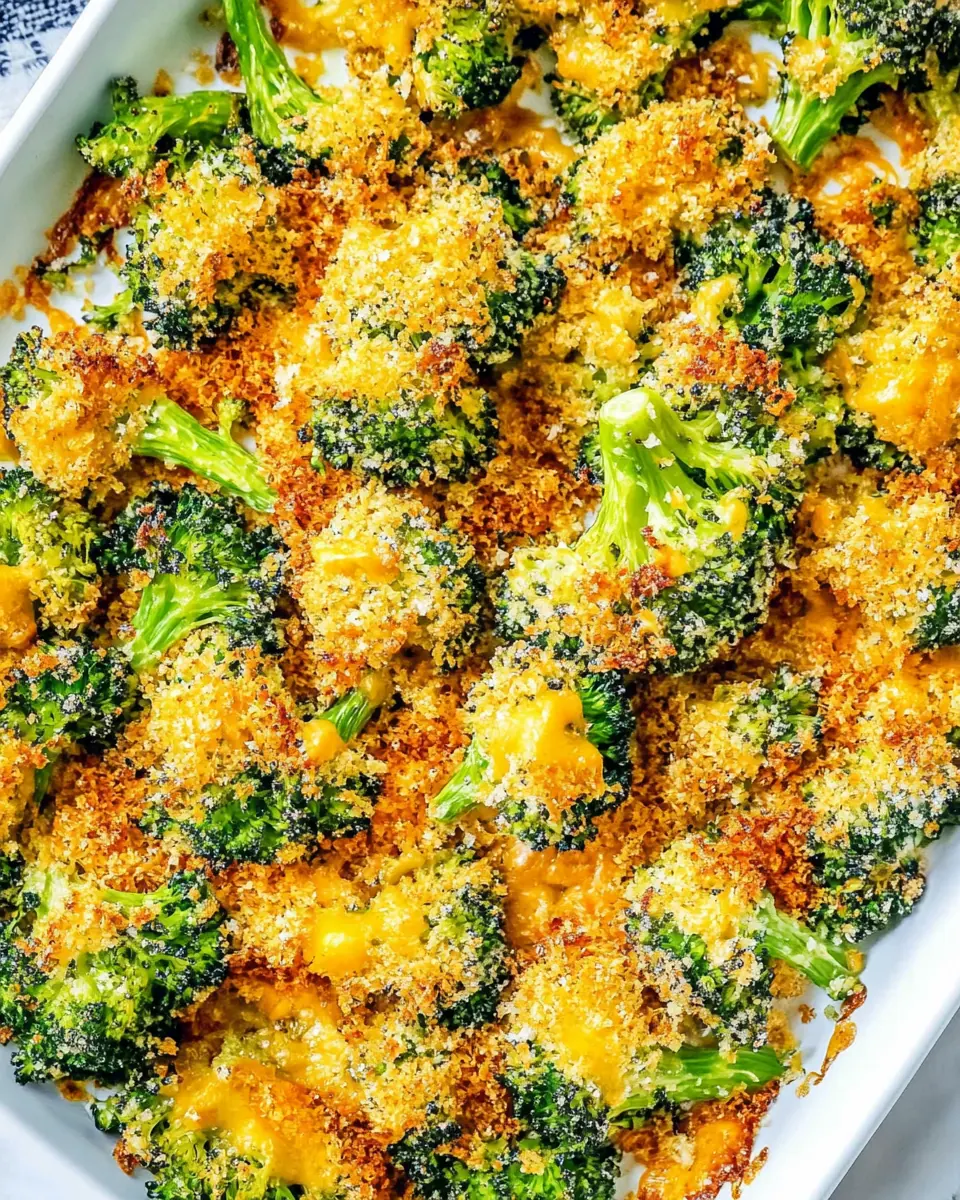
Return the broccoli to the oven and broil another 3-5 minutes or until the broccoli is fork-tender and the cheese has melted and is crispy around the edges. Watch closely so the cheese doesn’t burn. (Note: If the cheese is browning too quickly, remove the broccoli from the oven and turn off the broiler. After 1 minute, return the broccoli to the oven and let it finish cooking with residual heat.): In this final stage the cheese will melt and bubble, the crumbs will toast, and the top edges will turn a rich golden brown. You should hear a faint sizzling and smell nutty roasted notes as the topping caramelizes. The florets are done when a fork slides in easily and the topping is crunchy; timing varies by oven so check early. If the cheese browns too quickly, remove and turn off the broiler to let residual heat finish the cooking; continuing to broil is the quickest way to burn the topping.
Serve immediately and Enjoy!: The finished dish should present a mosaic of blistered green and golden topping, steaming gently as you bring it to the table. Serve it hot for the best contrast between tender interior and crispy top. A common serving mistake is letting it sit too long, which softens the crumbs; aim to plate and eat within minutes of pulling it from the oven for the ideal texture.