Combine the basil, garlic, and pine nuts in a food processor or blender and pulse until coarsely chopped. With the machine running, slowly add the olive oil and process until smooth. Add the cheese and pulse until combined. Season with salt and pepper, to taste. Set aside.: Close your eyes to the aromatic rush when you first pulse the basil , garlic , and pine nuts , it should smell green and slightly nutty, like fresh leaves with a toasted undertone. The coarse chop preserves some texture so the pesto does not become too thin, giving body to the sauce. If you overprocess at this stage you risk losing vibrant color and ending with an oily paste, so pulse in short bursts to monitor texture. A common mistake here is adding too much oil immediately, which can make the mix too slick and inhibit proper emulsification later.
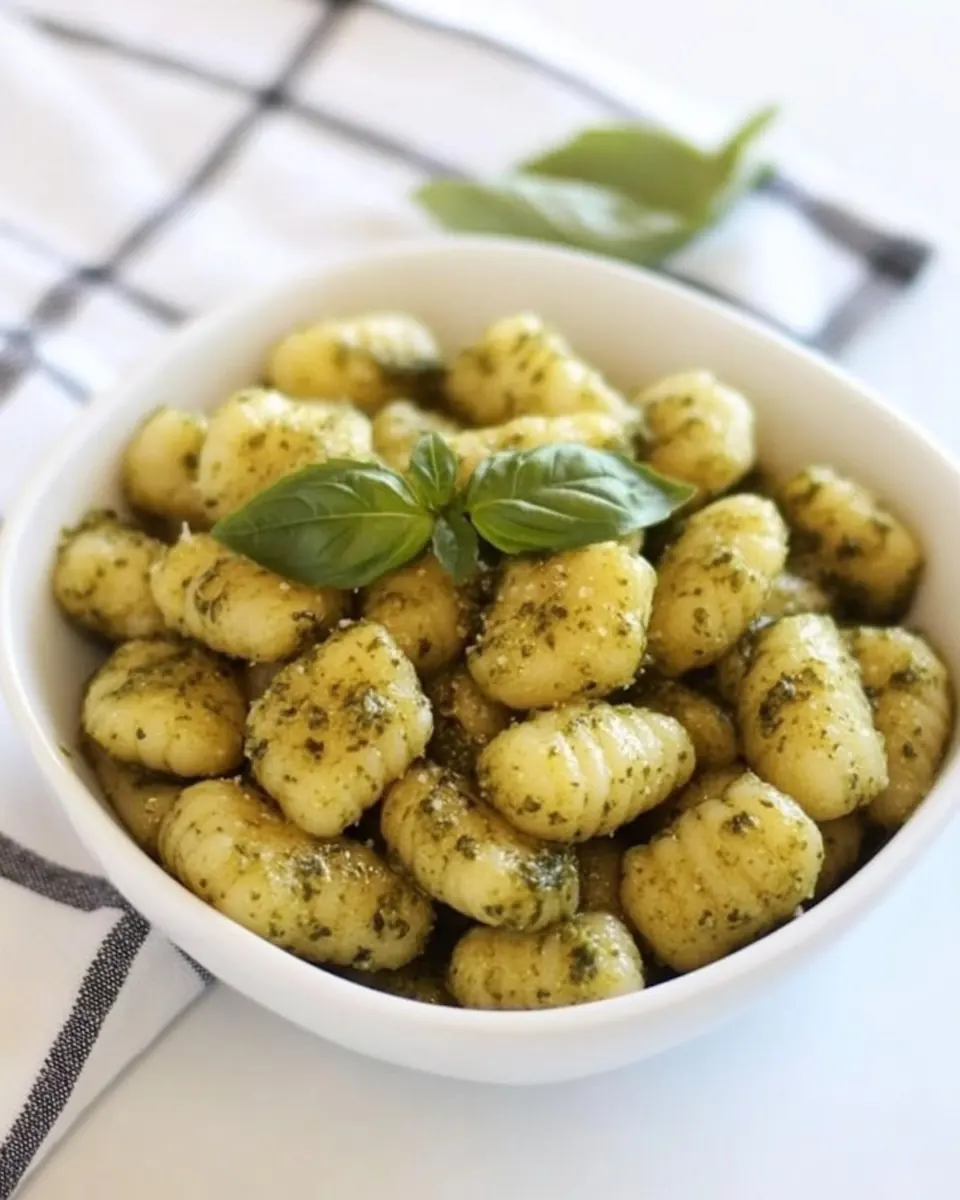
Cook the gnocchi according to package instructions. Drain completely. In a large skillet, heat olive oil over medium-high heat. Add the gnocchi in a single layer and cook, undisturbed, until golden and crisp, about 3-4 minutes. Turn the gnocchi and cook, turning occasionally, until golden and crisp, about 3 more minutes. Remove from the heat and stir in 1/4 to 1/3 cup of the pesto. You might have leftover pesto. Serve warm and garnish with Parmesan cheese, if desired.: As the olive oil streams in, listen for the change in motor sound and watch the mixture become glossy, almost creamy, which signals successful emulsification. This step matters because gradual addition helps the oil bind evenly to the basil and nuts, creating a cohesive sauce that will cling to the gnocchi . Avoid pouring the oil too quickly, or the pesto may separate and appear greasy rather than silky. If separation occurs, gently blend in a tablespoon of water to bring it back together.
Add the cheese and pulse until combined: When you add the grated Parmesan-Reggiano cheese you’ll notice the texture thicken and the aroma shift toward savory and nutty. The cheese stabilizes the pesto and boosts umami, which is why this inclusion is essential for balance. Pulse briefly to maintain a slightly textured consistency rather than completely liquified. A pitfall is adding pre-grated, heavily powdered cheese that can make the pesto grainy, so freshly grated is best whenever possible.
Season with salt and pepper to taste set aside: Tasting now is key, because the seasoning will concentrate after the oil marinates with the herbs. Add small pinches of salt and a few twists of freshly ground black pepper , sampling between additions until the balance sings. Proper seasoning amplifies the basil and cheese, so don’t skip this sensory check. Over-salting is a risk, especially if the cheese is already quite salty, so err on the side of light hand and finish adjusting after tossing with the gnocchi .
Cook the gnocchi according to package instructions drain completely: As you boil the potato gnocchi , watch for the moment they float, which typically indicates they are cooked through; they should feel tender yet not collapsing. Drain them thoroughly so excess water does not prevent proper browning in the skillet. Moisture on the surface is the enemy of crispness, so pat them gently if needed. A common mistake is skipping the drain and ending with steaming instead of frying, which gives a soft rather than golden result.
In a large skillet heat olive oil over medium high heat: Warm the additional olive oil until it shimmers and gives a faint scent of warmth, this indicates the pan is ready for the gnocchi . The right temperature creates immediate sizzle and browning, fostering those caramelized edges we want. If the oil smokes, reduce heat to avoid burning; too low and you will not get crispness, too high and you risk a bitter char.
Add the gnocchi in a single layer and cook undisturbed until golden and crisp about 3 to 4 minutes: When the gnocchi meet the hot oil you should hear a steady sizzle; that sound tells you a crust is forming. Resist the urge to stir early, as movement prevents proper browning. After about three to four minutes you should see a golden halo forming, and the bottoms will release cleanly from the pan. A frequent error is overcrowding the pan, which drops the oil temperature and results in limp rather than crisp pieces.
Turn the gnocchi and cook turning occasionally until golden and crisp about 3 more minutes: As you flip and turn the gnocchi , notice the changes in color and listen for consistent sizzle. Each turn exposes new surfaces to the heat, creating an even mosaic of golden nuggets. The goal is crunchy exteriors while preserving the tender centers, which takes gentle attention. Avoid excessive flipping, which can interrupt the crust formation and make the pieces greasy.
Remove from the heat and stir in 1/4 to 1/3 cup of the pesto: Once off heat, the residual warmth will coax the flavors together without wilting the basil too much; stirring in one quarter to one third cup of pesto at this point lets the sauce cling and shine. The taste will be vibrant and balanced, with the pesto coating the crispy surfaces. If you add too much pesto, it can overwhelm the crispness and make the dish slick, so start modestly and add more if you prefer.
You might have leftover pesto serve warm and garnish with Parmesan cheese if desired: Leftover pesto is a wonderful bonus you can save for later, and serving the dish warm ensures the Parmesan cheese melts slightly and binds to the gnocchi . A final sprinkle of cheese and a twist of black pepper amplifies aroma and mouthfeel. A common mistake is serving it cold, which dulls the aromatics and lessens the impact of the crisp texture.